

One of the most popular ways to experience Grand Canyon National Park is by exploring its day hikes! Lucky for you, there are plenty of trails in the Grand Canyon that can be completed in anywhere from 1 hour to 8 hours.
From the flat Rim Trail to the steep hike down to Ooh Ahh Point, these trails are perfect if you’re visiting for just a day or two, not quite ready to commit to a multi-day backpacking trip, or prefer staying at the rim.
In this article, we’ve put together a list of the 11 top day hikes in the Grand Canyon to help you make the most of your visit to this incredible US National Park! While we’ve focused on day hikes in the South Rim, as it’s the most popular side of the park and where we visited, we’ve outlined a few of the top day hikes in the North Rim as well.
Note: We use affiliate links which provide us a little kickback each time you use one of our links and make a purchase, without any additional cost to you. We do not recommend products that we don’t already love or have heard great things about, so you can trust we’re only suggesting great products to you.
Best Day Hikes in Grand Canyon South Rim
You’ll see that many day hikes in the Grand Canyon are just small segments of longer trails that go all the way down to the Colorado River. For example, the South Kaibab Trail can go all the way to Phantom Ranch at the river, but the most popular segment is the South Kaibab Trail to Ooh Ahh Point, only 1.5 miles down into the Canyon.
🐴 Mules First! Mules have the right of way on trails in the Grand Canyon. If a mule is approaching on the trail, find a safe place to step aside and allow them to pass.
It’s important to note that temperatures increase as you descend into the canyon. You can typically expect a 5°F increase for every 1,000 feet of elevation gain, so it’s important to be prepared both physically and with the proper gear, food, and water. We often found ourselves wearing layers at the rim and removing them as we descended into the canyon. We’ll share more about the clothing we wore and the hiking gear we brought later in this article.
1. Rim Trail
Difficulty: Easy to Moderate
Distance: Up to 12.7 miles (20.4 km)
Time: Up to you
Elevation Gain: Up to 577 feet (176 m)
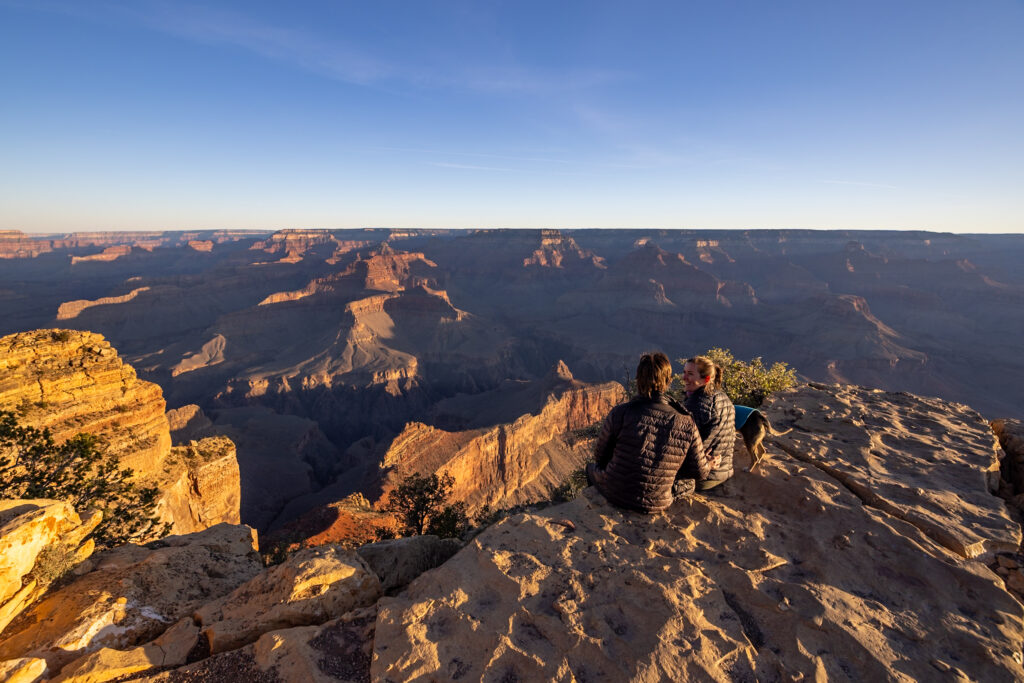
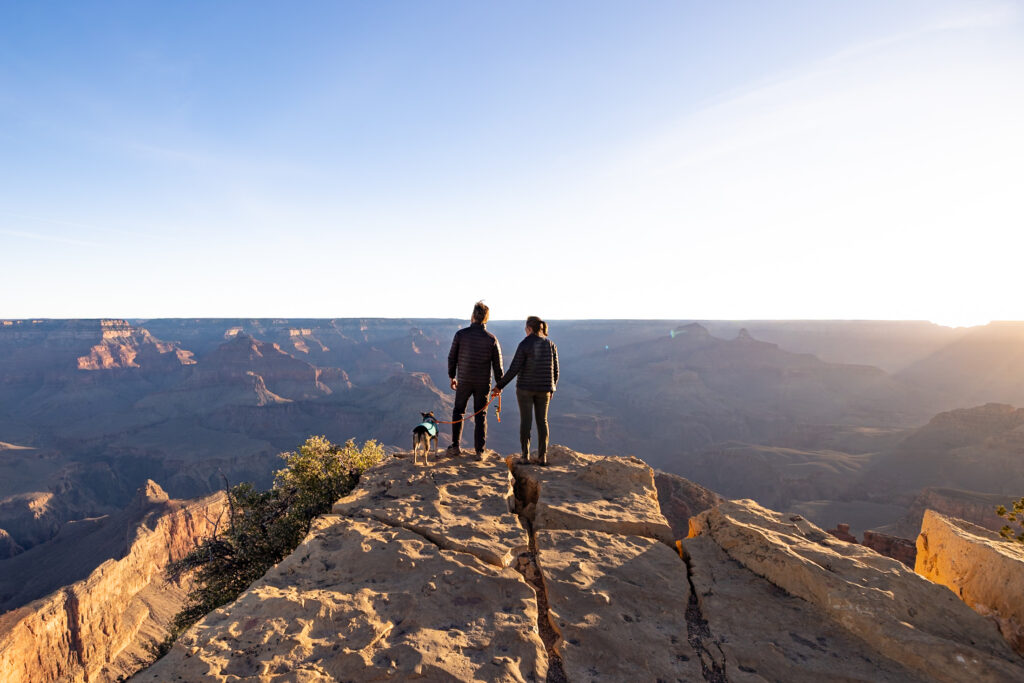
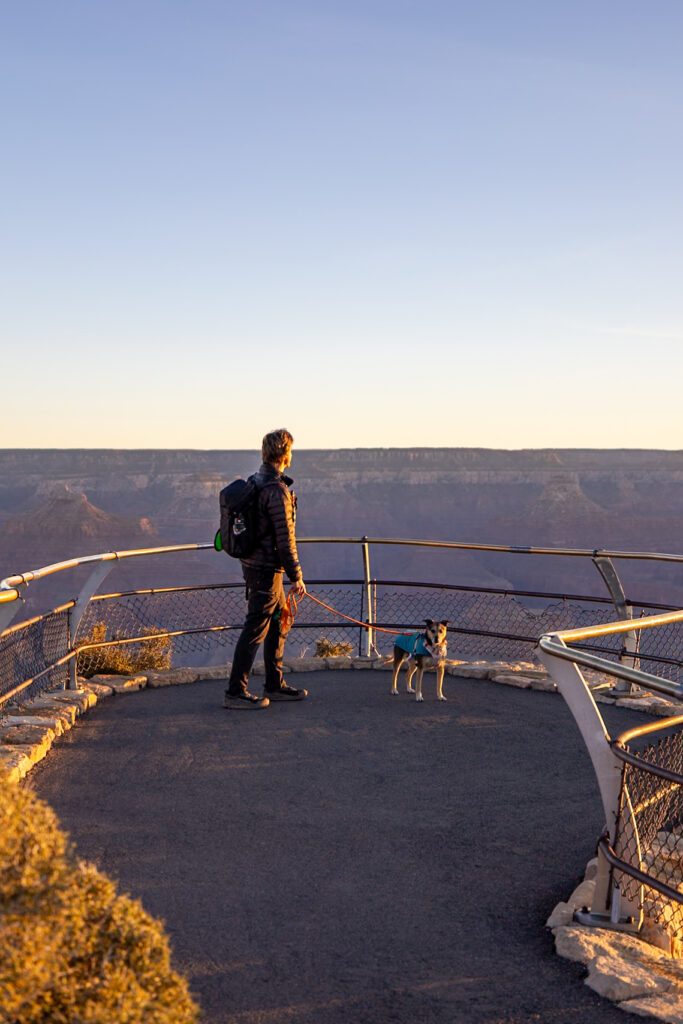
You can hike the Rim Trail as long as you like, and, as it stays on the rim, there aren’t any major elevation changes! We also loved this trail because it was dog-friendly, and the fact that it goes for 12 miles (20 km) is actually pretty impressive for dog-friendly trails in US National Parks.
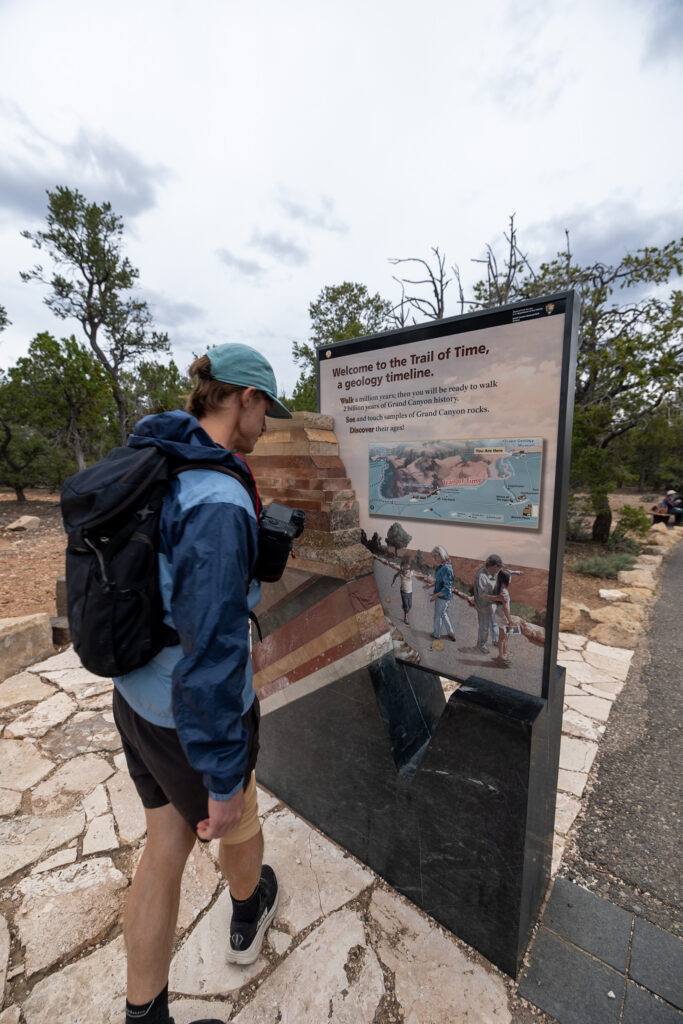
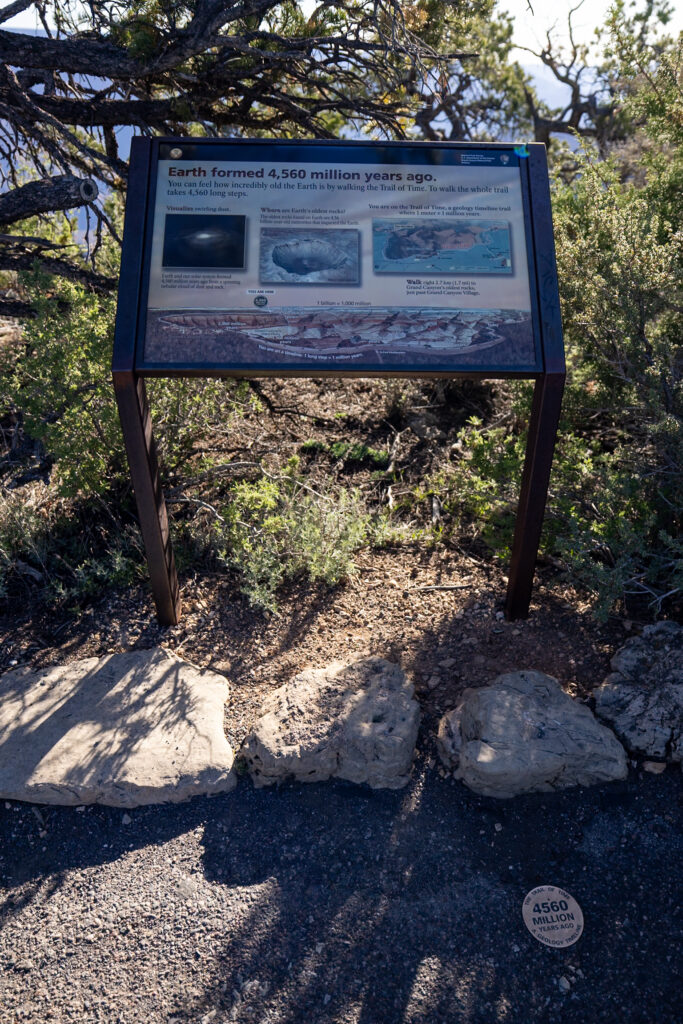
We hiked this trail several times, tackling different portions at different times of day and with varying levels of crowds. The section of trail around the Grand Canyon Visitor Center was by far the most crowded section of the trail because it’s located right next to the most convenient parking lot. We particularly enjoyed the Trail of Time section, located near the Grand Canyon Visitor Center. This section was super informative, taking you along a geological timeline where every meter you walked equaled 1 million years.
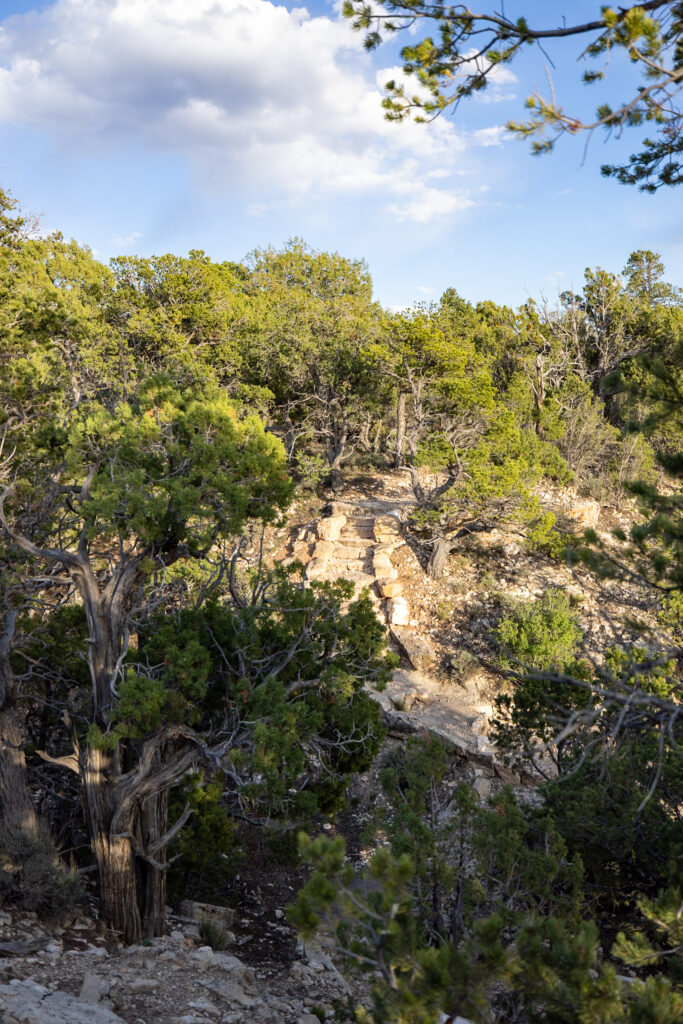
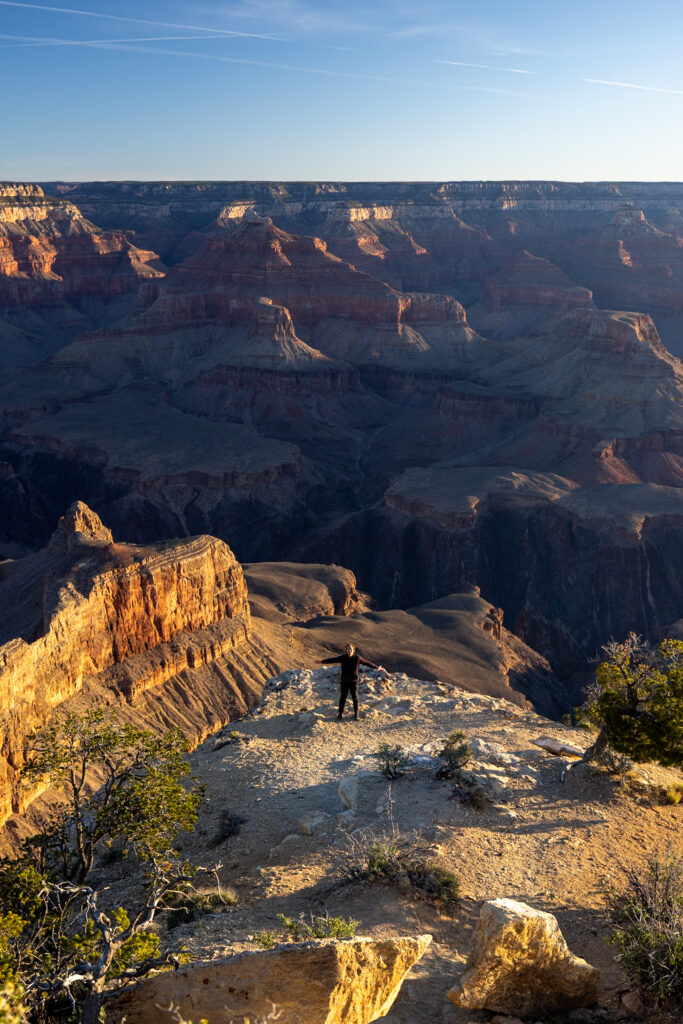
We most enjoyed the western part of this trail, along the Red Shuttle route, since we hiked this area 3 times over the course of two weeks. It wasn’t as crowded as the Grand Canyon Visitor Center section and offered some of the best views of the canyon from the south rim. If we were to focus our time on one section of this trail, we’d prioritize the Maricopa Point, Powell Point, and Hopi Point, three iconic viewpoints located right next to one another on the west rim.
2. Bright Angel Trail
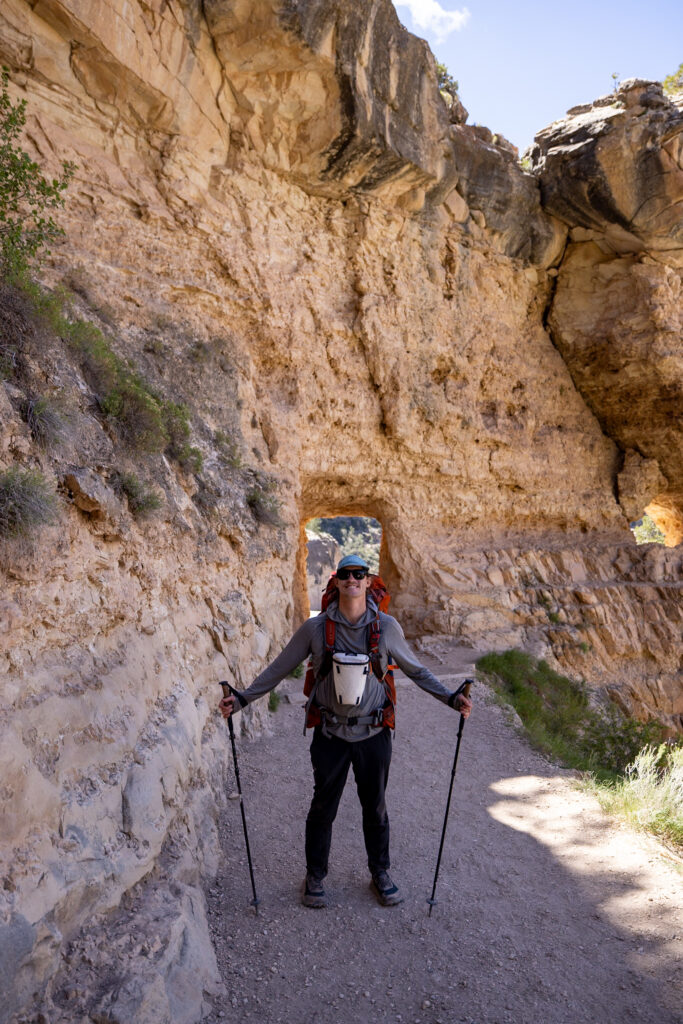
The Bright Angel Trail is the most heavily used trail at the Grand Canyon. Although you can hike it all the way to the Colorado River, many visitors choose to hike shorter sections of it for an enjoyable day hike. Many visitors, us included, appreciate the easy access to water, bathrooms, and shade along parts of the trail that are not found on all trails in the Grand Canyon.
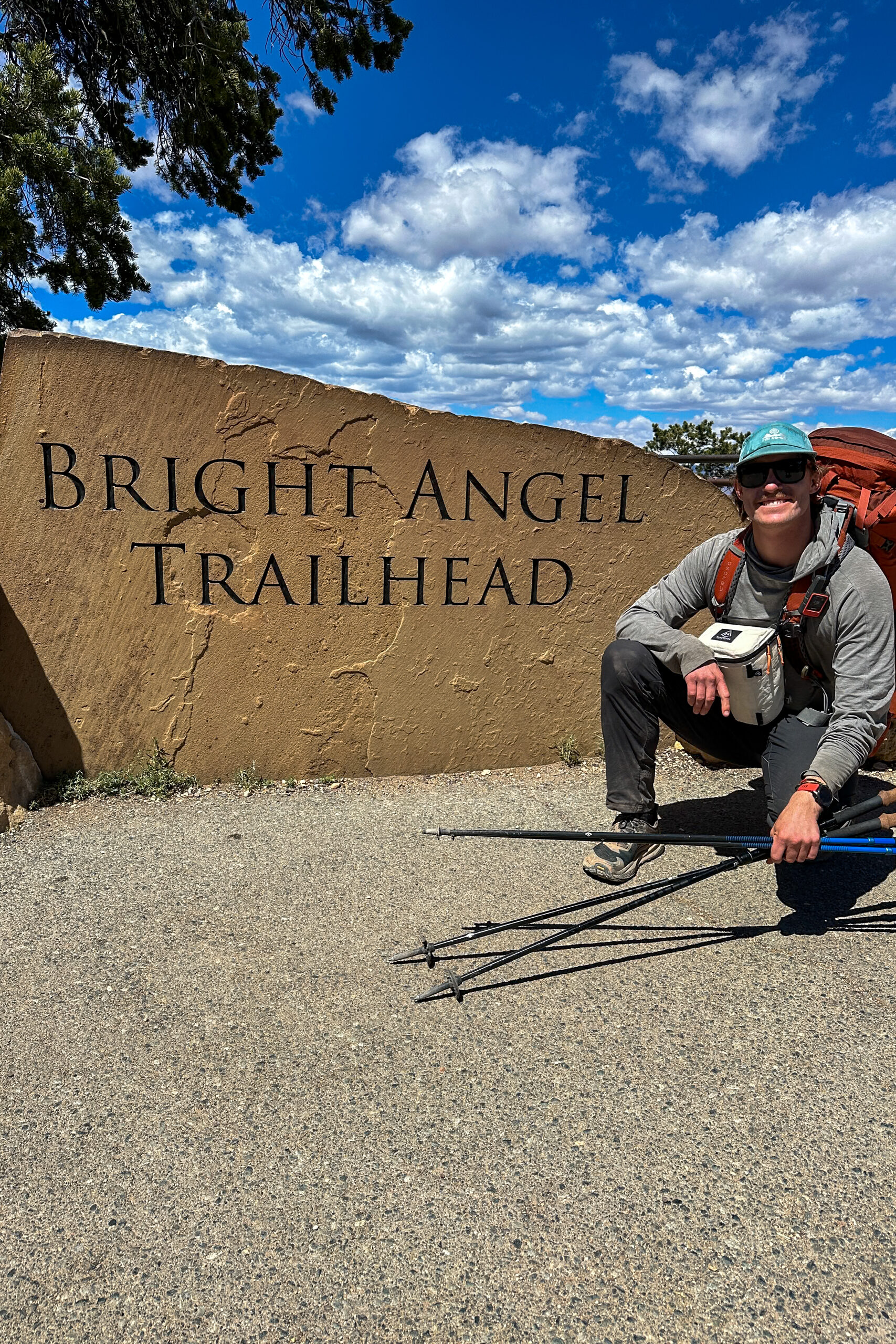
With the trailhead located in Grand Canyon Village, you can access it super easily by car or via the blue shuttle. There is some parking near the trailhead, but not a ton. If you can’t find parking near the trailhead, park in Lot D, a large lot by Maswik Lodge and the Backcountry Information Center. You can either take the shuttle or walk the 0.4 miles from the parking lot to the trailhead.
Bright Angel Trail to 1.5 Mile Resthouse
Difficulty: Hard
Distance: 3.5 miles (5.6 km)
Time: 2-2.5 hours
Elevation Gain: 1,151 feet (350 m)
The first option is the 1.5 Mile Resthouse via Bright Angel Trail, which only takes you 1.5 miles (2.8 km) down to a resthouse with water stations, bathrooms, and a shady covering that fits about 8 people, before turning back. Although short in distance, don’t be fooled; this trail is still labeled as hard due to its 1,151 feet (351 meters) of elevation gain! As the saying goes in the Grand Canyon, hiking down is optional, but hiking up is mandatory.
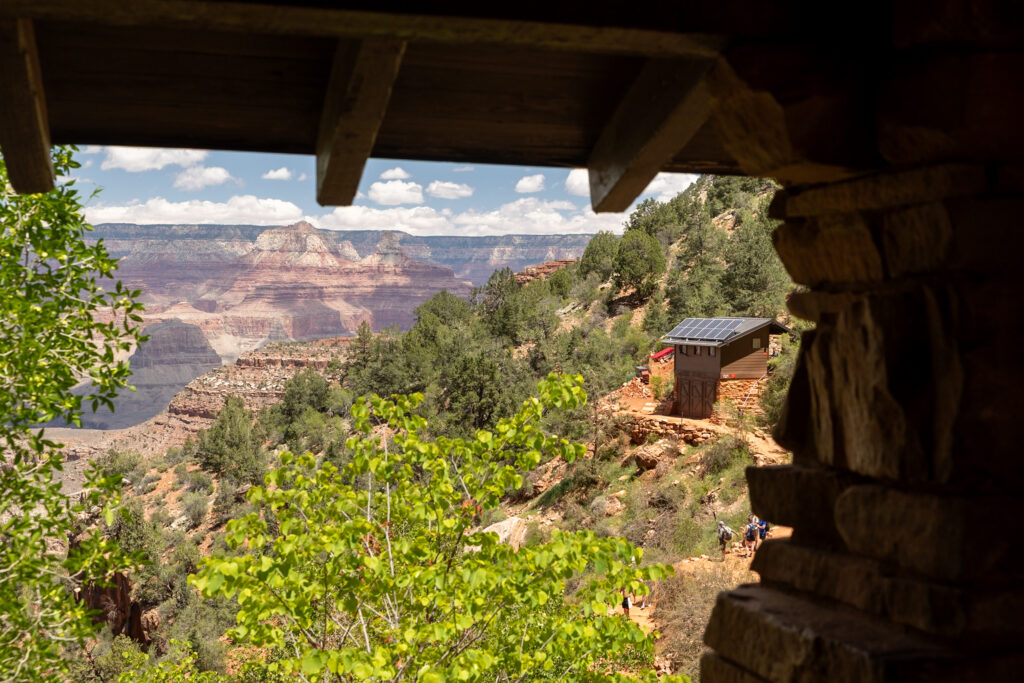
We loved hiking this trail twice; once when we combined it as part of our longest day hike and a second time on our backpacking trip. And although it can get crowded (thanks to its shade and water source), the greenery on this trail is super unique. The Havasupai people used this trail for centuries because of access to the reliable water source at Havasupai Gardens.
Bright Angel Trail to 3-Mile Resthouse
Difficulty: Hard
Distance: 6.5 miles (10.5 km)
Time: 4-6 hours
Elevation Gain: 2,106 feet (642 m)
For longer day hikes on the Bright Angel Trail, you have the 3-Mile Resthouse Trail (6.5 miles, 10.5 km) with 2,106 feet (642 m) of elevation change. Similar to the hike to 1.5-Mile Resthouse, this section of the Bright Angel Trail also has access to water, a resthouse with shade and an emergency phone, as well as pit toilets. As expected, this section of the trail had fewer crowds than the 1.5-Mile Resthouse since fewer and fewer people travel lower into the canyon.
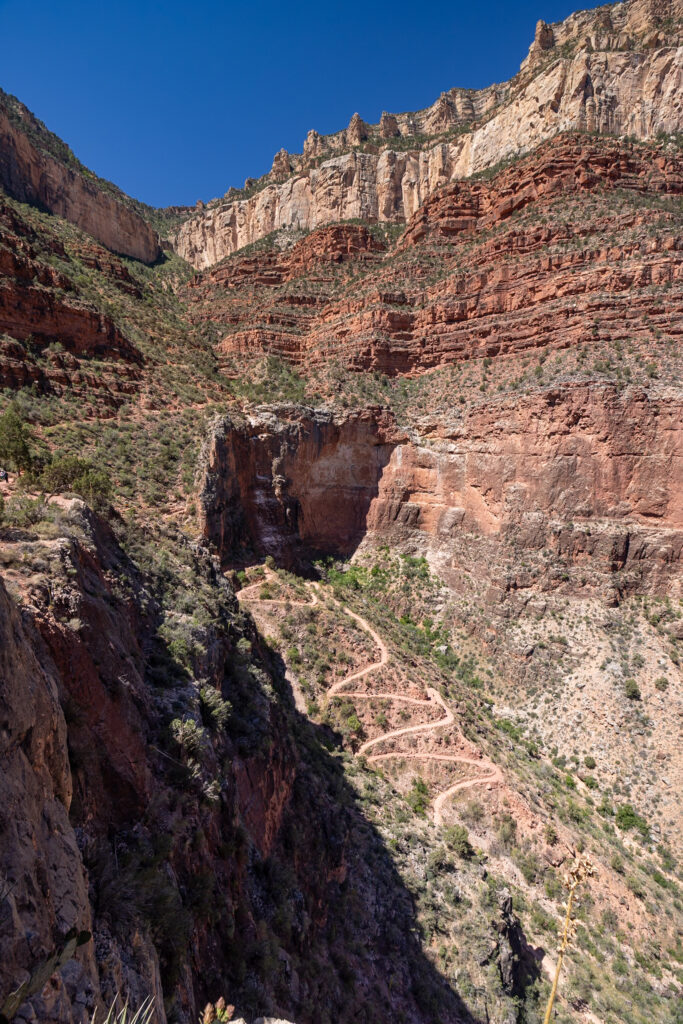
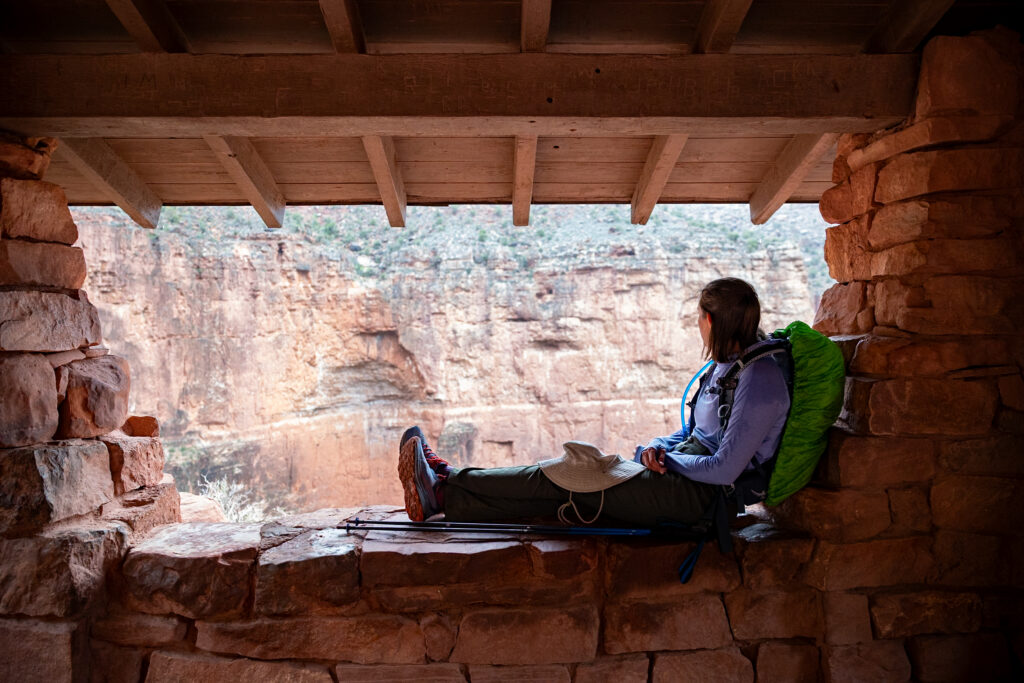
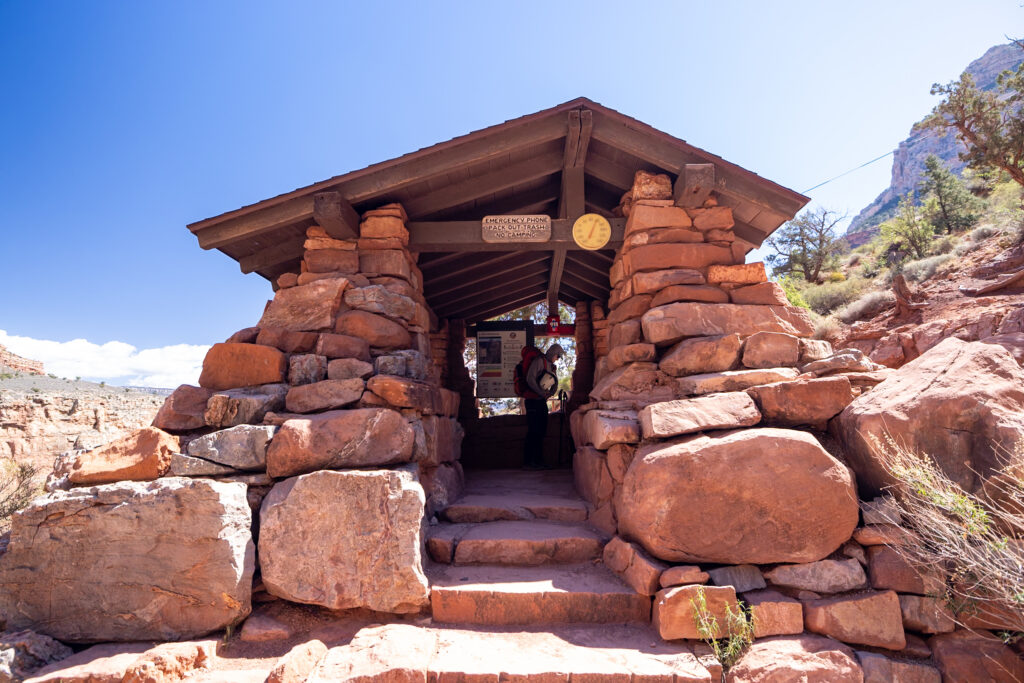
This turnaround point offered great views of the canyon and multiple spots to enjoy them while eating salty snacks. Just past the 3-Mile Resthouse, there are some great lookout points, so we definitely recommend walking around to find a good spot. In our opinion, there are no “bad” views in the Grand Canyon.
Bright Angel to Havasupai Gardens
Difficulty: Hard
Distance: 9.2 miles (14.8 km)
Time: 7-9 hours
Elevation Gain: 3,034 feet (925 m)
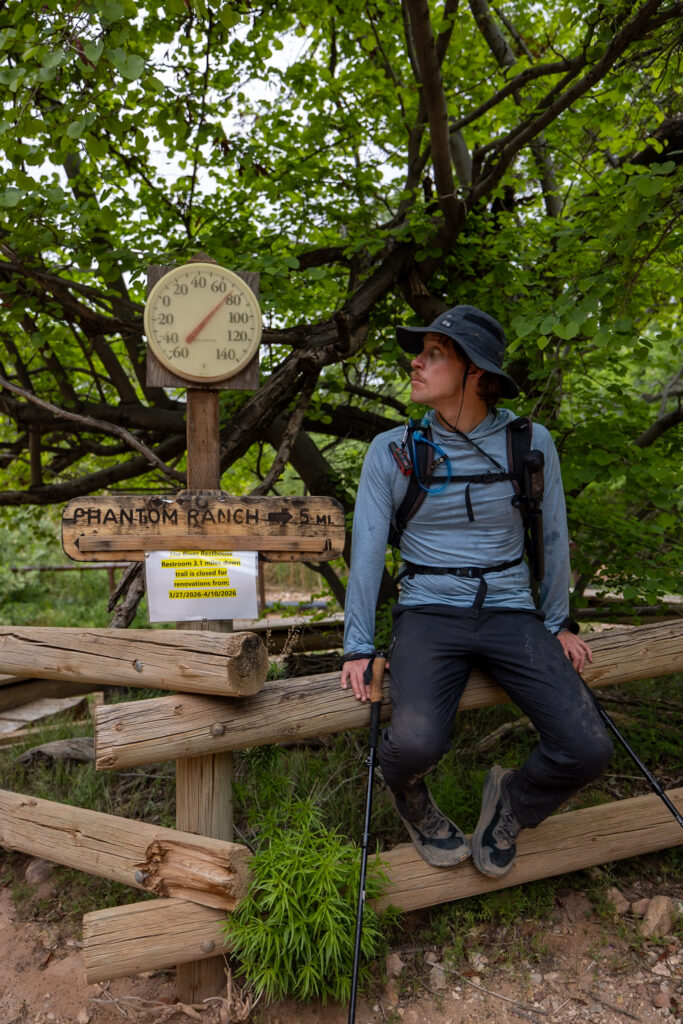
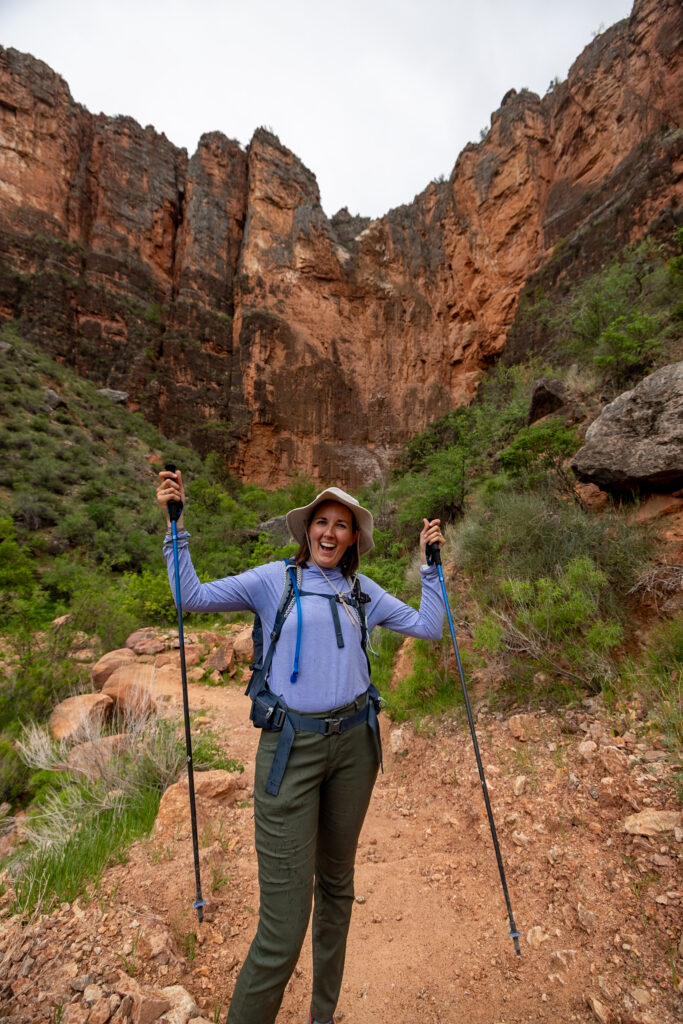
The next destination and turnaround point along the Bright Angel Trail is the Havasupai Gardens Trail, which is 9.2 miles (14.8 km) with 3,034 feet of elevation gain. This is a great option if you want to stop halfway for lunch in a shady spot with picnic tables, running water, bathrooms, and lots of trees. This was our favorite turnaround spot for all the trees, and we could hear the nearby stream. It’s like a little piece of heaven in the desert!
Bright Angel to Plateau Point – Currently CLOSED
Difficulty: Hard
Distance: 12.3 miles (19.8 km)
Time: 9-10 hours
Elevation Gain: 3,257 feet (992 m)
The Plateau Point Trail is 12.3 miles (19.8 km) with 3,257 feet of elevation gain and has a great overlook of the Colorado River. This trail is currently closed due to construction for the waterline project. The NPS does NOT recommend day hikes beyond Havasupai Gardens due to extreme elevation changes, temperature extremes, and long distances. It’s crucial that you’re well prepared, both physically and with the right gear, water, and food, to tackle longer hikes in the Grand Canyon.
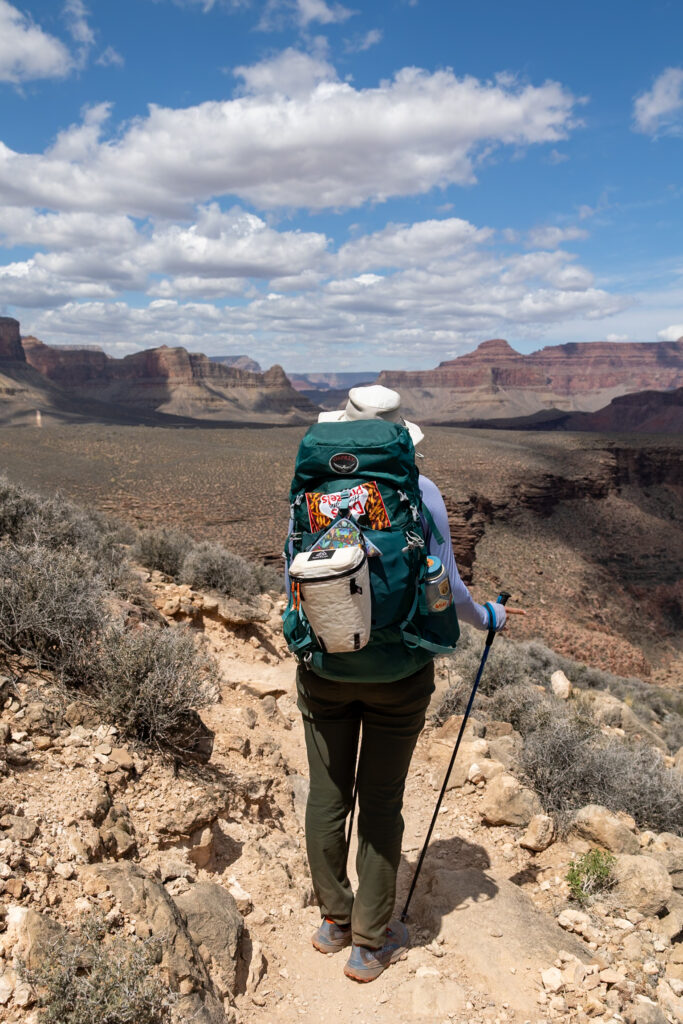
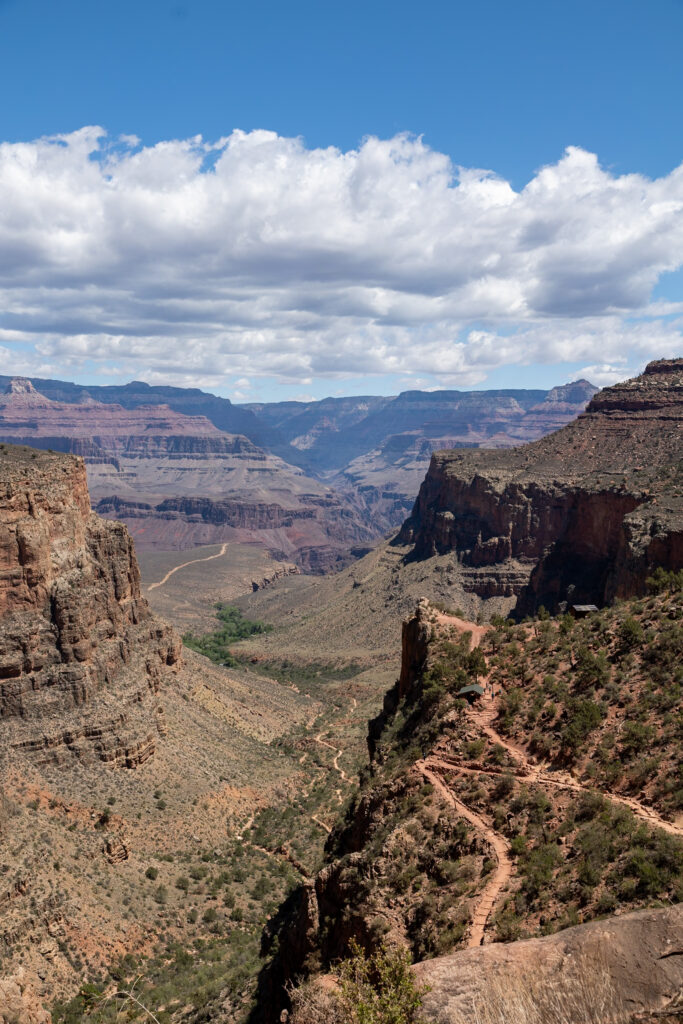
⚠️ Trail Closures ⚠️ The Bright Angel Trail from Havasupai Gardens to Plateau Point is closed due to construction for the water pipeline project.
Bright Angel to Colorado River
Difficulty: Hard
Distance: 19 miles (30.5 km)
Time: 10+ hours
Elevation Gain: 4,460 feet (1,360 m)
The last hike on the Bright Angel Trail ends at the Colorado River, a 19-mile (30.5 km) round trip with 4,460 feet of elevation gain. Although you can hike all the way down to the Colorado River, it’s not recommended by park rangers as a day hike because of its distance, high temperatures, and extreme elevation change. At the bottom of this trail are bathrooms and, obviously, the beautiful Colorado River!
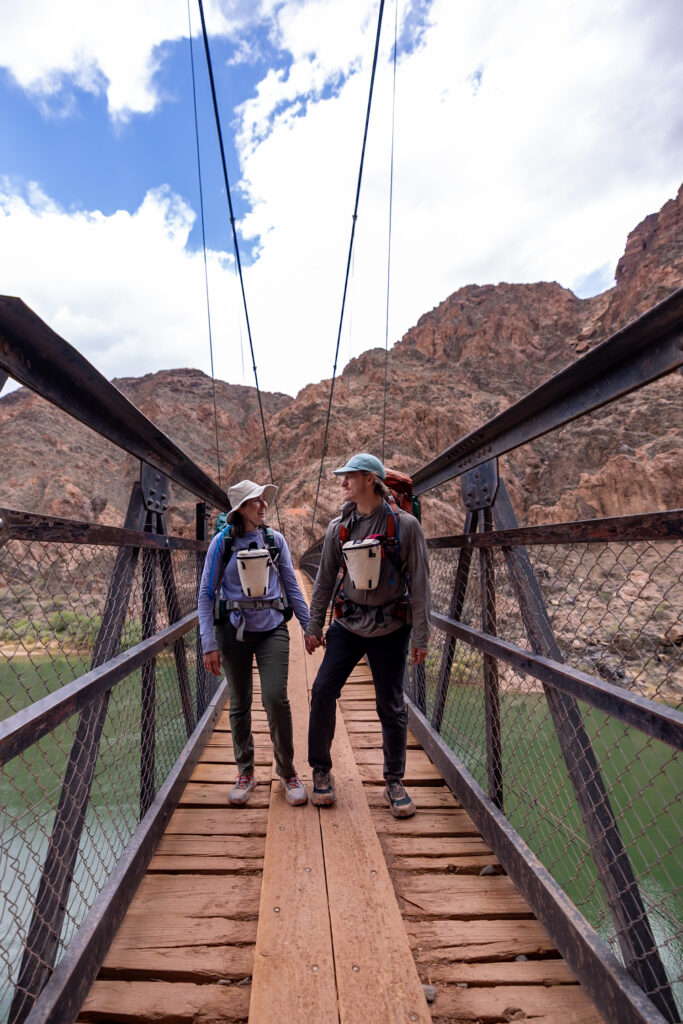
The Silver Bridge, which connects the south rim to the north rim over the river, is currently closed due to the construction of the water filtration project. The River Trail, which connects the Bright Angel Trail to the South Kaibab Trail with views of the Colorado River, is also currently closed. So the only way to get to Phantom Ranch is by taking the Bright Angel Trail to the Tonto Trail to the South Kaibab Trail and over the Black Bridge.
⚠️ Trail Closures ⚠️ The Silver Bridge, which connects the south rim to the north rim over the river, is currently closed due to the construction of the water filtration project. The River Trail, which connects the Bright Angel Trail to the South Kaibab Trail with views of the Colorado River, is also currently closed. So the only way to get to Phantom Ranch is by taking the Bright Angel Trail to the Tonto Trail to the South Kaibab Trail and over the Black Bridge.
3. South Kaibab Trail
The South Kaibab Trail is one of the Grand Canyon’s most iconic, gorgeous hikes, and another *super* long trail that can be split up into smaller sections. We hiked portions of this trail 3 separate times and didn’t get tired of it! This trail is a lot more exposed compared to the Bright Angel Trail, does not have water sources along it, and juts out into the canyon more, providing hikers with a feeling of being immersed in the canyon.
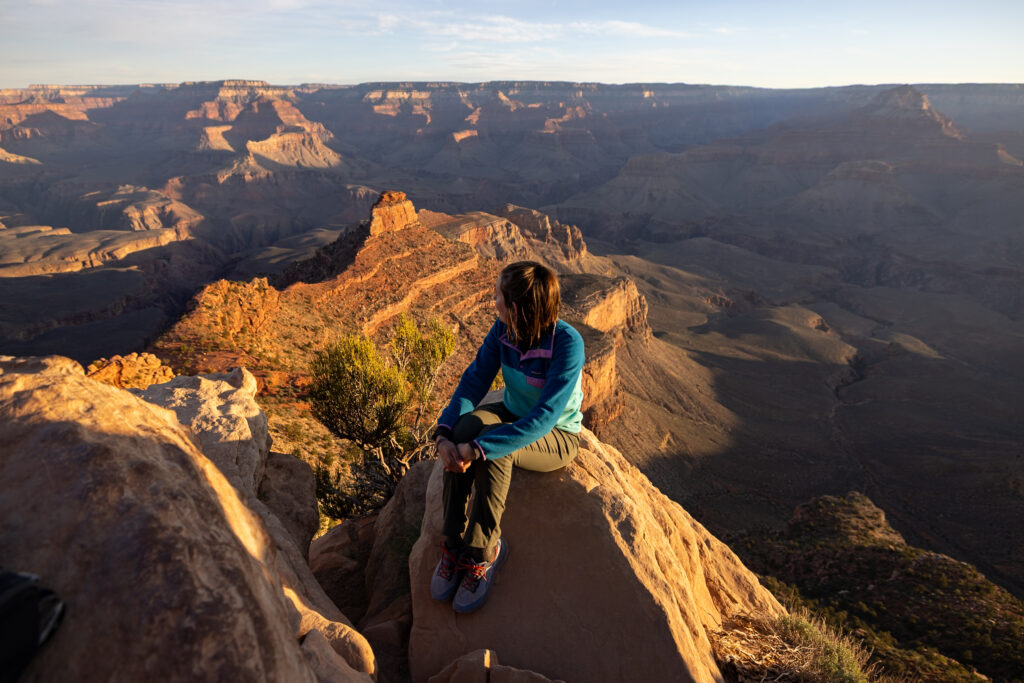
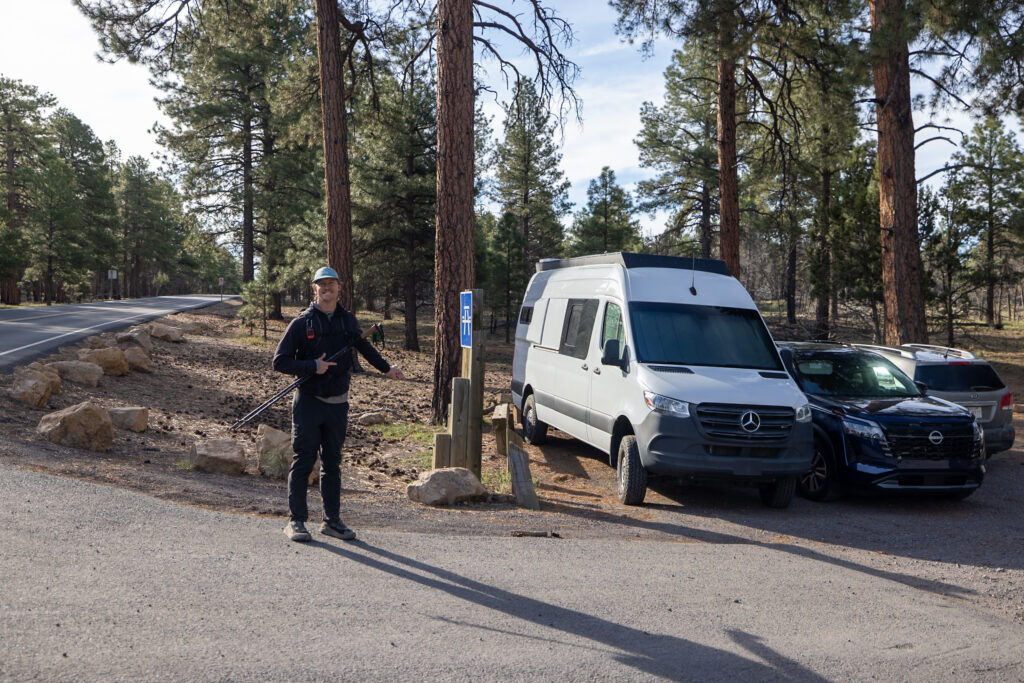
Although no private vehicles are allowed directly at the trailhead, there is a 10-spot parking lot about a half-mile away, across from the road turn-off. We parked here to see the sunrise at Ooh Ahh Point because even the early hiker express bus won’t get you here early enough. If you visit later in the day, you can just take a shuttle bus here.
☀️ No shade here! No matter how far you travel down this trail, sufficient water and salty snacks are essential, as this trail is very exposed to the sun. Make sure to fill up at the trailhead or elsewhere if those fountains aren’t working prior to starting your hike.
South Kaibab Trail to Ooh Aah Point
Difficulty: Moderate
Distance: 2 miles (3.2 km)
Time: 1-1.5 hours
Elevation Gain: 663 feet (202 m)
For day hikers, we recommend this shorter version to Ooh Aah Point, which also happens to be the best spot to watch the sunrise in the park! You’ll start this trail by descending steep switchbacks in a section called The Chimney, which winds through Kaibab limestone that’s more than 250 million years old! Once you reach Ooh Aah Point, enjoy the views and rest before making your way back up.
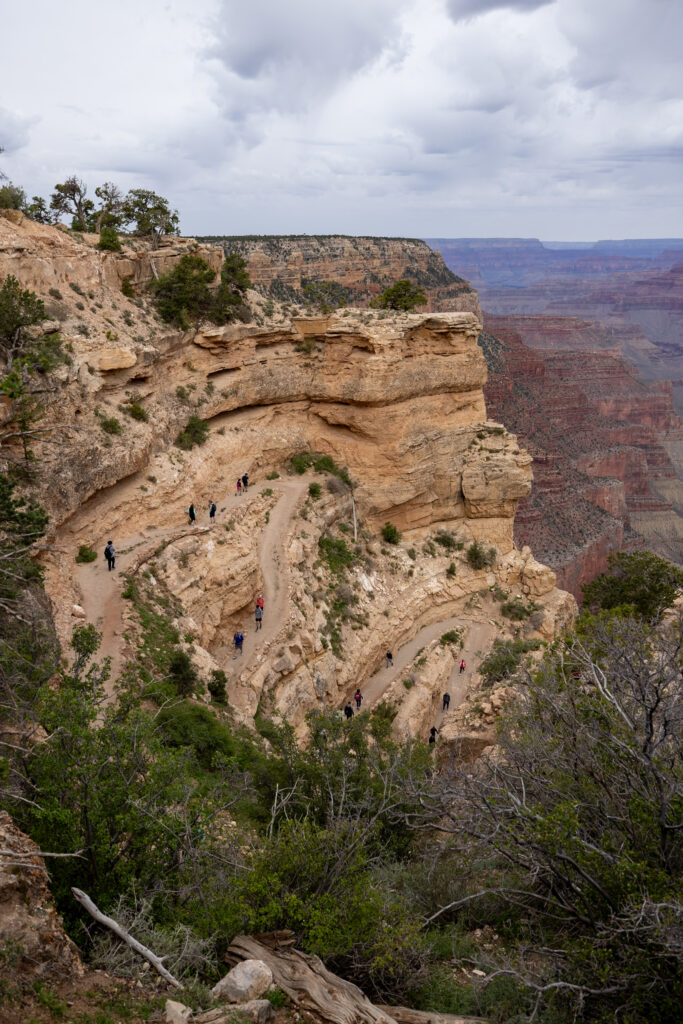
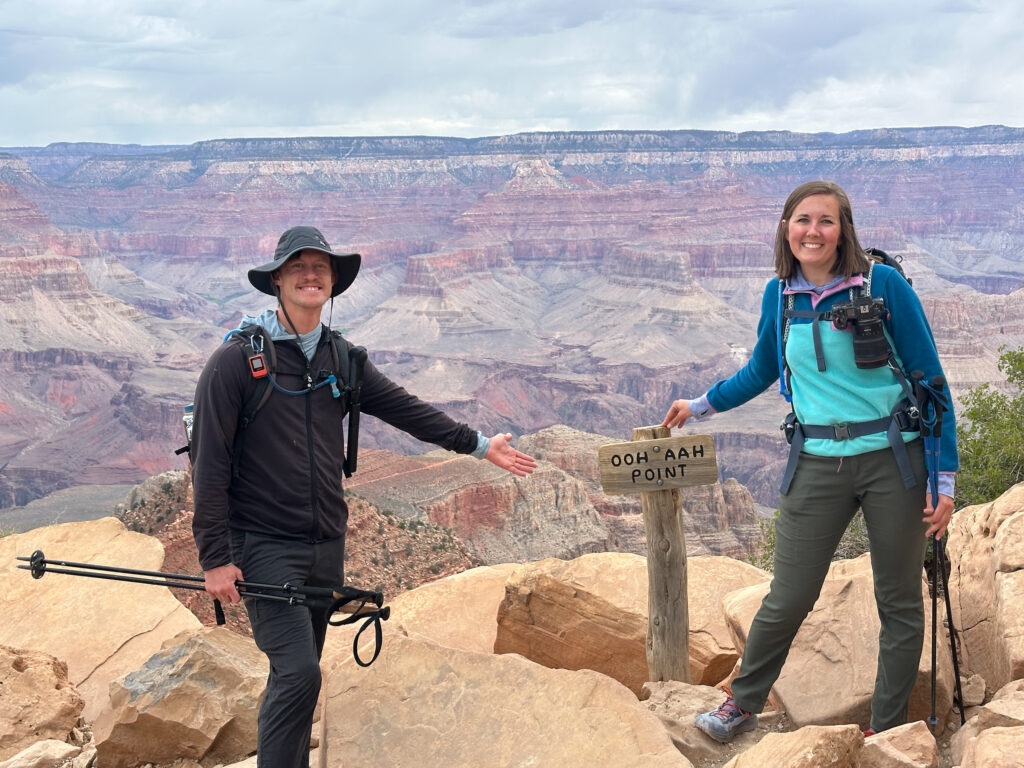
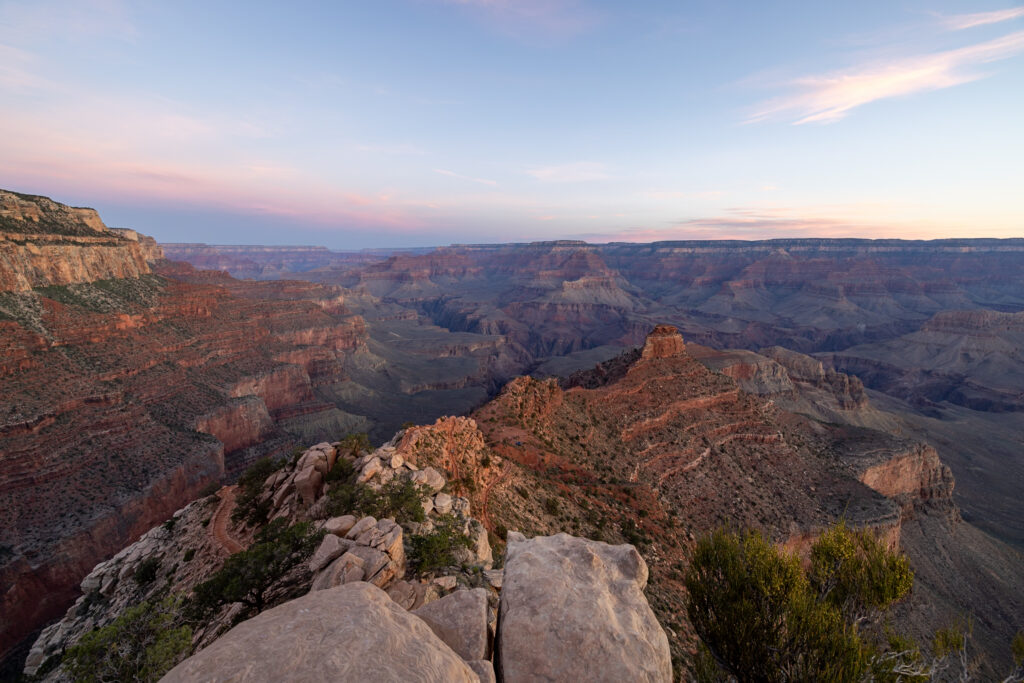
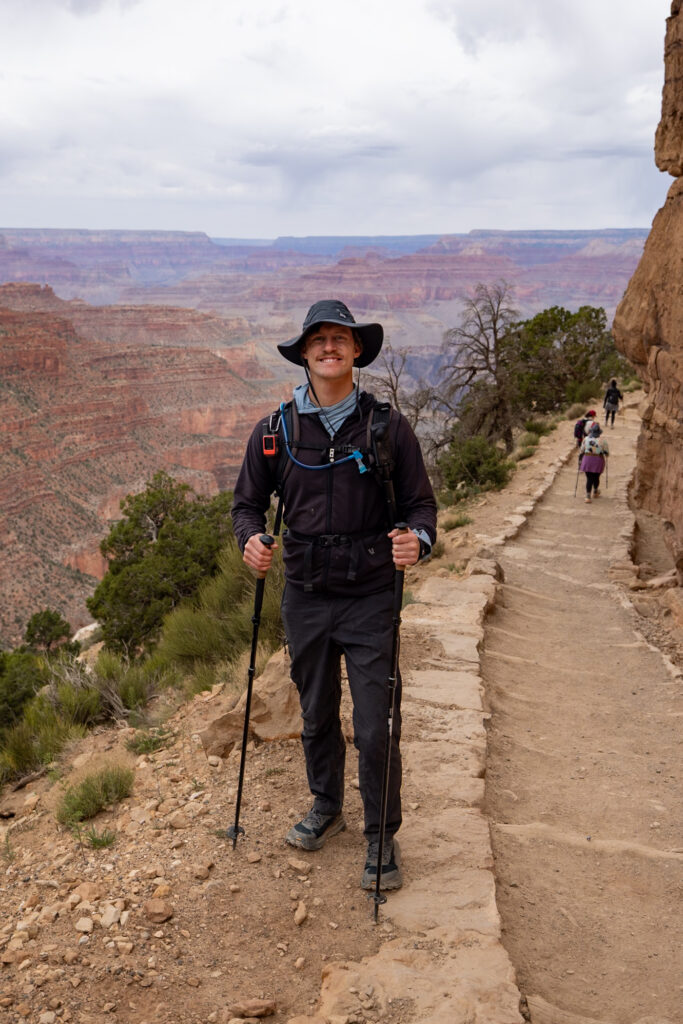
This section of trail was one of our favorite trails in the Grand Canyon on the South Rim for its ease, incredible views, and the feeling of being immersed in the canyon. If you only have time for one trail in the Grand Canyon, we would recommend this one!
South Kaibab Trail to Cedar Ridge
Difficulty: Hard
Distance: 3.4 miles (5.5 km)
Time: 2-2.5 hours
Elevation Gain: 1,181 feet (360 m)
If you want to go past Ooh Aah Point, Cedar Ridge is a popular turnaround at 3.4 miles (5.5 km) round trip with 1,181 feet elevation change, taking 2-3 hours. This ridge offers some of the best 360-degree views in the park! This spot also offers pit toilets (though they smelled pretty bad when we visited) and a large area for snacking and enjoying the views.
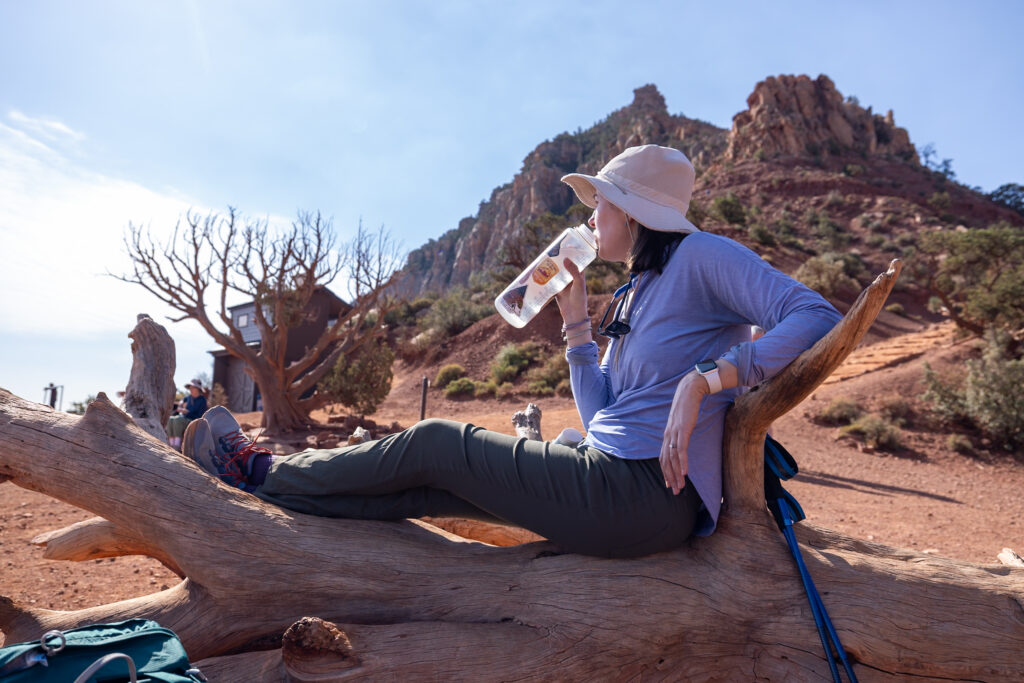
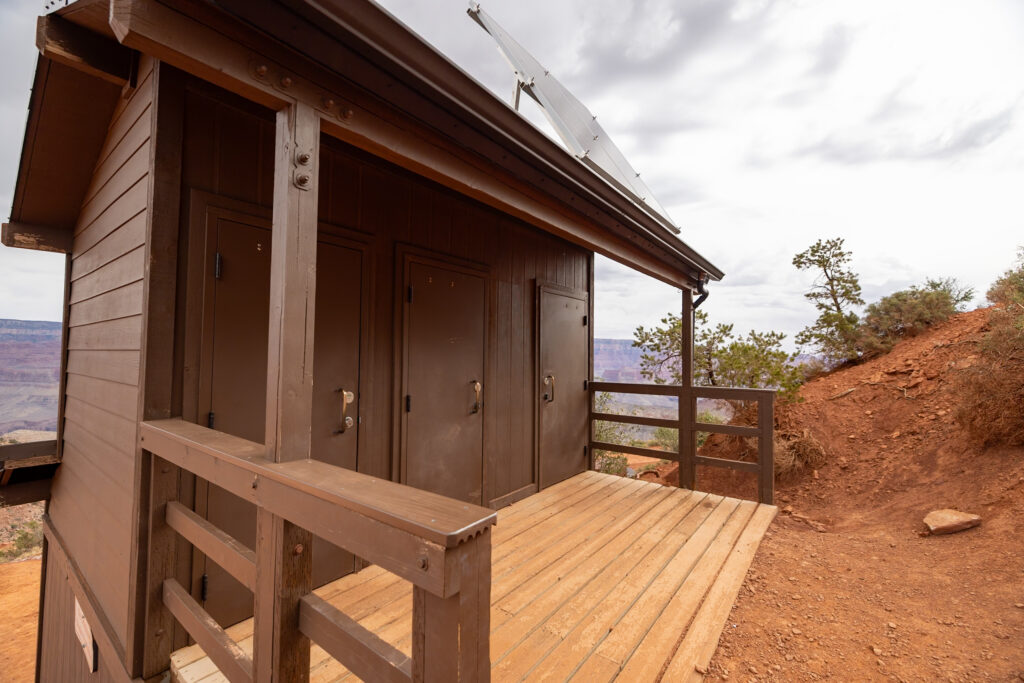
Cedar Ridge has a pretty large area to walk around and explore. It’s completely exposed to the sun, so being prepared with plenty of water, the right clothes, and ample sun protection is key. There were several great viewing areas to take in the Grand Canyon’s incredible views.
South Kaibab Trail to Skeleton Point
Difficulty: Hard
Distance: 6.1 miles (9.8 km)
Time: 4-6 hours
Elevation Gain: 2,027 feet (618 m)
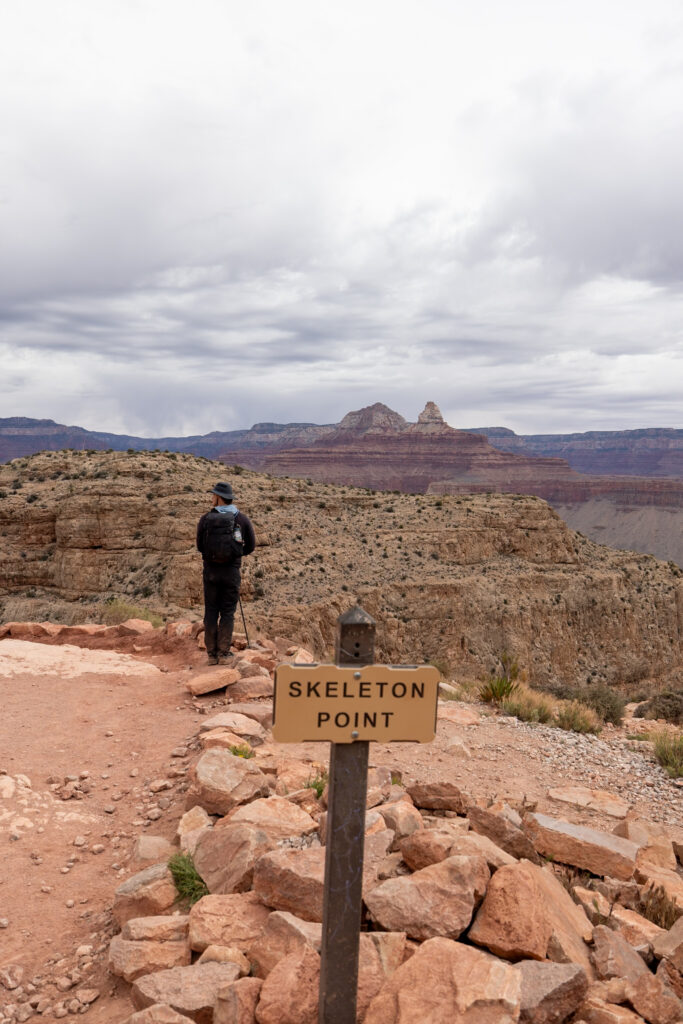
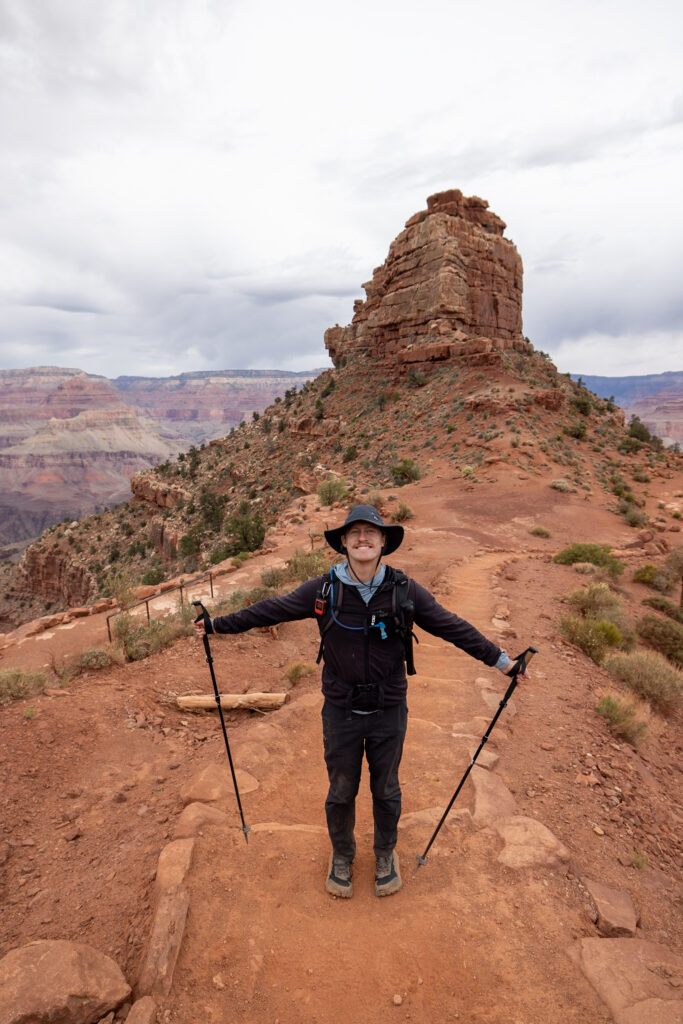
After Cedar Ridge, you can hike 6.1 miles (9.8 km) round trip to Skeleton Point, which has a 2,027-foot elevation change. This area had sweeping views of the canyon, and like most trails in the Grand Canyon, the further you go down into the canyon, the fewer people you’ll see. We thought the views were spectacular from this point, but we don’t think there are any ‘bad’ views in the Grand Canyon.
South Kaibab Trail to Tip Off
Difficulty: Hard
Distance: 9.3 miles (15 km)
Time: 7-9 hours
Elevation Gain: 3,261 feet (994 m)
Hiking down to the Tip Off is a 9.3-mile (15 km) round-trip hike with a 3,261-foot elevation change, offering sweeping views of the Grand Canyon. The Tip Off also has pit toilets and a great shaded structure for some reprieve from the sun or bad weather. We enjoyed this spot in particular because of the resthouse, which let cool breezes in while still giving us shade. This stop also connects to the Tonto Trail, which runs horizontally through the canyon, linking many trails.
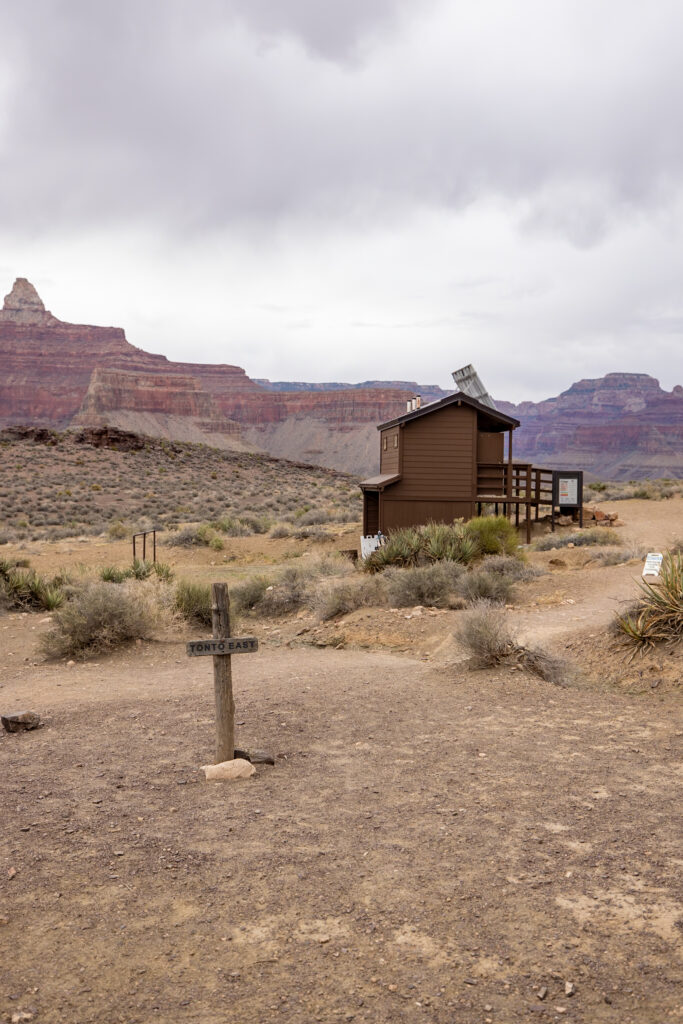
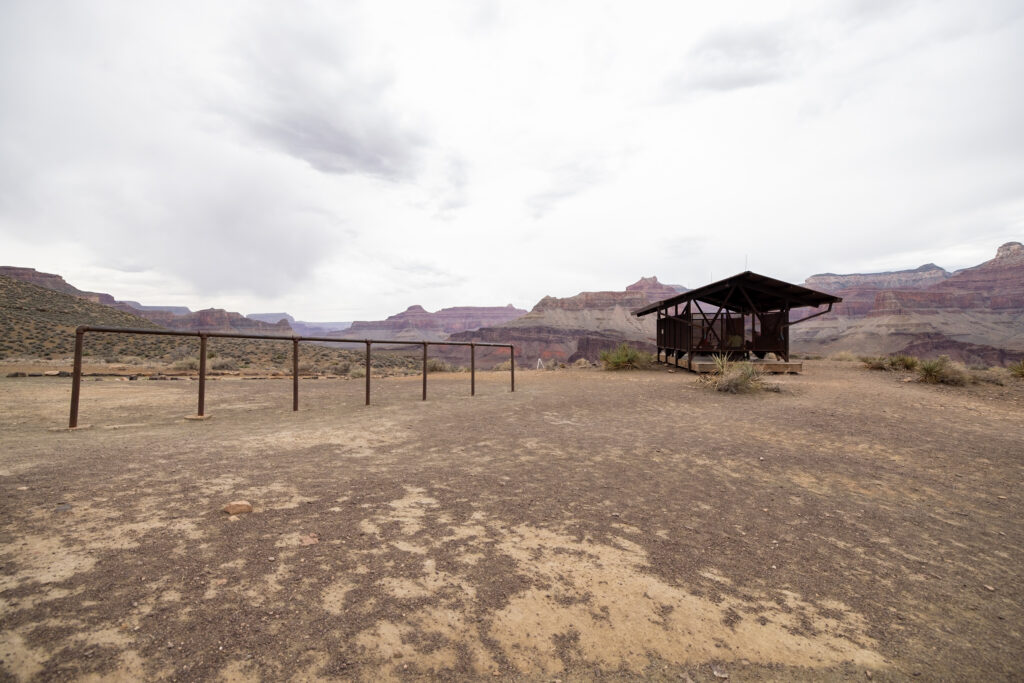
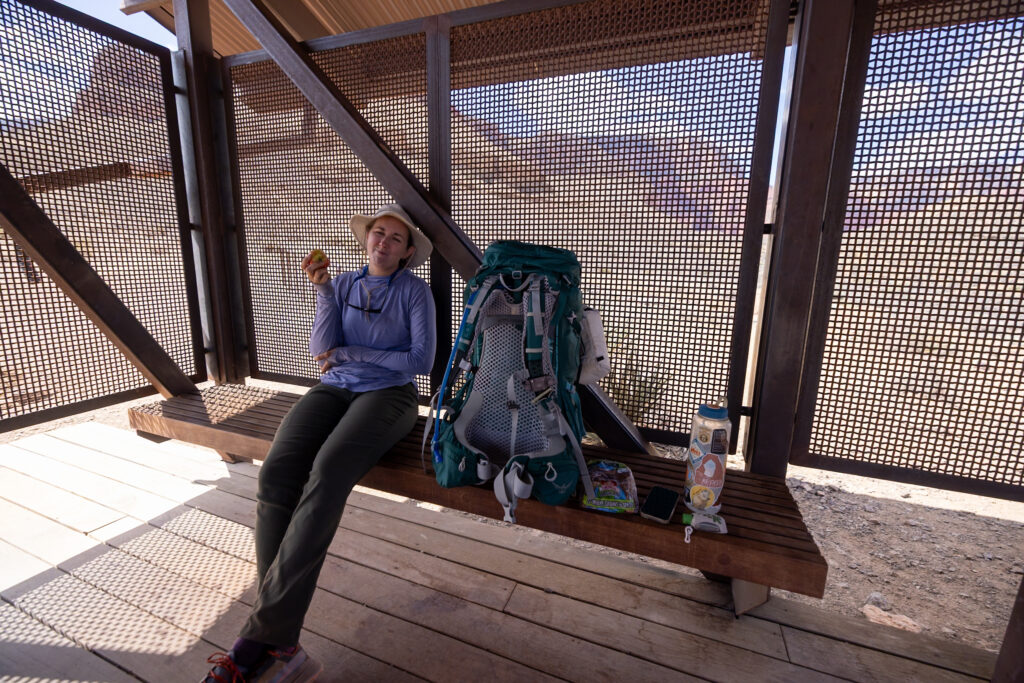
We recommend checking with a park ranger before going so far down, as anything beyond Skeleton Point isn’t recommended as a day hike by the NPS. It’s vitally important to be prepared both physically and with the proper gear, food, and water. During our hike going from South Kaibab to Bright Angel on the Tonto Trail, we were met with a Grand Canyon volunteer just beyond Skeleton Point who asked us questions to ensure we were prepared for our planned hike.
South Kaibab Trail to Phantom Ranch
Difficulty: Hard
Distance: 14.8 miles (23.8 km)
Time: 10+ hours
Elevation Gain: 4,924 feet (1500 m)
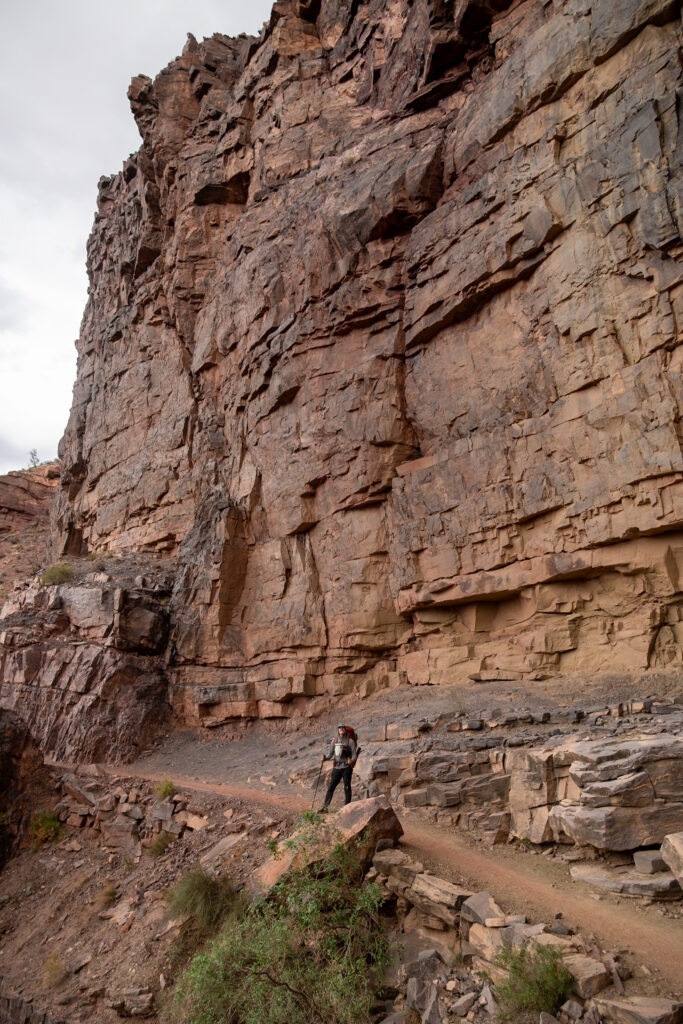
If you choose to hike 14.8 miles (23.8 km) round trip down to Phantom Ranch, you’ll be looking at a 4,924-foot elevation change, which is an incredibly tough hike! This hike is known as Rim to River and is not recommended by park rangers as a day hike. We did this in one day on our backpacking trip, as we did not plan to hike up on the same day.
4. Shoshone Point Trail
Difficulty: Easy
Distance: 2.1 miles (3.4 km)
Time: 30 minutes-1 hour
Elevation Gain: 154 feet (47 m)
Near the South Kaibab Trailhead, you can also hike to Shoshone Point in just under an hour and with little elevation change! Although we didn’t get around to this trail, we wanted to mention it as it leads you to a 270-degree viewpoint showcasing some of the most staggering formations at the Grand Canyon! Since this trail isn’t near Grand Canyon Village or Grand Canyon Visitor Center, it’ll be a much quieter hike and a great spot to watch the sunrise!
You could also hike to Shoshone Point from the South Kaibab Trail, which is slightly longer at 5.2 miles (8.4 km) and takes closer to 2 hours. If you do this, you might as well take the fork to Yaki Point. This trailhead is a bit hidden, so not many people know about this route! You can park your car here to access this trailhead.

With offline maps, wrong-turn alerts, and extra planning features, make the most of every outside adventure with AllTrails Plus. Get 7 days of AllTrails Plus for free!
5. Hermit Trail to Santa Maria Springs
Difficulty: Hard
Distance: 4.23 miles (6.8 km)
Time: 3-3.5 hours
Elevation Gain: 1,781 feet (543 m)
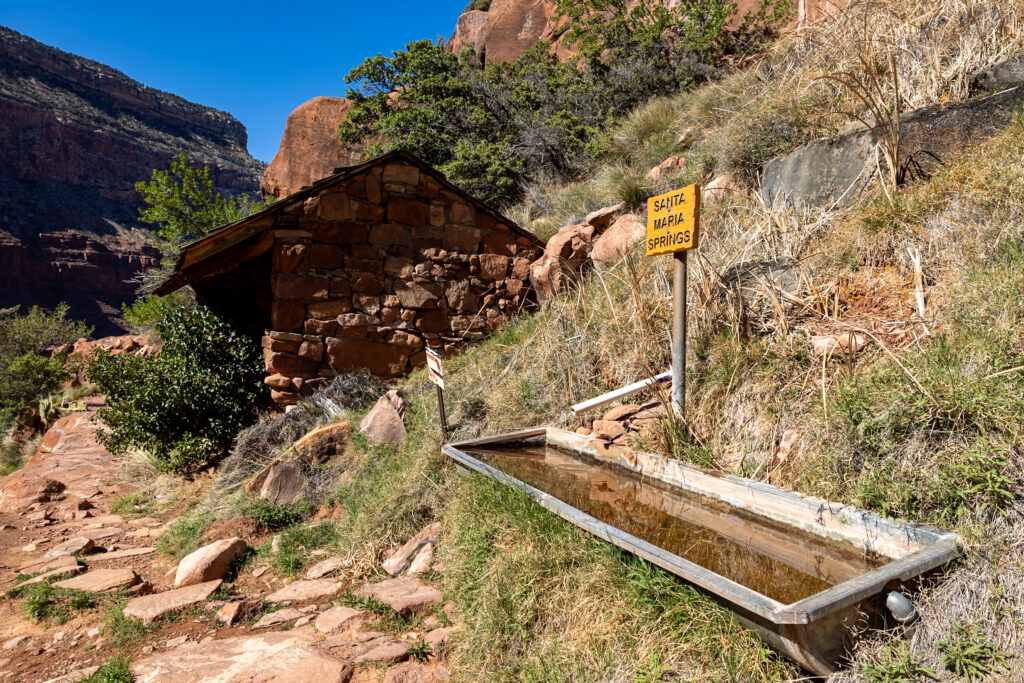
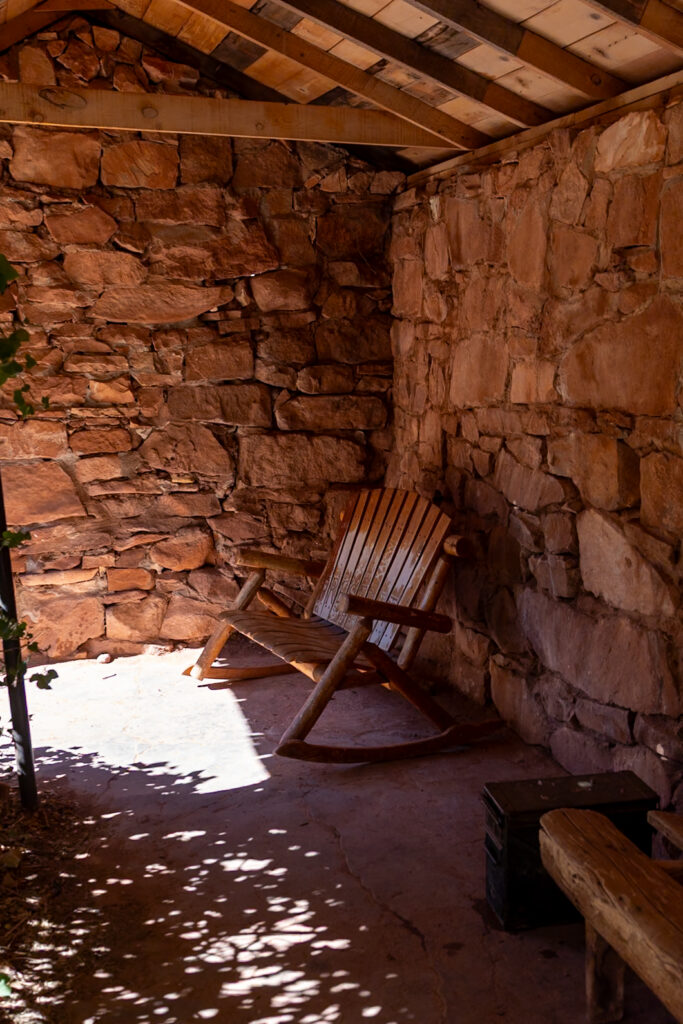
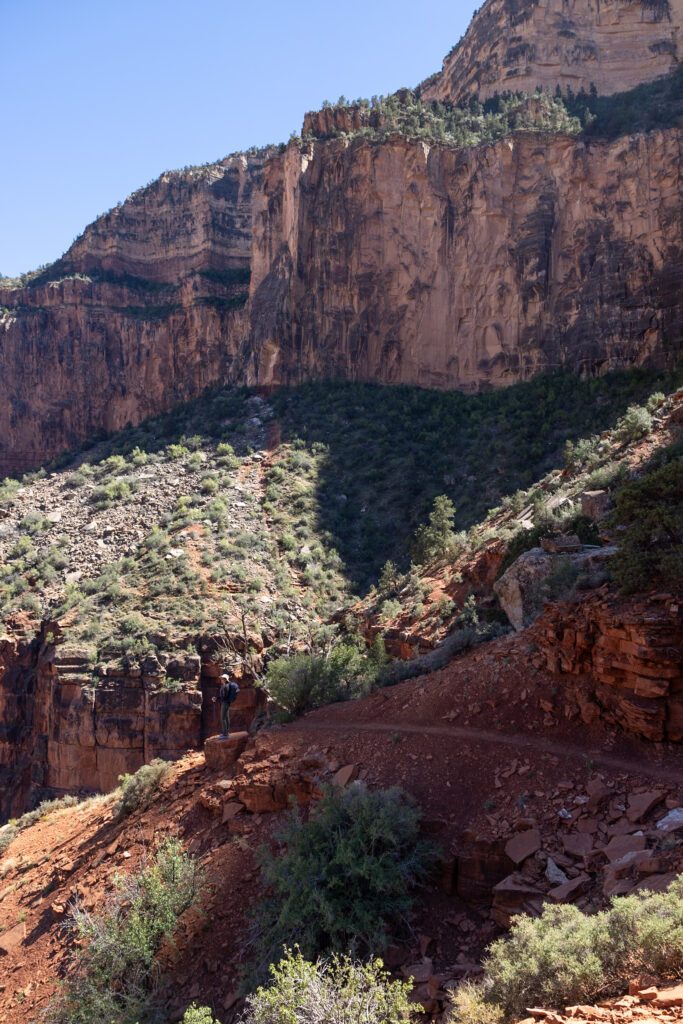
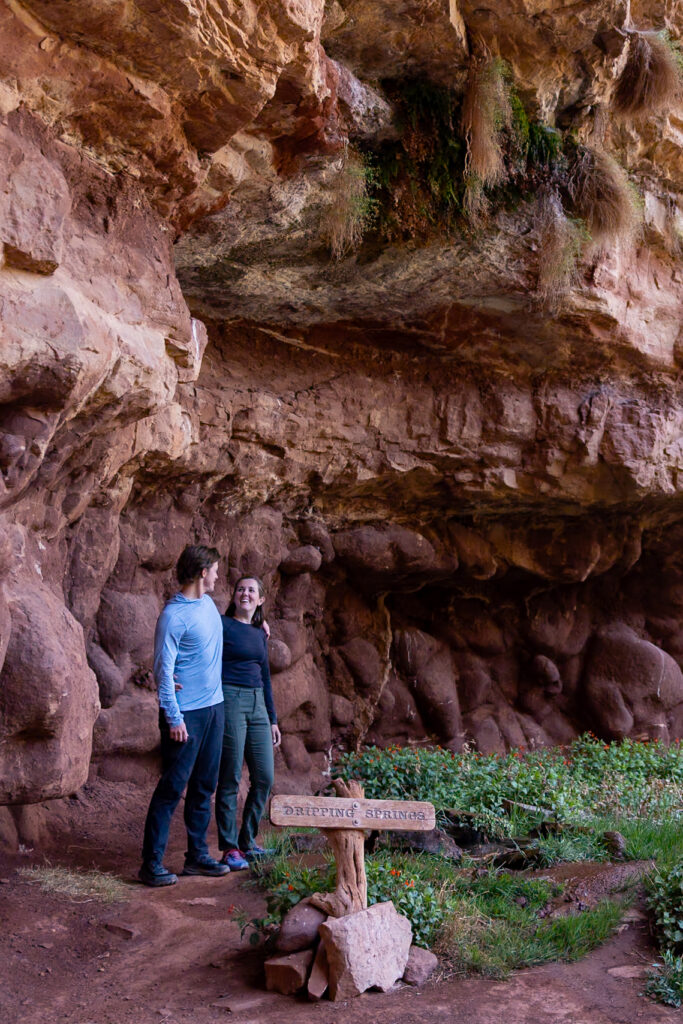
Santa Maria’s Spring via Hermit Trail follows Hermit Trail down until there’s a fork. To go to Santa Maria Spring, go to the right. If you want to go to Dripping Springs, take the left. Elliot went to this spot alone and found that the trail was great and had a nice shaded spot to sit with rocking chairs with an awesome view!
There was water at the springs that he was able to filter, although it’s always best practice to speak to a ranger before drinking from any natural water source. They will be able to tell you the current water conditions as well as which faucets are on.
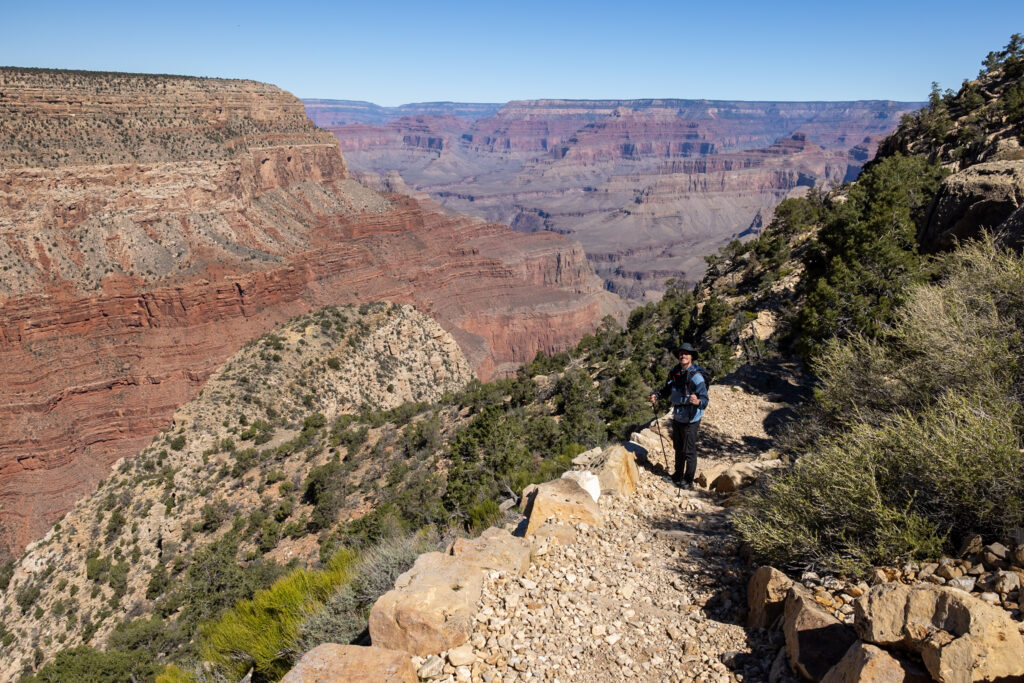
If you don’t take the fork to the right, you can continue down to Dripping Springs Trail via Hermit Trail, which is a bit longer at 6.3 miles in total (10.1 km). We both did this trail and enjoyed it, although it was more difficult than South Kaibab or Bright Angel, and the views aren’t as good in our opinion. There are also some parts with narrow ledges, so it’s definitely not for the faint of heart or for those who have vertigo.
This trail was much more in one of the side canyons, so if you’re looking for sweeping views of the Grand Canyon along the river corridor, this might not be the trail for you.
6. Grandview Trail to Coconino Saddle
Difficulty: Hard
Distance: 2.2 miles (3.5 km)
Time: 2-3 hours
Elevation Gain: 1,000 feet (305 m)
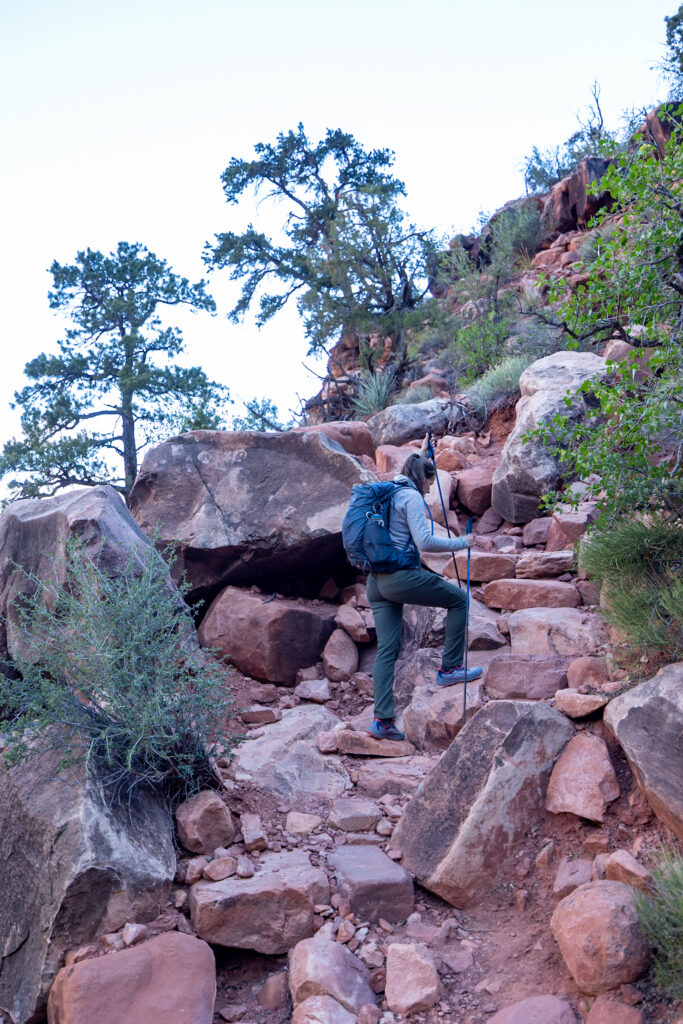
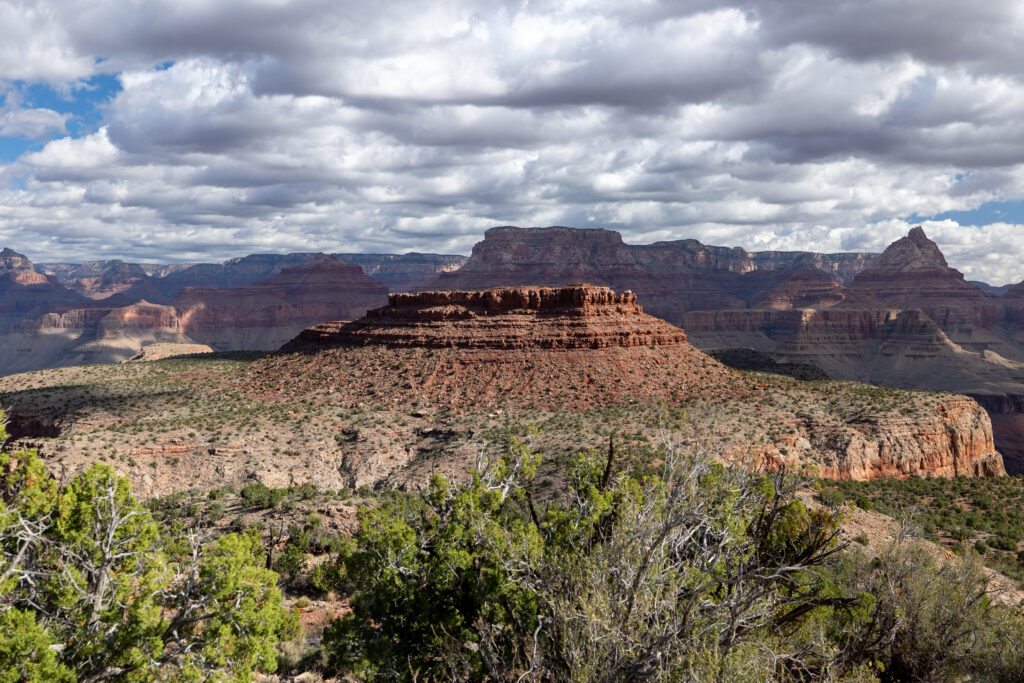
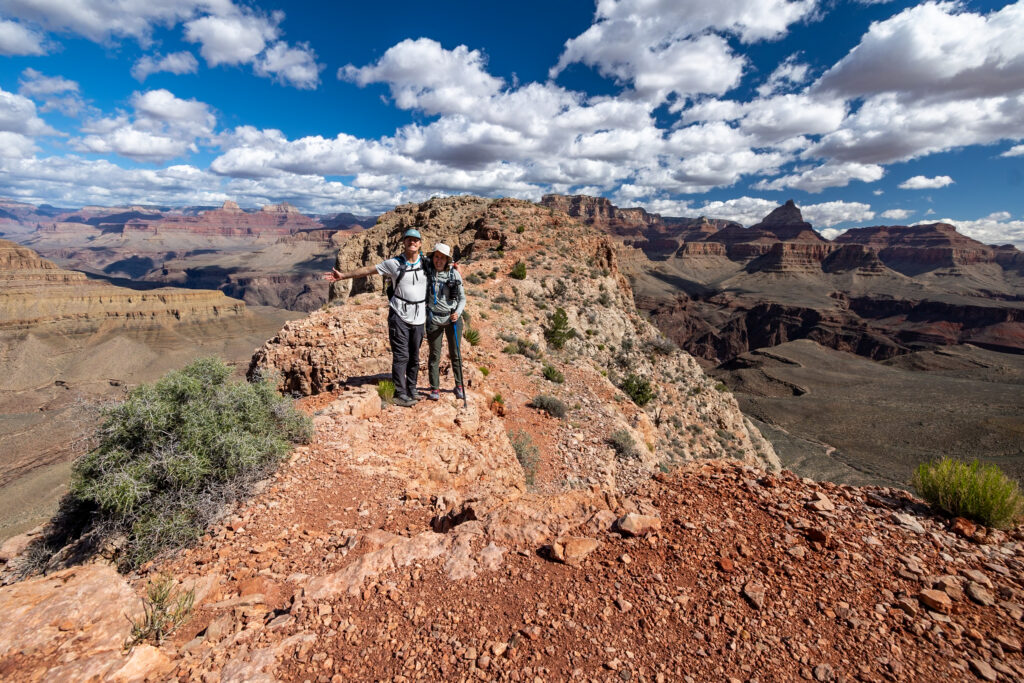
Grandview Trail is another long trail that you can hike as far as you like on, or all the way to the final viewpoint, as we did. Originally built in the 1800s, this trail was created to connect the rim with copper mines at Horseshoe Mesa. You’ll see some of the original cobblestone construction along the way, which is really neat!
The first official turnaround point is Grandview Point to Coconino Saddle (no AllTrails map). Like all trails into the canyon, this one starts by descending steep switchbacks. There are also some pretty steep drop-offs, so I wouldn’t recommend this trail for anyone with vertigo. Once at Coconino Saddle, you’ll have a really unique view of Hance Creek Valley ahead of you!
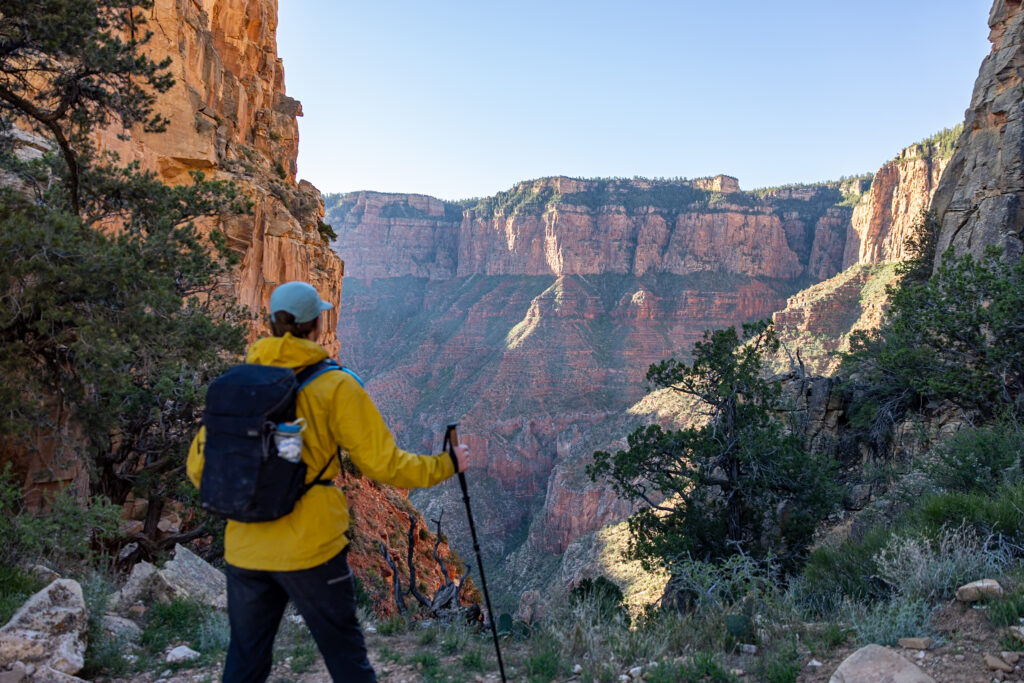
You can also continue hiking to Horseshoe Mesa (6 miles, 9.6 km round-trip), known for its historic copper mine ruins, the Cave of the Domes, and panoramic canyon views. You could also go all the way down Grandview Trail (8.5 miles, 13.7 km round-trip) as we did. We ate our lunch here, and it was really nice to be the only ones out there, fully surrounded by the canyon.
Just be aware that this trail is rarely maintained and has sheer drop-offs, even on the way to Coconino Saddle, so if it’s your first trip down into the canyon, we recommend checking out sections of Bright Angel or South Kaibab instead.
7. Grand Canyon Greenway Trail
Difficulty: Easy
Distance: Up to 13 miles (20.9 km)
Time: Up to 4-5 hours
Elevation Gain: Up to 997 feet (304 m)
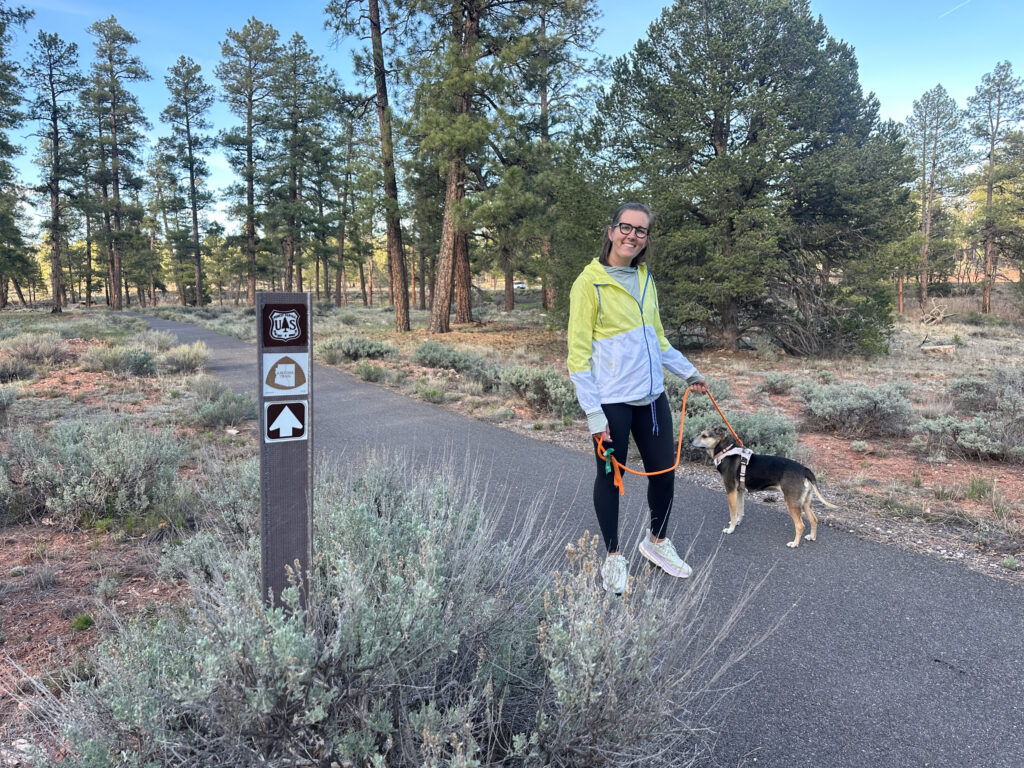
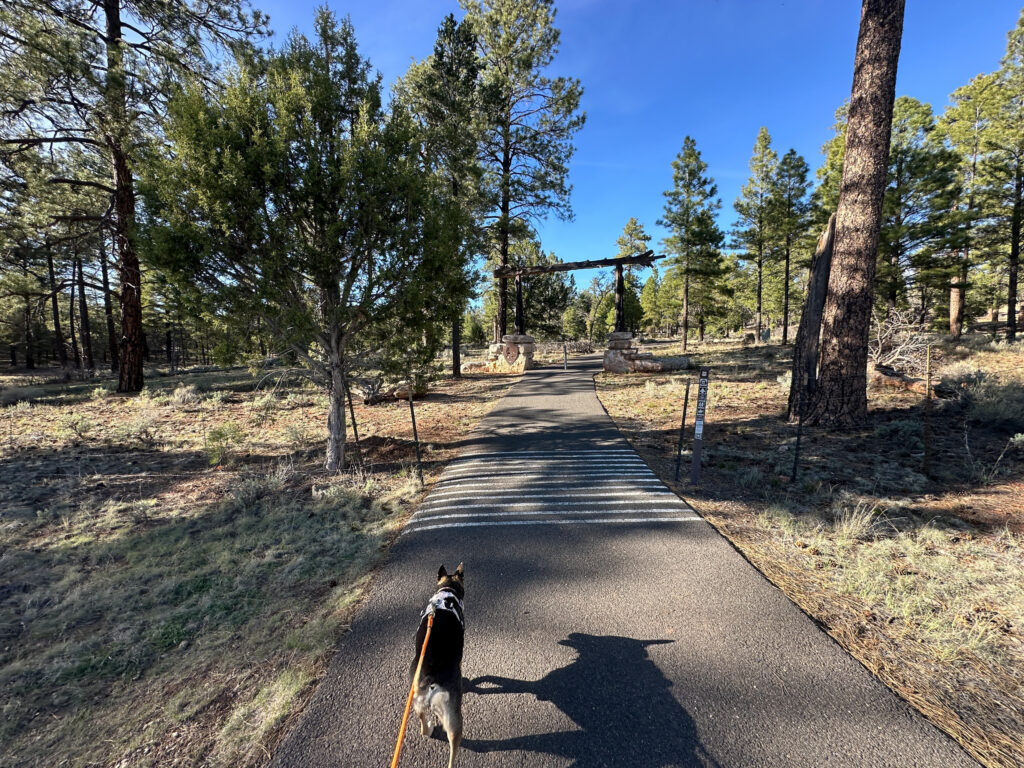
We hiked the Greenway Trail from our boondocking spot outside of the park in Kaibab National Forest. You can hike just a portion of it, or take it all the way into or out of the park.
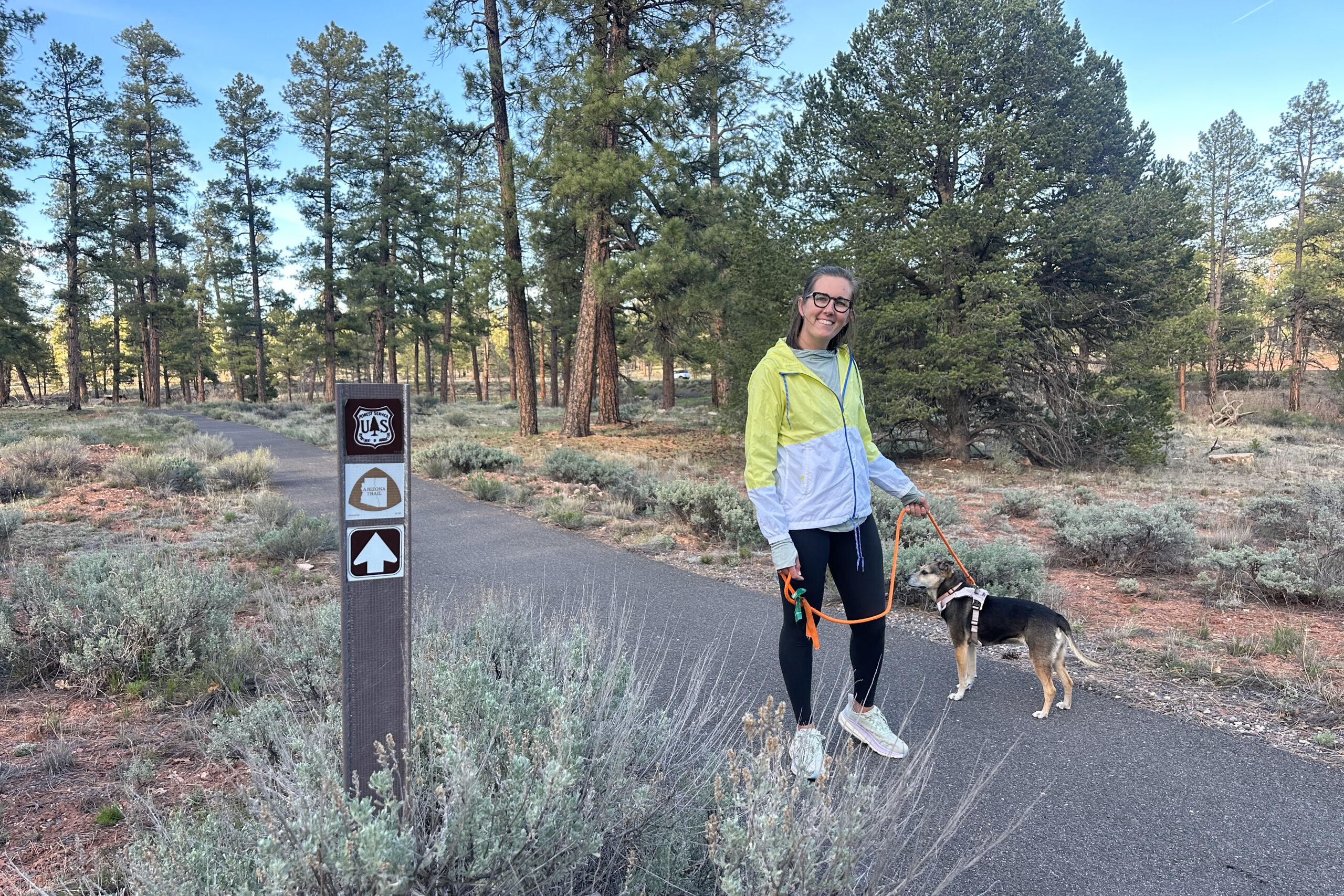
As it’s dog-friendly and bike-friendly, it’s a great option for people coming from Tusayan (the town just south of the Grand Canyon) or those who are looking to walk or bike into the park from the National Forest. It is also part of the Arizona Trail, a thru-hike across all of Arizona!
Best Day Hikes in Grand Canyon North Rim
Although we haven’t yet had a chance to see the North Rim, there are day hikes to explore there, too! In case you plan on visiting this area of the park, here are four of the most popular ones:
- Bright Angel Point Trail: This 30-minute easy trail is the most popular in the North Rim. A paved trail by the Visitor Center leads you to a spectacular view of the canyon from the north. You can pick up an informative pamphlet at a box along the trail, too!
- Bridle Path: This 3.2-mile (5.1-km) forest trail follows the road near North Rim Campground and is pet and bicycle-friendly! If you’re visiting with your pup, make sure to take advantage of this trail as it’s one of the only dog-friendly ones in the North Rim.
- Transept Trail: This 3.8-mile (6.1-km) moderate trail takes approximately 90 minutes to hike and follows a section of the North Rim (called the Transept) from Grand Canyon Lodge to the campground. You’ll pass through a forest as well as by an ancestral Puebloan ruin halfway to camp!
- North Kaibab Trail to Supai Tunnel and Coconino Overlook: This 3.4-mile (5.5-km) trail is the first segment of the longer North Kaibab Trail, the only maintained trail into the canyon from the North Rim. If you want to go further into the canyon within a day, you can continue to Roaring Springs (7-8 hours total), but beyond that is strongly discouraged.
Dog-Friendly Trails in the Grand Canyon
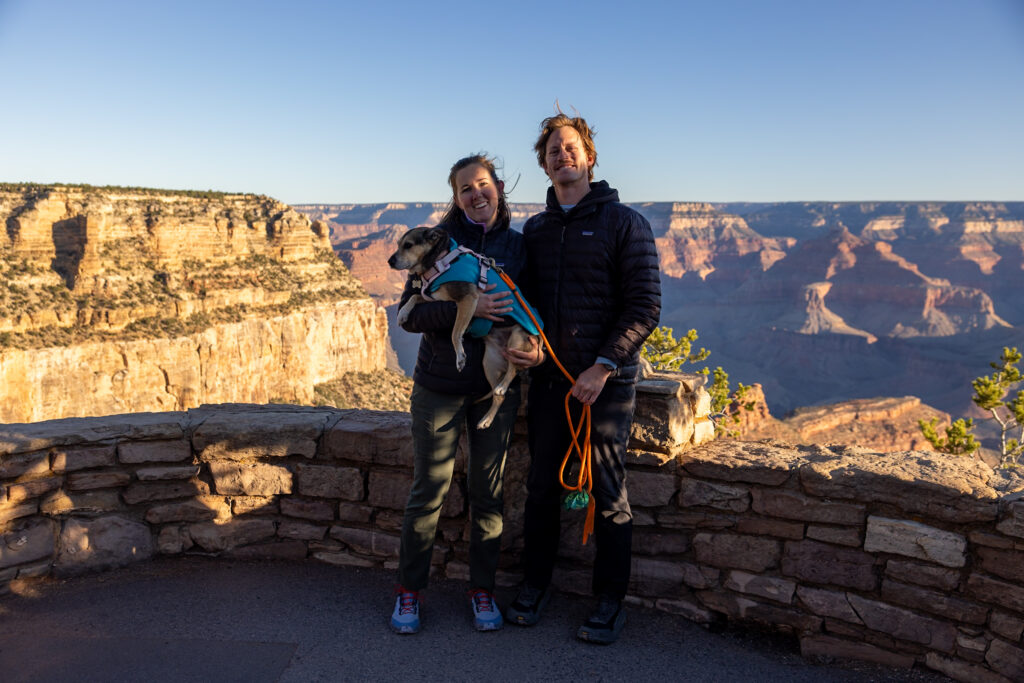
There are two dog-friendly trails in the Grand Canyon. The first is the Rim Trail, which runs for 12 miles along the rim of the Grand Canyon. We did several sections of this trail with Ollie over the course of 2 weeks at the Grand Canyon and loved it. The trail can be busy near Grand Canyon Village or Grand Canyon Visitor Center, so we particularly liked the section near Hermit Road (red shuttle route, although dogs are not allowed on shuttles).
The second dog-friendly trail is the Greenway Trail, which is up to 13 miles long, making it another great option for getting your furry friend some exercise while visiting the park. This trail didn’t have any views of the Grand Canyon, so we preferred hiking the Rim Trail with Ollie.
Map of the Best Day Hikes in the Grand Canyon
How to use this map: We have saved the locations from this guide on this map. You can save this map to your Google Maps by pressing the star icon. In your Google Maps, click the menu icon and then Saved Maps, where this map will appear.
What to Bring Hiking in the Grand Canyon
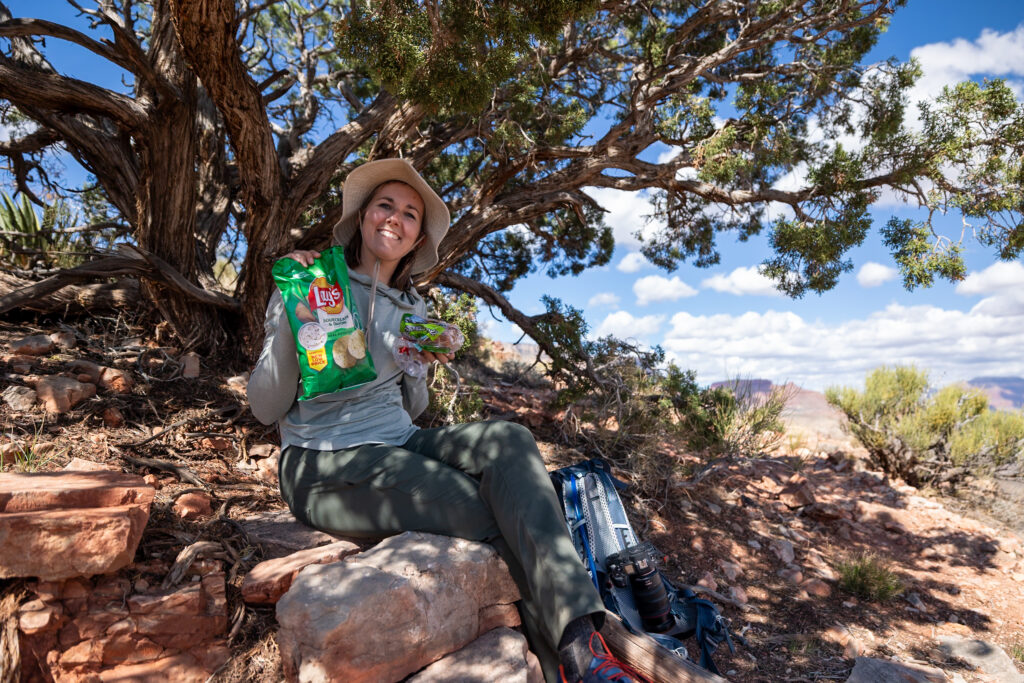
Hiking in the Grand Canyon requires visitors to be prepared! Since temperatures can vary by up to 25 degrees from the rim to the river, it’s essential to be prepared with the right clothing to keep you comfortable. Most trails in the Grand Canyon lack ample shade, so wearing and bringing proper sun protection is crucial. Lastly, packing salty snacks really does hit different in the Grand Canyon. We brought our usual snacks plus salty chips on many of our long hiking days in addition to electrolytes, and they hit the spot!
Hiking Essentials
Read next: Hiking Gear for Beginners!
Sun Protection
Safety Essentials
When to Visit the Grand Canyon
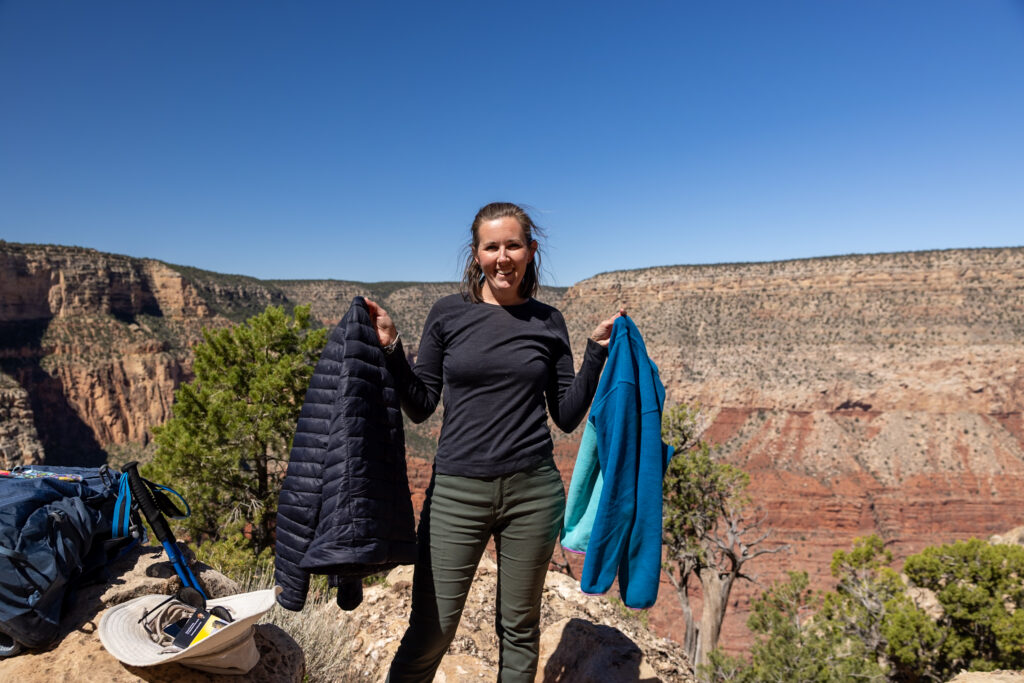
The seasons bring different weather and, therefore, experiences in the Grand Canyon. We visited in April and May 2026 and had excellent weather. As we prefer to hike in slightly cooler weather, we were able to comfortably wear pants and sun shirts during the day, having taken off our puffy jackets or fleece pullovers for the cool morning temps.
- Spring: Spring can have a mix of warm and cool days and can be windy. In our experience, it was very windy both hiking, on our rafting trip, and backpacking to Phantom Ranch. The wind is a nice reprieve from the sun, but it can be a little annoying when setting up a tent.
- Summer: During the summer, temperatures are at their highest, and there are also quite a few thunderstorms. July and August are known for monsoons. Hiking in the middle of the day is going to be quite difficult due to the hot temperatures and isn’t advised by rangers. It’s best to restrict your hiking below the rim so you’re not hiking a lot of elevation on exposed trails in the middle of the day. Summer is also peak season, so you can expect to wait for shuttles after 10 AM and have a more difficult time finding parking later in the day.
- Fall: Fall has moderate temperatures, no big winds like in spring, and is the most comfortable. When speaking with our rafting tour guides and park rangers, we found that their favorite season was always fall! It has cooler temperatures similar to spring, but a lot less wind.
- Winter: In the winter, you may have ice and snow as you enter the Canyon and cool conditions at the bottom. We plan to come back in February to backpack the Escalante Route. Winter is cold, so expect to wear many layers and for snow to be a possibility, especially near the rim.
Which Rim Should You Visit?
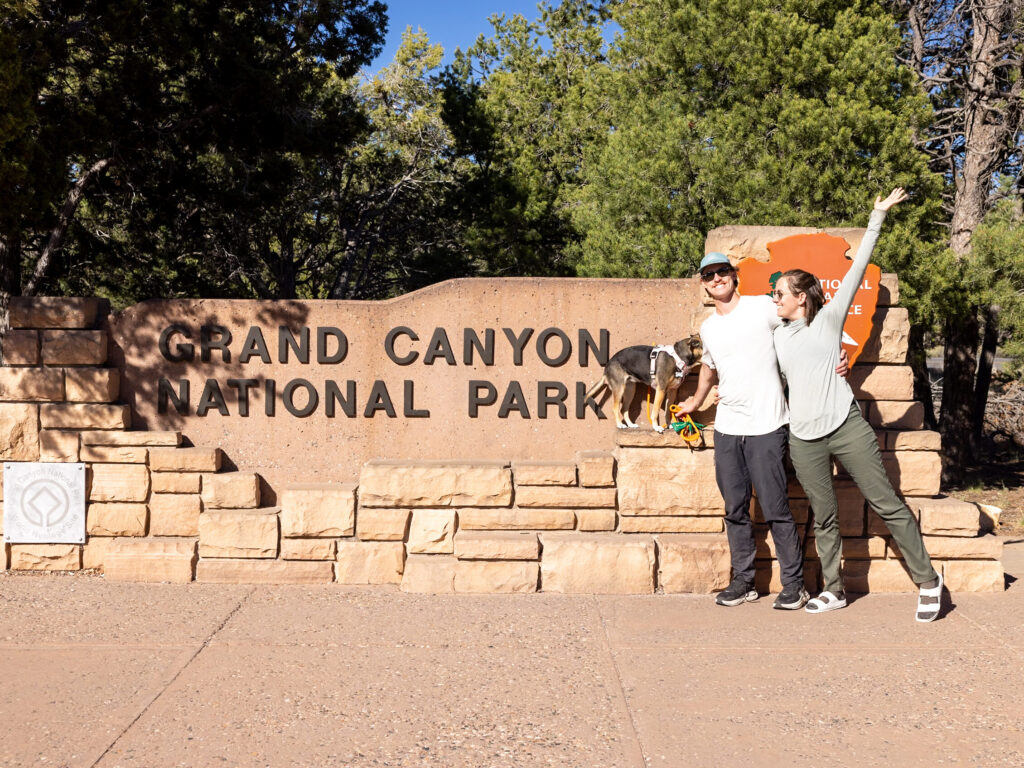
The South Rim is the most popular area of the Grand Canyon. This is where we went and probably what you’re imagining when you think of the iconic images of the Grand Canyon. If you have more time or have already been to the South Rim, the North Rim is your next best bet.
Here, you’ll get to see a quieter side of Grand Canyon National Park that many visitors don’t get to experience. Just keep in mind that the North Rim opens in mid-May and closes in mid-October, whereas the South Rim is open year-round.
Also, the two rims have a 1,000-foot elevation difference, so temperatures vary between them. The North Rim, which is at 8,000 feet above sea level, will be cooler than the South Rim, which is at 7,000 feet above sea level.
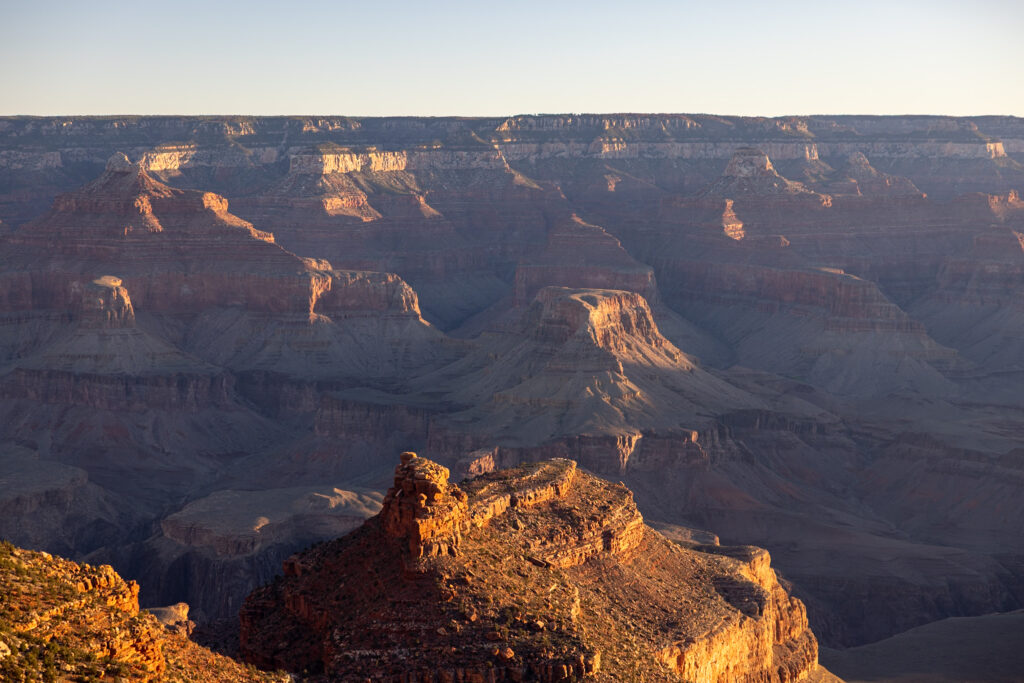
5 Tips for Day Hikes in the Grand Canyon
1. Speak with the Rangers
Although the trails mentioned in this article are day hikes, there is no easy hike into the Grand Canyon. All Grand Canyon trails can be dangerous, and it’s important to speak with a ranger to ensure that you’re properly prepared for your hike ahead of time if you’re going down into the canyon.
💡 Remember, hiking down is optional, but hiking up is mandatory.
2. Pack Sufficient Water and Food
The Grand Canyon is the deadliest National Park, so bringing enough water and food and being mindful of the heat are vitally important. During hot weather, make sure to take at least 4 liters of water per person per day, as well as salty, satisfying snacks and electrolytes to reenergize.
3. Start Early
If you’re visiting during the warmer months, it’s generally best to start hiking earlier than later, especially if you’re setting out on a day hike that is more than 2 hours. This is something you can ask a ranger if you’re not sure what time to do a hike. On top of this, entering the Grand Canyon can have major lines, so arriving early can help you avoid this!
4. Prepare for the Temperature Increase
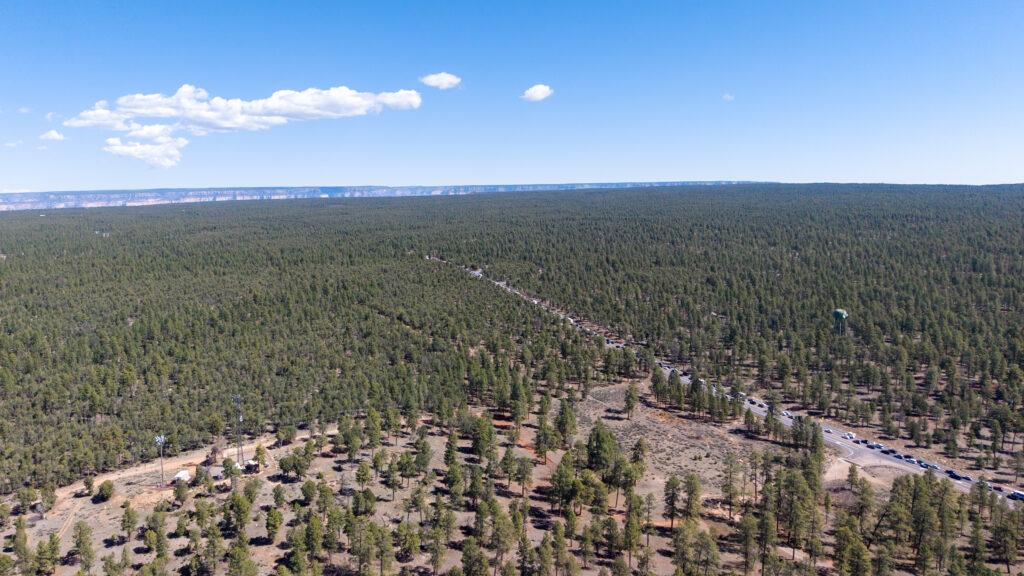
It gets hotter as you go down into the canyon. For every 1,000 feet you descend into the canyon, you can expect the temperature to increase by about 5°F. So, for example, the south rim can be 70°F, but the temperature at Phantom Ranch at the bottom of the canyon can be 95°F on a hot, sunny day. When planning your hikes into the canyon, it’s important to account for this increase in temperature as it relates to your clothing, water consumption, snacks, and overall heat strategy.
5. Stay within your Limits
Some trails in the Grand Canyon really tested our mental strength, with narrow ledges or steep drop-offs. If at any point you aren’t comfortable continuing down a trail you had planned to finish, don’t hesitate to turn around and finish early. Your safety is more important than finishing that hike!
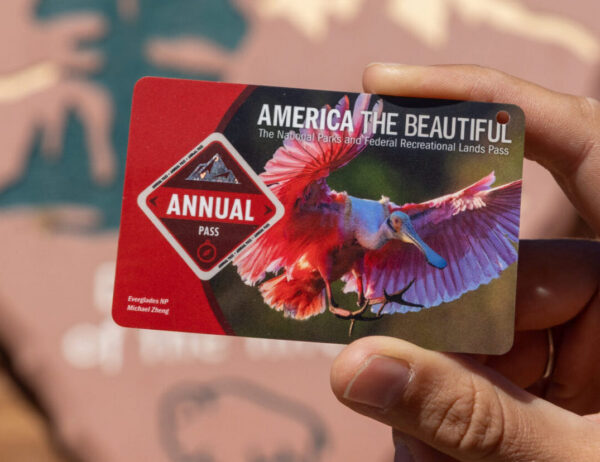
🎫 Consider investing in the America the Beautiful pass for $80 like we did if you’re planning on travelling to several parks within the year.
📰 Related Articles
- EXACTLY What to Expect Rafting the Grand Canyon (Our 10-Day Motor Trip)
- ULTIMATE Guide to Helicopter Tours in the Grand Canyon
- 15+ BEST Grand Canyon Sunrise & Sunset Viewpoints (South Rim)
- 13 TOP Things to Do at Grand Canyon South Rim
- 15 BEST Hikes in Grand Canyon (Ranked Easy to Hard)
- 19 BEST Books to Read About the Grand Canyon
- The BEST Way to Spend One Day in the Grand Canyon
- Grand Canyon Itinerary: 2 PERFECT Days in the South Rim


Leave a Reply
You must be logged in to post a comment.