
At 13,175,799 acres, figuring out what to do in Wrangell–St. Elias National Park & Preserve, the US’s largest and most remote national park, can seem daunting. Its sheer size and wild beauty make it unlike anywhere else in Alaska.
To make it easy on you, we’ve rounded up the 15 best things to do in Wrangell–St. Elias, from glacier hikes to once-in-a-lifetime flightseeing tours. Stay tuned to the end for extra Alaska trip-planning info, like where to stay, when to visit, and more!
Note: We use affiliate links which provide us a little kickback each time you use one of our links and make a purchase, without any additional cost to you. We do not recommend products that we don’t already love or have heard great things about, so you can trust we’re only suggesting great products to you.
ℹ️ About Wrangell-St. Elias National Park & Preserve
Wrangell–St. Elias National Park and Preserve is a land of superlatives—a UNESCO World Heritage Site, the largest national park in the U.S., and one of the wildest places left on Earth. At over 13 million acres, you could fit six Yellowstone Parks inside its borders!
Here, four great mountain ranges collide—the Wrangell, Chugach, St. Elias, and Alaska Ranges—forming a landscape of active volcanoes, towering peaks, and sprawling glaciers. It’s home to Mount St. Elias, the second-highest mountain in the country, and the Malaspina Glacier, which alone is larger than the entire state of Rhode Island.

There are two main areas accessible by car: the McCarthy/Kennecott area in the south (via McCarthy Road) and the Nabesna area in the north (via Nabesna Road). Beyond these, most of the park, like the Yakutat Coast region, requires air travel, long backcountry treks, or guided expeditions to access. Because of this, this article focuses on things to do in McCarthy, Kennecott, and along Nabesna Road.
Please respect the outdoors and Leave No Trace! Before embarking on your outdoor adventure, review the seven principles of Leave No Trace, which include planning ahead and preparing, traveling and camping on durable surfaces, disposing of waste properly (pack out what you pack in), leaving what you find, minimizing campfire impacts, respecting wildlife, and being considerate of others. Abiding by these principles helps keep these places beautiful so others can enjoy them for years to come!
1. Stop by the Visitor Centers
At over 13 million acres, it should come as no surprise that Wrangell–St. Elias National Park has four visitor centers and ranger stations. Each one offers helpful information, maps, and exhibits that can make a huge difference when planning your visit, especially since cell service is limited inside the park.
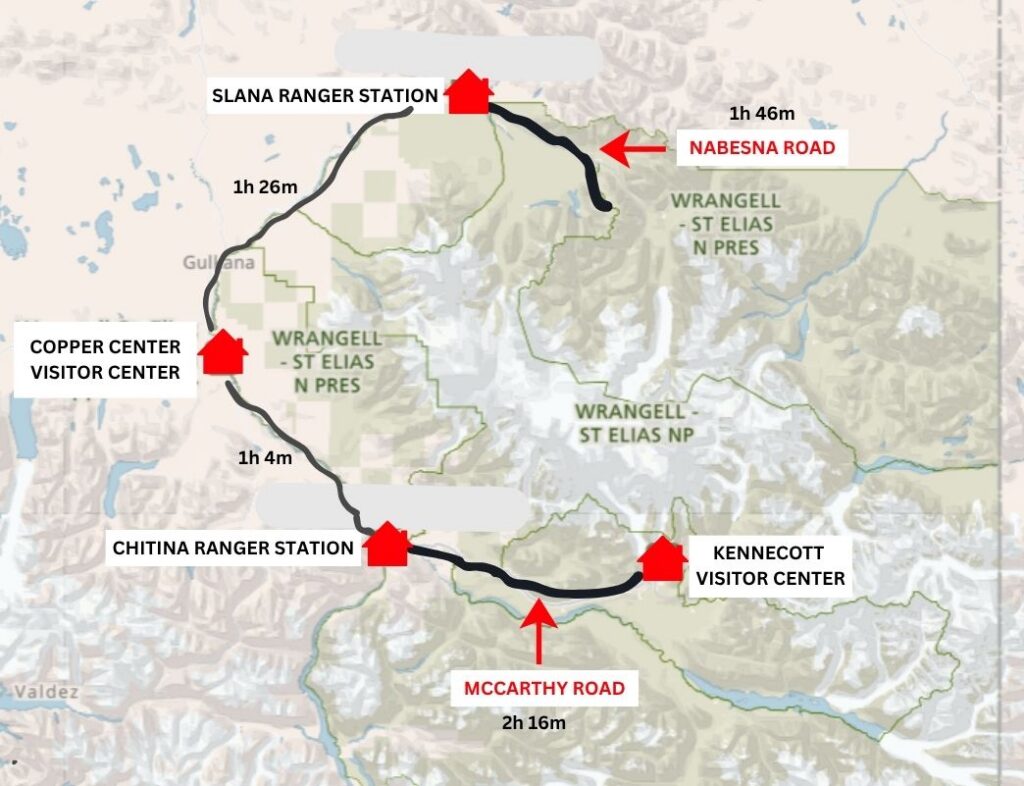
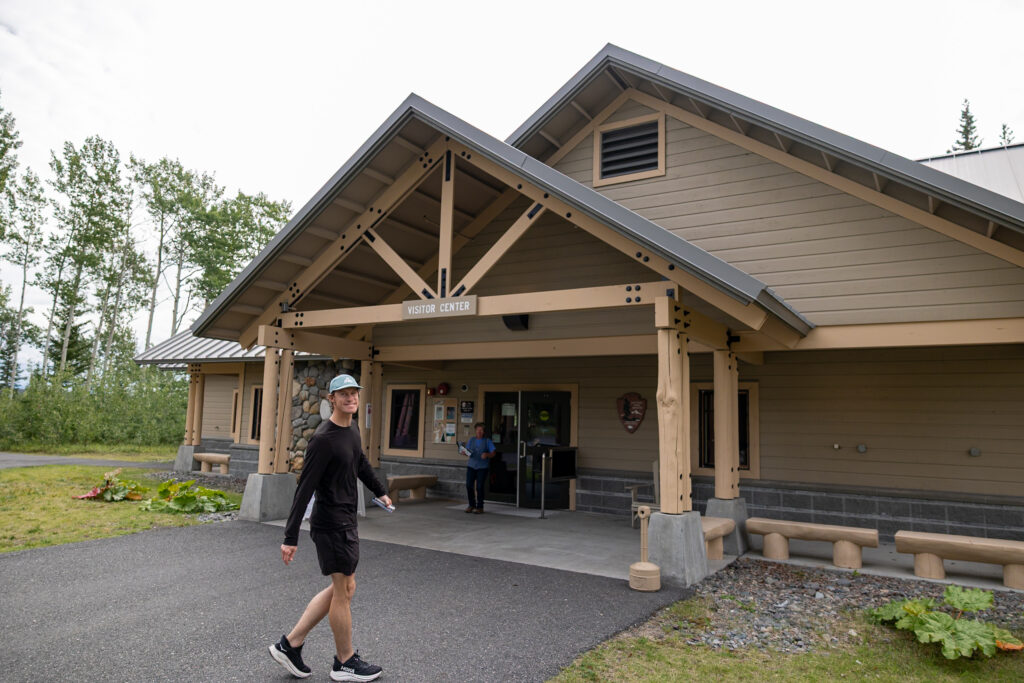
- Copper Center: Located along the Richardson Highway just outside the park, this is the main visitor center and the best place to start your trip. This visitor center is closest to Anchorage, where most visitors drive in from. You’ll find exhibits, a short park film, and rangers who can help you check current road conditions before driving into the park.
- Chitina Ranger Station: Located near the beginning of McCarthy Road, this seasonal station is a helpful pit stop before driving towards the towns of McCarthy and Kennecott.
- Kennecott Visitor Center: Located within the historic Kennecott Mines National Historic Landmark, this small center is ideal for visitors exploring the McCarthy/Kennecott area.
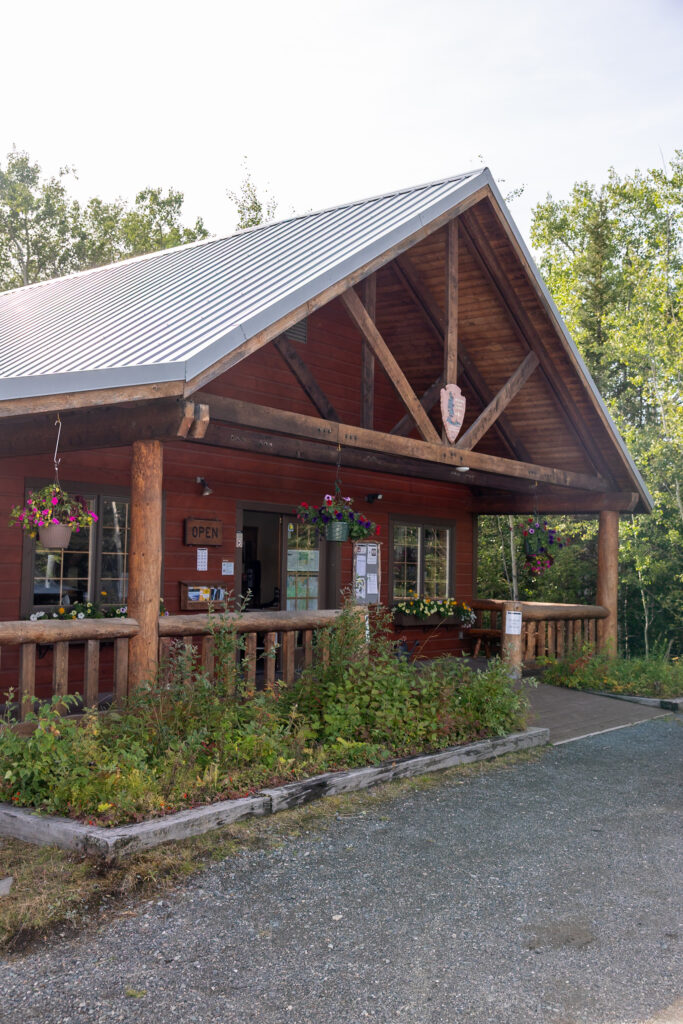
- Slana Ranger Station: Situated near the start of Nabesna Road, this is your go-to stop before driving down Nabesna Road. We highly recommend that visitors exploring Nebesna Road stop at this visitor center to get current conditions, as there are three creek crossings along this road. Rangers can provide up-to-date information and tips to help you have a safe experience.
2. Hop on a Ranger-Led Program
Wrangell-St. Elias offers free ranger-led talks, guided walks, and evening programs throughout the summer, plus the Junior Ranger Program for kids (and adults) to earn a badge. These programs are hosted at the Copper Center, Slana, and Kennecott visitor centers.
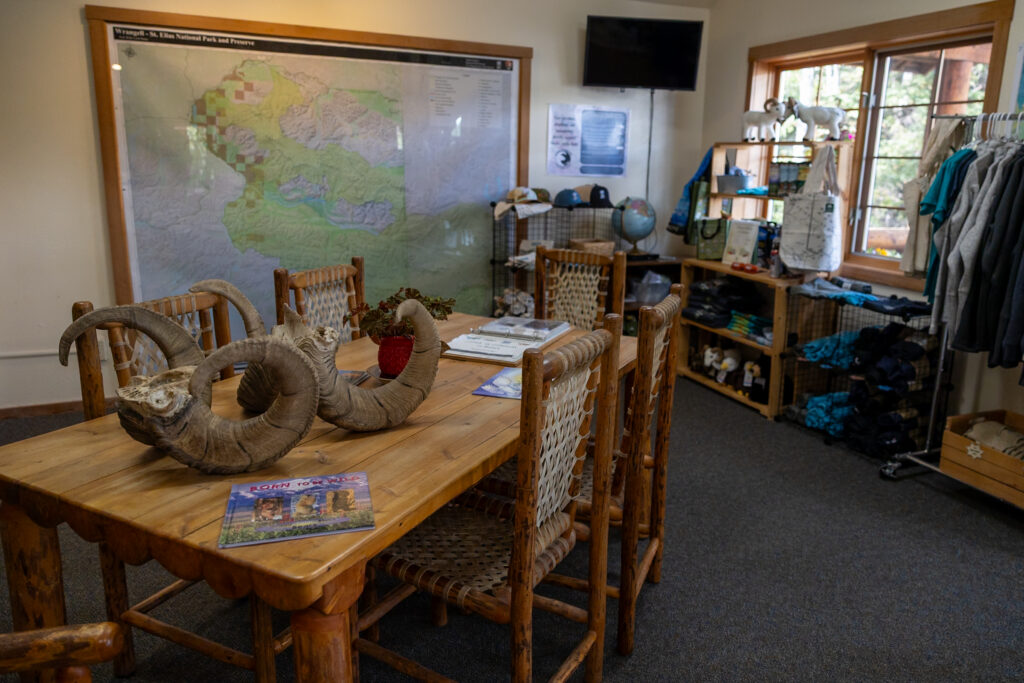
Local non-profits like the Wrangell Mountains Center in McCarthy and the Wrangell Institute for Science and Environment in Willow Creek, AK, also provide free, hands-on events throughout the summer months.
🗓️ Check Wrangell-St. Elias’ Online Calendar for any special events that might be going on during your visit.
3. Drive McCarthy Road
Driving McCarthy Road is one of the top things to do in Wrangell–St. Elias National Park. This 60-mile (96-km) gravel road connects the town of Chitina to McCarthy, tracing the path of the historic Copper River and Northwestern Railway, where ore was once hauled from the Kennecott Mines. Reaching McCarthy then gives you access to explore the Kennecott Mines, hike Root Glacier, and more!
Plan to take at least three hours one way, and remember that there’s no cell service for most of the route. Because of this, we recommend downloading offline Google Maps before starting down McCarthy Road.
While the road is rough in sections with frost heaves, potholes, and washboard gravel, it’s improved in recent years and is generally manageable for most vehicles. We recommend stopping by the Cooper Center Ranger Station or Chitina Ranger Station before you set out to ask about recent road conditions.
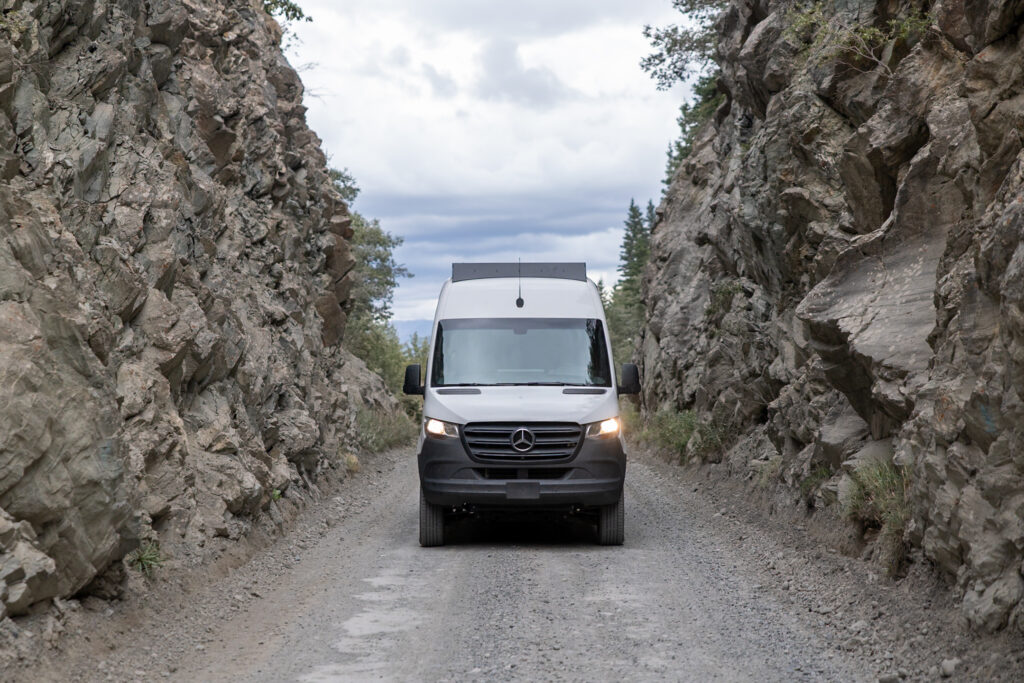
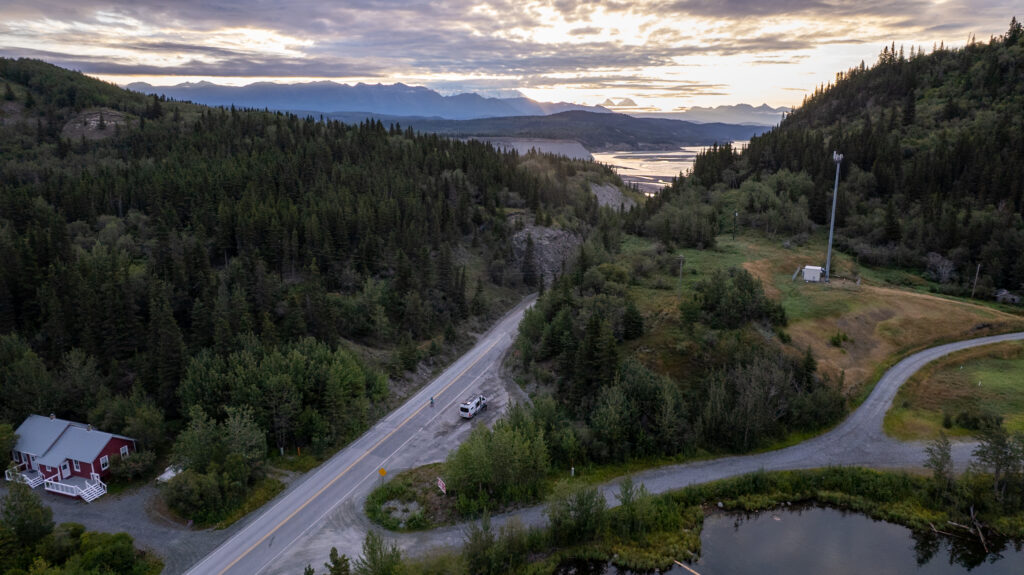
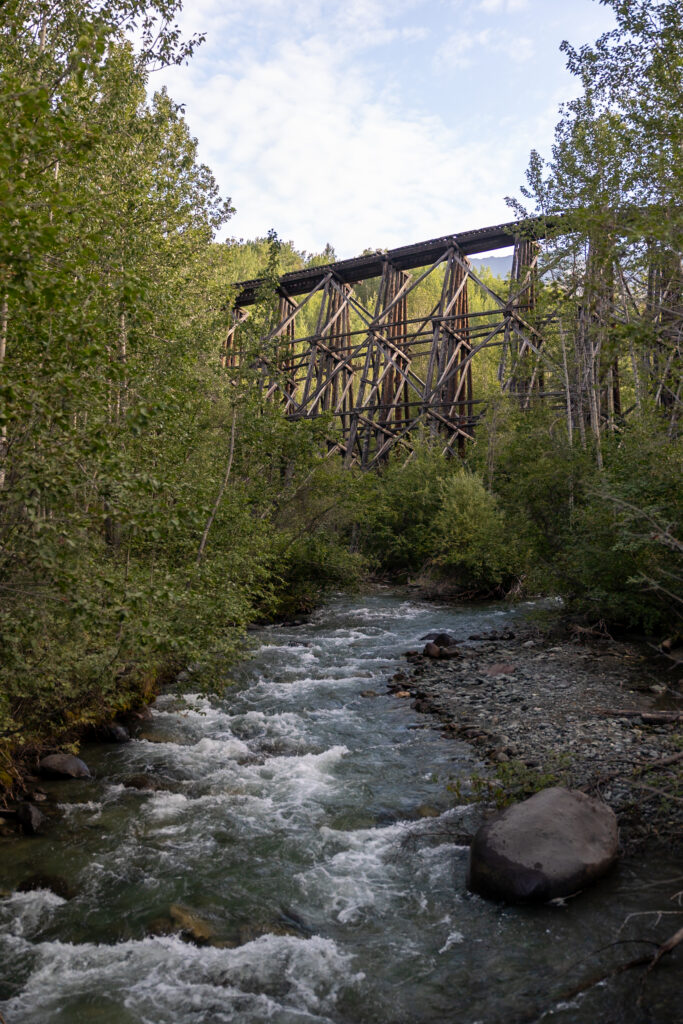
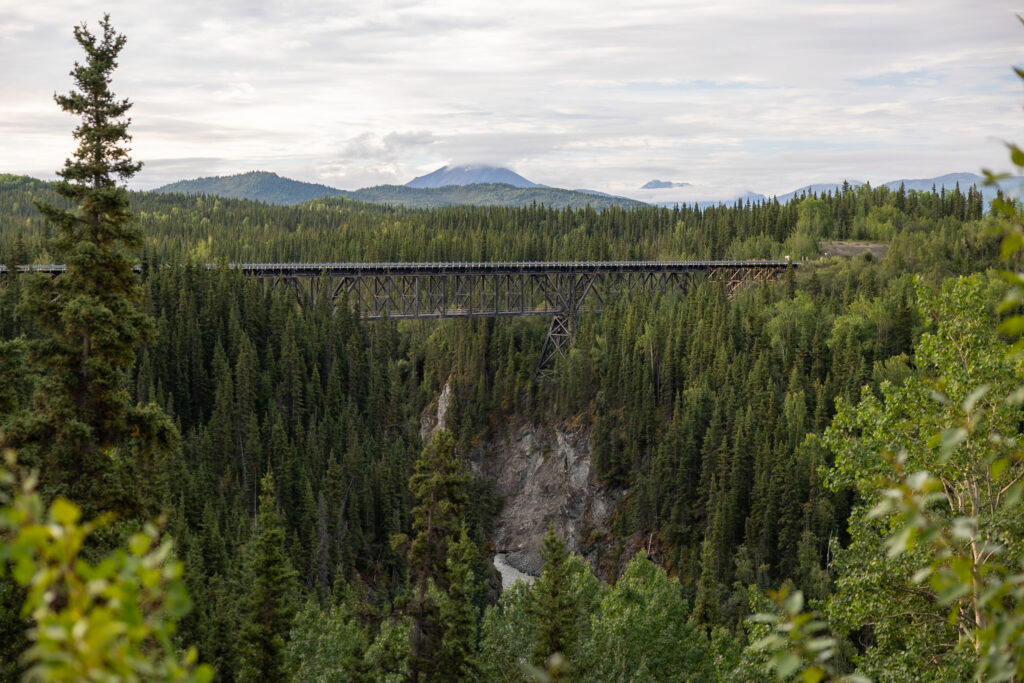
Throughout the entire drive, you’ll pass by scenic pullouts, interpretive signs, and even wildlife like moose, bears, and eagles. Around Mile 17 (km 27), you can look forward to crossing the one-lane Kuskulana Railroad Bridge, suspended nearly 240 feet (73 m) above the Kuskulana River.
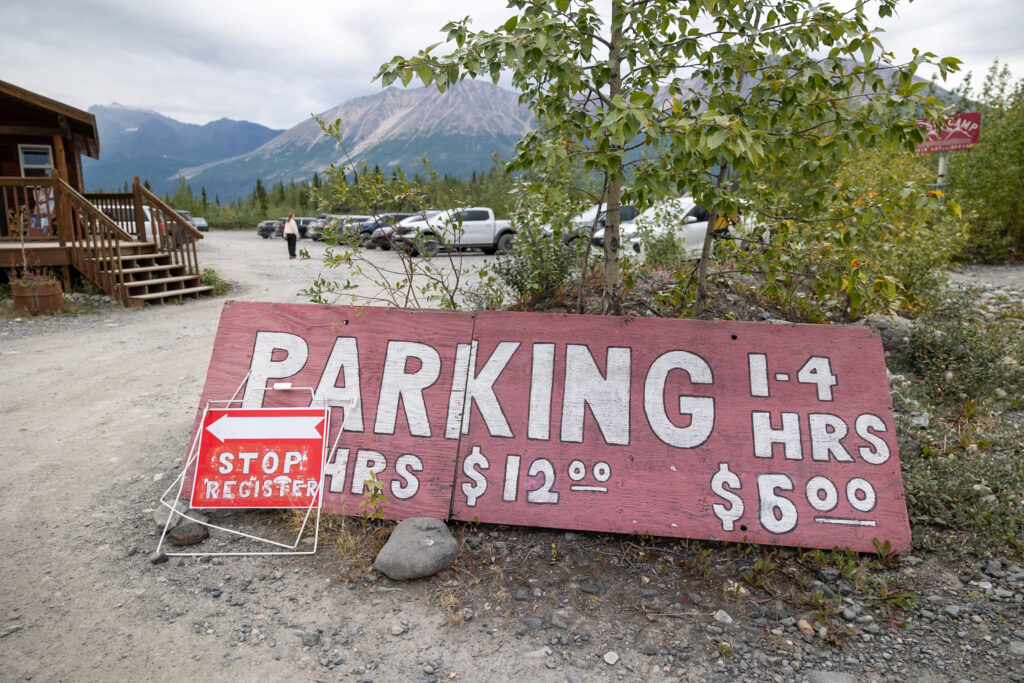
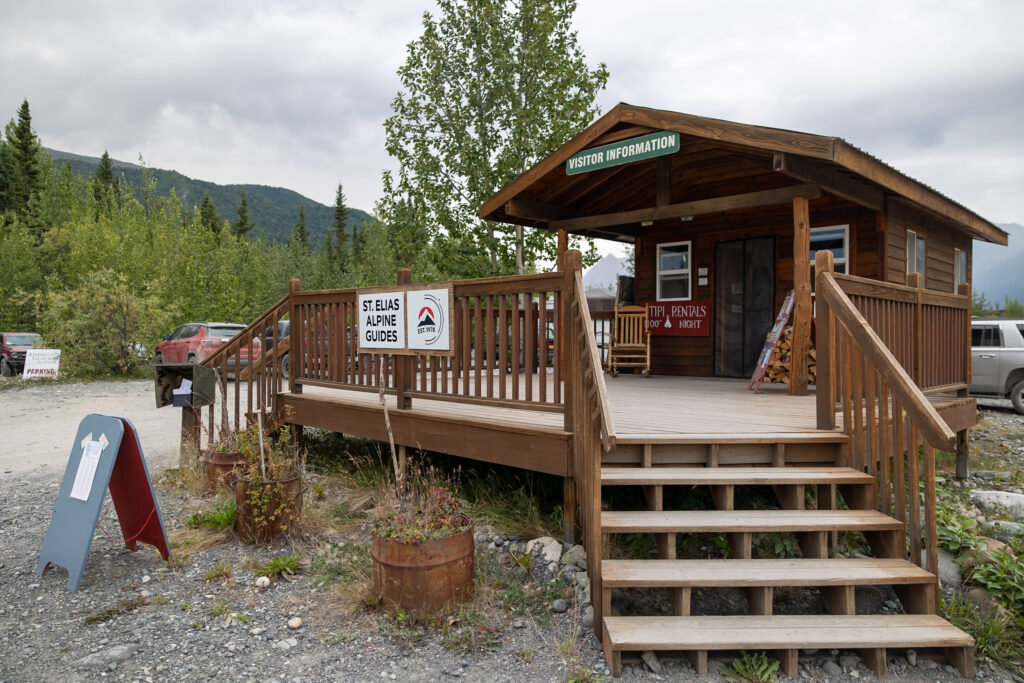
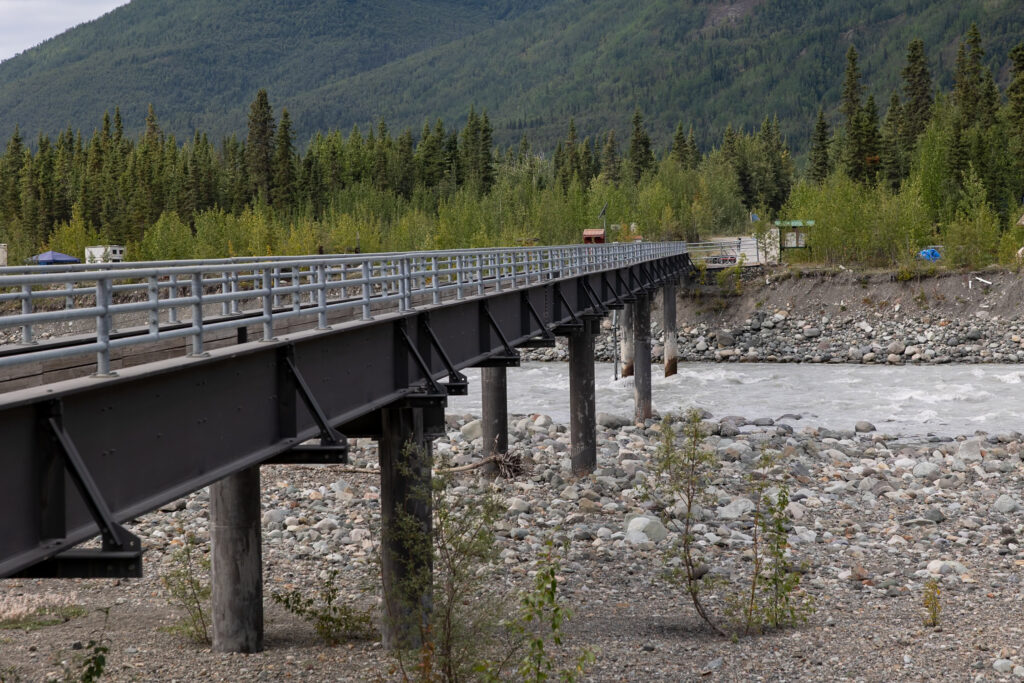
At the end of the road, park at the designated lot ($12/day payment can be made at the Visitor Information building) and walk across the McCarthy Footbridge into the town of McCarthy. Carts are available to help carry your gear across the bridge, marking the start of your exploration into McCarthy and then Kennicott.
ℹ️ Alternative to Driving: If you prefer not to drive McCarthy Road, but still want to reach McCarthy and Kennicott, you can take the Kennicott Shuttle from Chitina, or even fly from Chitina to McCarthy Airport.
5 Tips for Driving McCarthy Road
1. Fill up on Fuel: Before setting out, make sure to fill up your tank in one of the nearby towns like Glennallen, Valdez, or Copper Center, as you’re headed into the wilderness and will need to make your way 60 miles (96 km) back as well. There is no fuel along McCarthy Road.
2. Air Down Your Tires: For the smoothest ride, we recommend airing down your tires as we did. We used this deflator before starting and this inflator when we completed the road. We also recommend carrying a tire repair kit in case you get a flat. Make sure you know how to change a tire just in case as well.
3. Slow Down for Others: When someone is coming the opposite way, slow down to a crawl. This way, any gravel they may be kicking up is less likely to crack your windshield.
4. Plan at Least 3 Hours: Set aside at least 3 hours for the drive from Chitina to the McCarthy footbridge. We don’t recommend rushing to a hike or experience right after this drive because the road conditions and how much time you actually have are unpredictable.
5. Be Mindful of Private Land: You’ll pass through Native and private lands several times throughout this drive (signs point out where you are). Ensure you follow the local rules for the area you’re in. For example, there isn’t any free camping on Native Land, so you may be approached and asked for compensation. However, you can camp for free on the park’s public lands.
4. Take the Shuttle to McCarthy
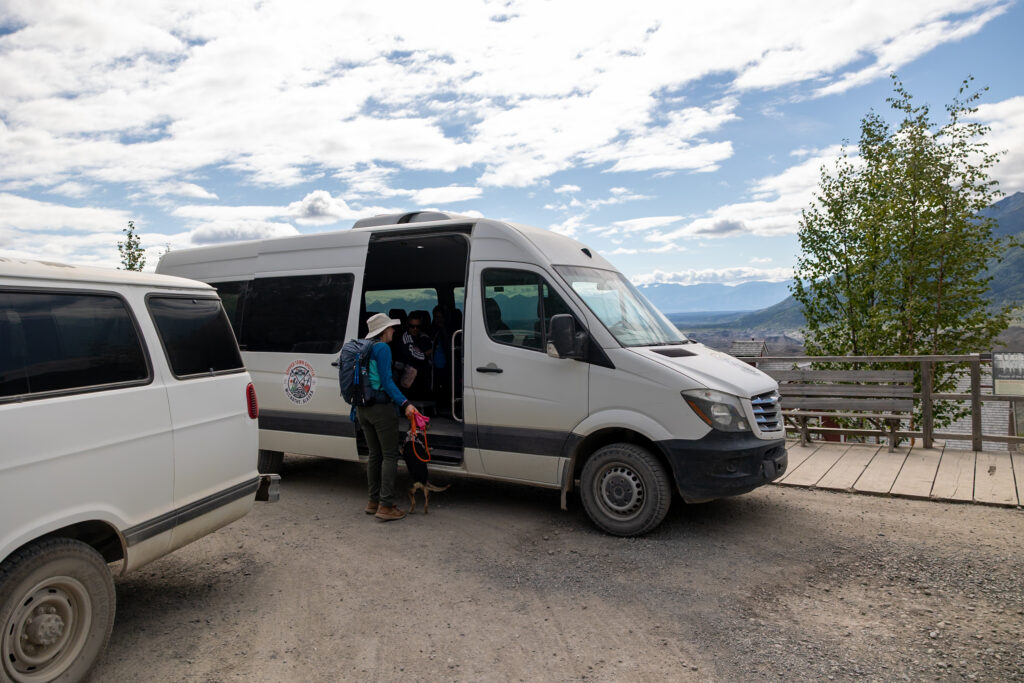
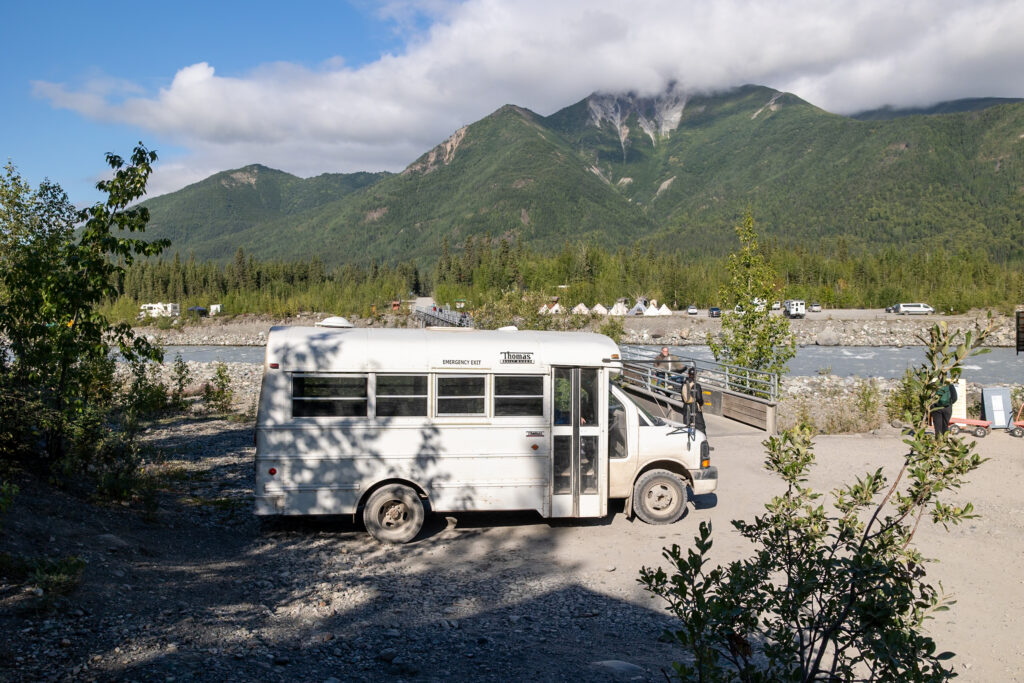
Once you’ve crossed the footbridge, hop on the first shuttle waiting on the other side—either the Copper Town Shuttle or the Blackburn Heritage Shuttle. They both run frequently and are priced similarly. You can pay your fare directly on the bus or at one of the in-town stops. Once you pay for your shuttle, you’ll get a bracelet to take the same shuttle company.
ℹ️ Option to Walk: Walking to McCarthy is easy—we did it whenever a shuttle wasn’t waiting—but stay bear aware, as we spotted one on the trail! The road to Kennicott is longer, narrower, and often busy, so taking the shuttle is the safer and more convenient option here.
5. Visit McCarthy, Alaska
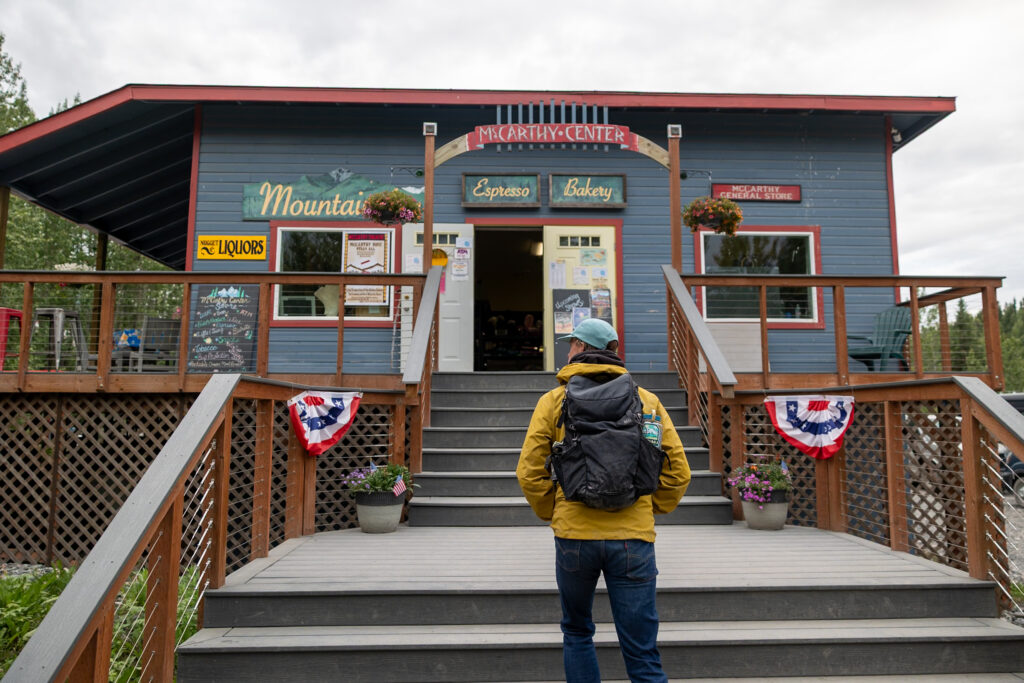
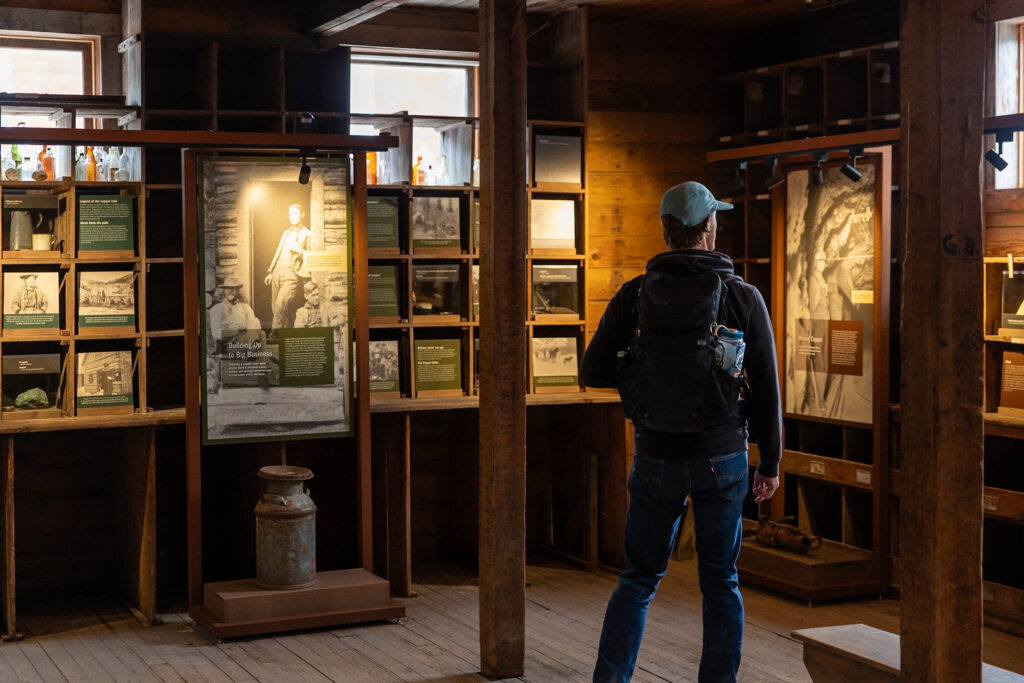
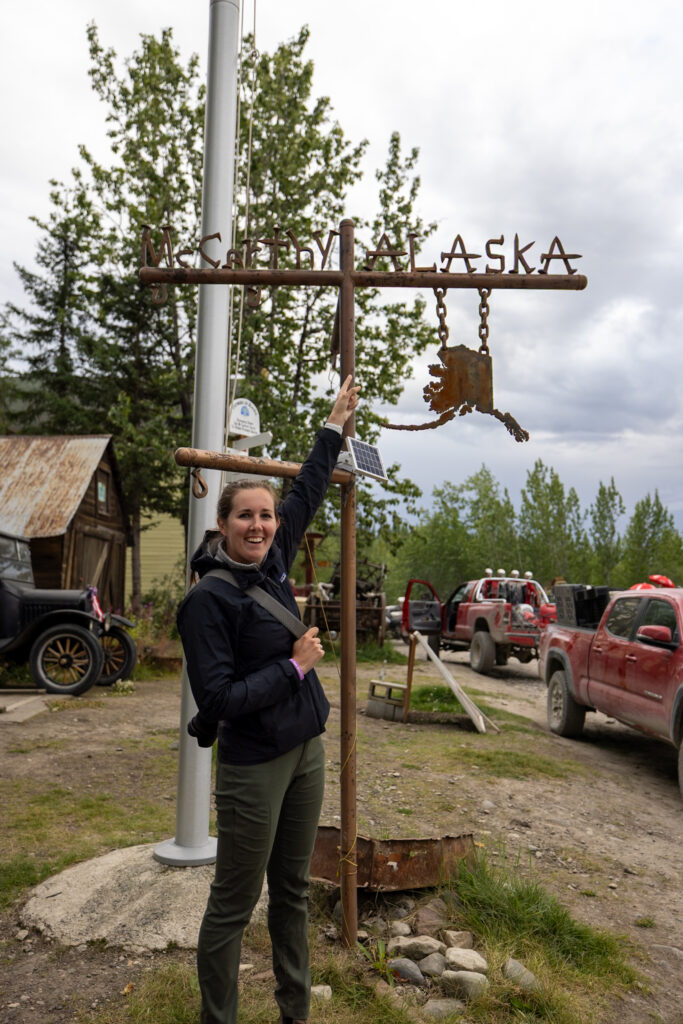
McCarthy is the first stop off the shuttle, a tiny frontier town that still feels like old Alaska. With its dusty main street, friendly locals, and just a handful of restaurants and shops, it perfectly encompasses this area’s end-of-the-road atmosphere. Stop by the McCarthy–Kennicott Museum to learn about the area’s mining history, the McCarthy Center Store for a coffee and a baked good, or The Golden Saloon to enjoy a drink and some live music.
For food, don’t miss The Potato, McCarthy’s most popular spot and for good reason. We ordered the Bangers & Mash, Salmon Roll, and Rosemary Garlic Curly Fries. The fries were hands-down our favorite and an absolute must-order. Jen loved her salmon roll, while Elliot says he’d skip the bangers & mash next time in favor of the Potato Head Burrito, which we heard locals rave about.


6. Take a Flightseeing Tour
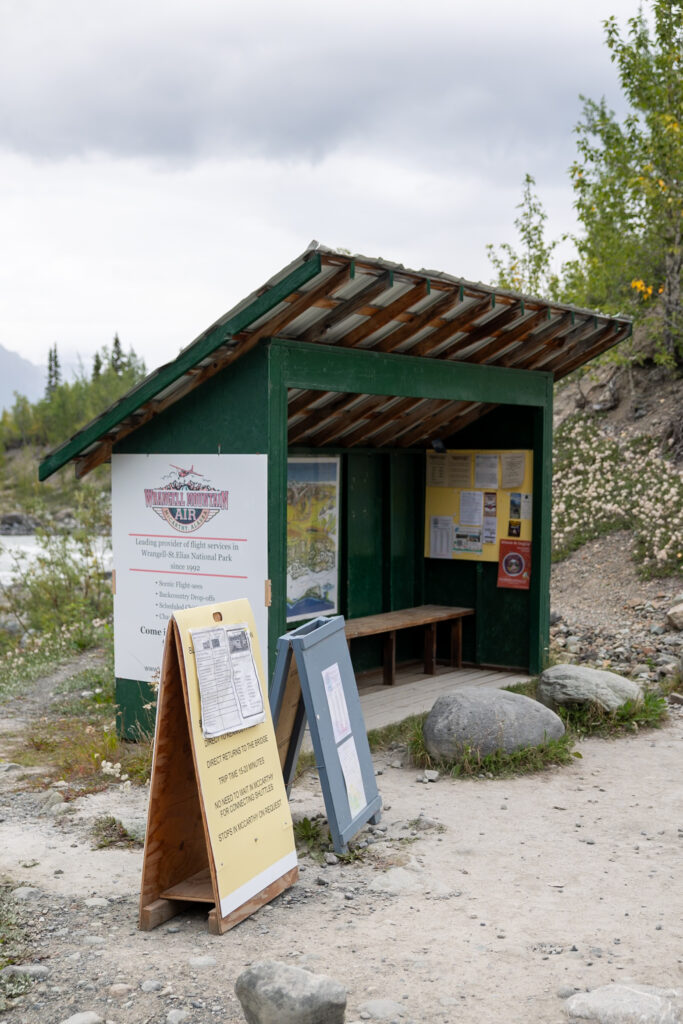
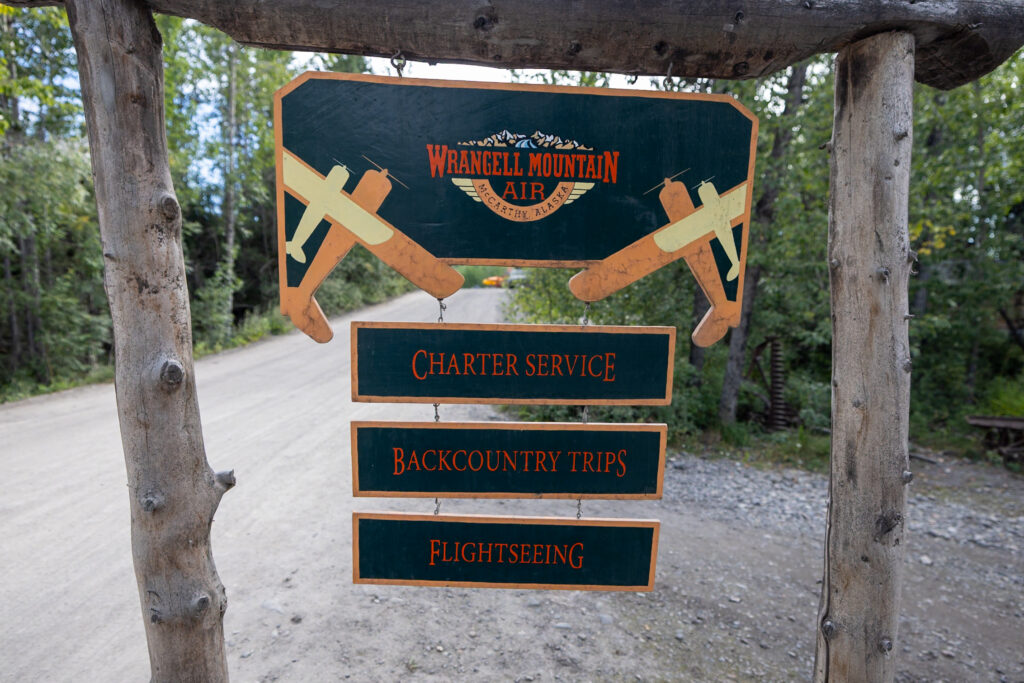
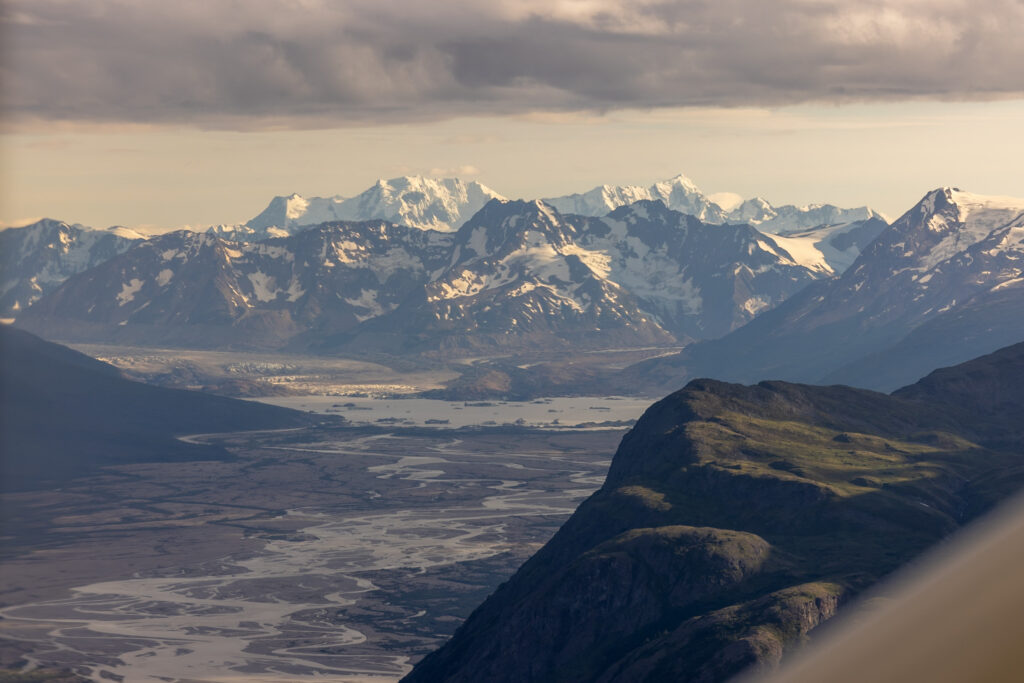
Flightseeing over Wrangell–St. Elias was hands down our favorite memory from the park. Seeing the park from the sky really made us grasp just how massive this park is. Although there are a handful of local flightseeing companies, we ended up booking with Wrangell Mountain Air because their prices are competitive and they depart from downtown McCarthy. Plus, Wrangell Mountain Air donates some of its profits to environmental non-profits, which really aligns with our values.
We went on their 90-minute Bagley – University Range Tour, and had the time of our lives! We’d already heard the views were unreal, but flying over the icefield completely exceeded expectations—easily one of our top Alaska experiences. Since Wrangell-St. Elias is so large that we found seeing the park from the air crucial to getting a holistic experience.
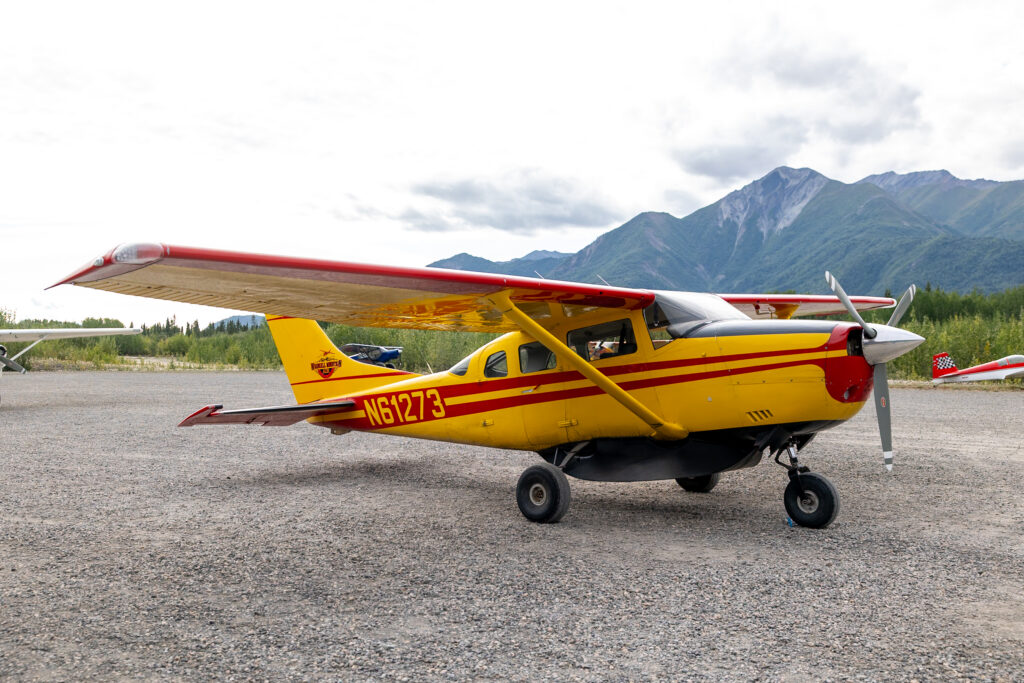
Our small plane (five passengers plus the pilot) took off from the McCarthy airstrip around 5 pm. Right away, we were soaring over Root and Kennicott Glaciers, the Bonanza Mine, and Kennicott before heading toward Mt. Blackburn, the highest peak in the Wrangell Mountains.
From there, we crossed the Copper River and the landscape gradually opened up into the Bagley Icefield, the second-largest non-polar icefield in North America.
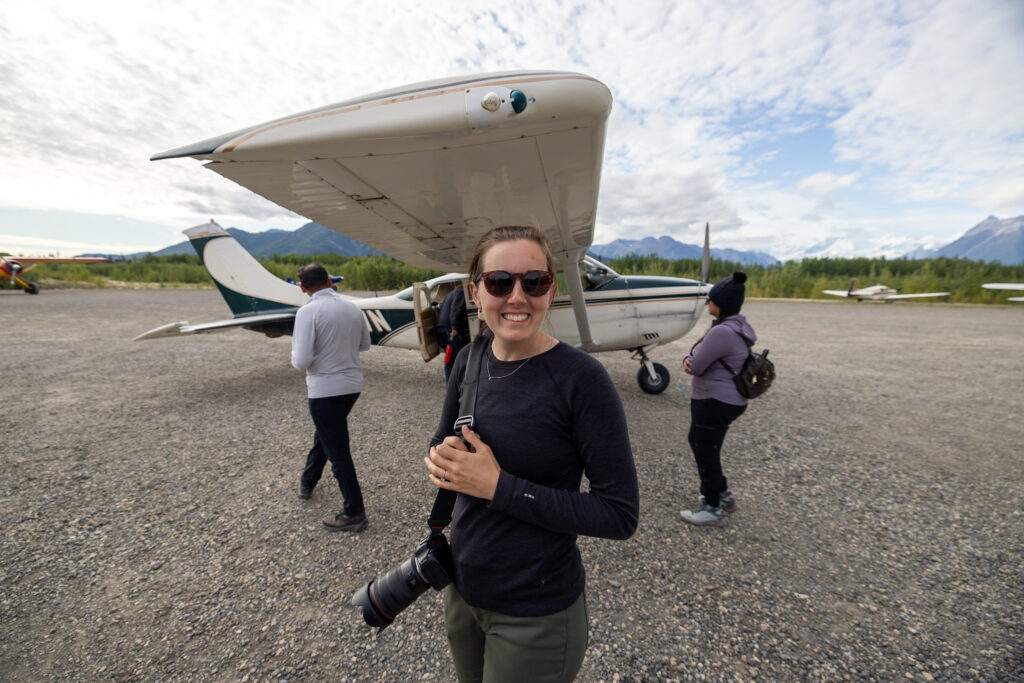
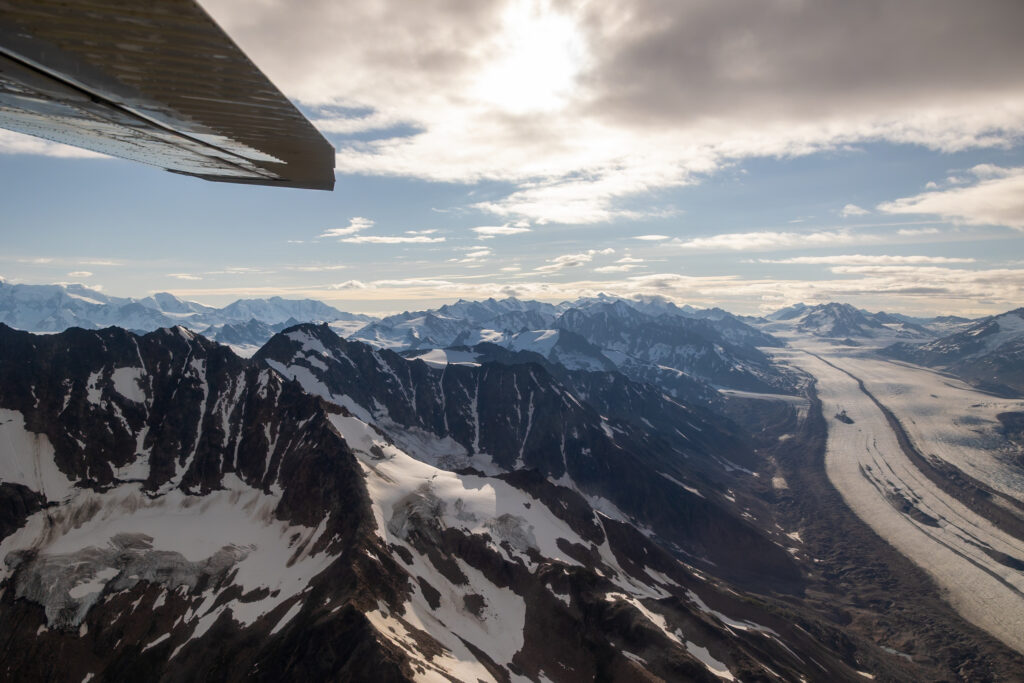
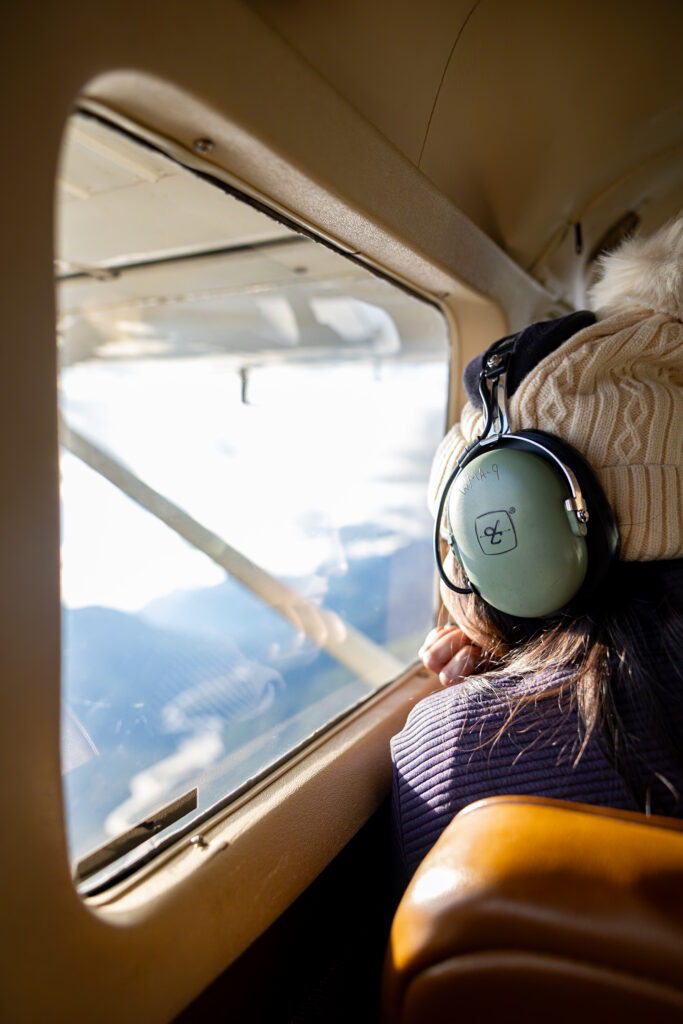
Everyone on board wore airline headsets, which blocked out engine noise and let us chat with each other and our pilot, Orin, who was fantastic. He was incredibly knowledgeable about the area’s history and geology. This was our second flight in a small aircraft, and we felt completely safe the entire time.
Seeing Wrangell–St. Elias from the sky put the park into perspective in a way hiking trails can’t, and if there were two big-ticket splurges we’d recommend in Alaska, this and a Kenai Fjords boat tour would be it!
ℹ️ Fun Fact! Did you know that an icefield is essentially a “lake of ice,” whereas glaciers are more like “rivers of ice” that have left the lake?
7. Take a Guided Tour of the Kennecott Mines
Just five miles up the road from McCarthy sits Kennicott, a beautifully preserved copper mining town from the 1900s. Although now a ghost town, you can still visit the Kennecott Mines National Historic Landmark, which is the first thing we did upon arriving!
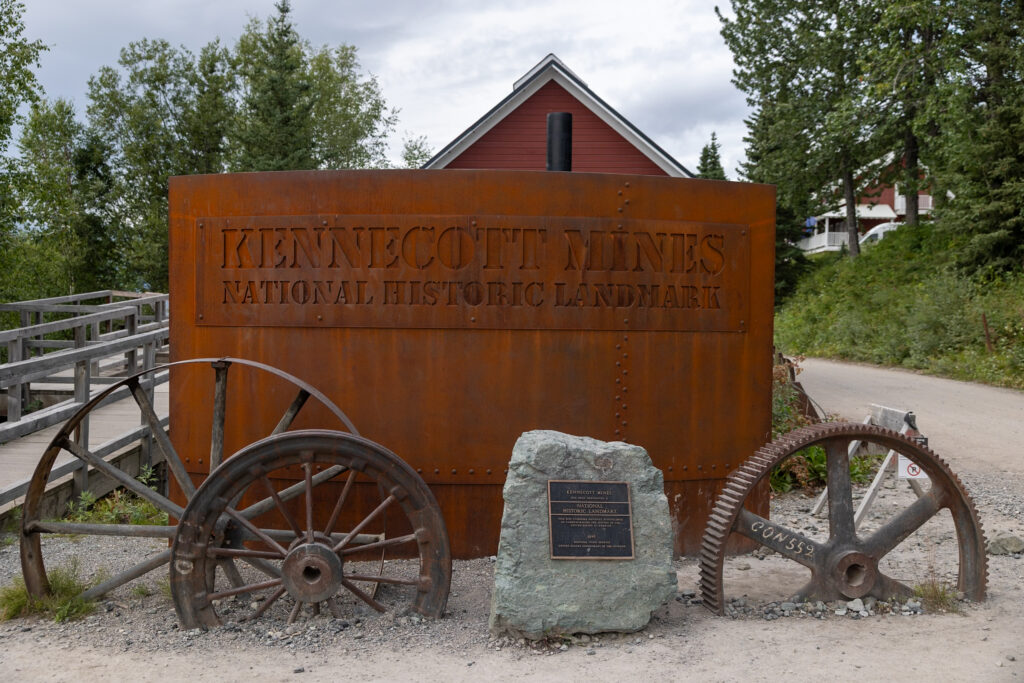
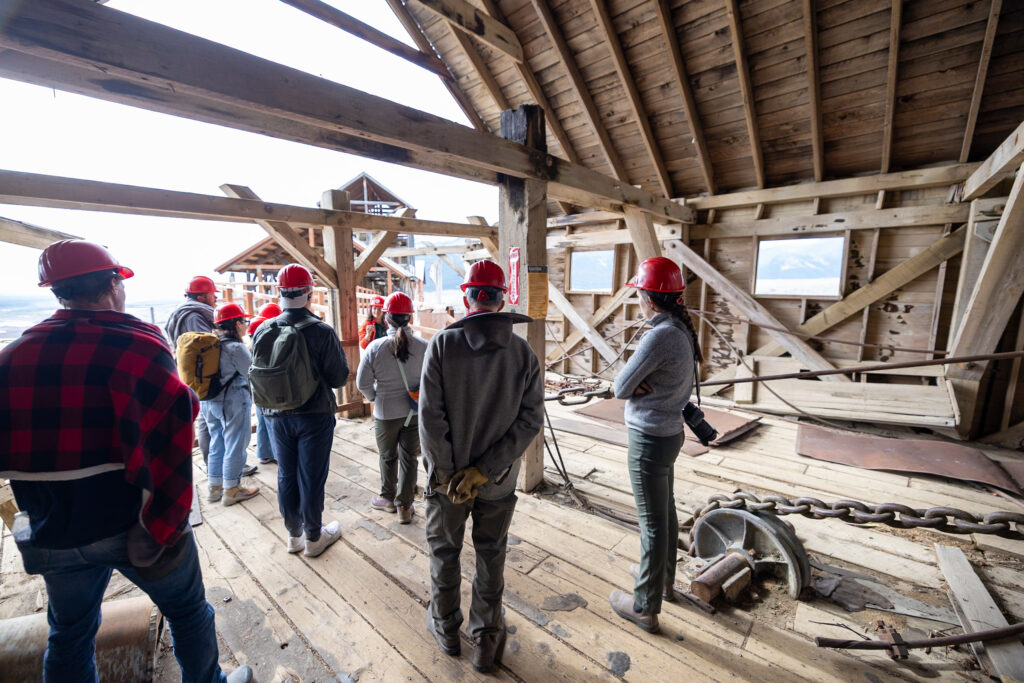
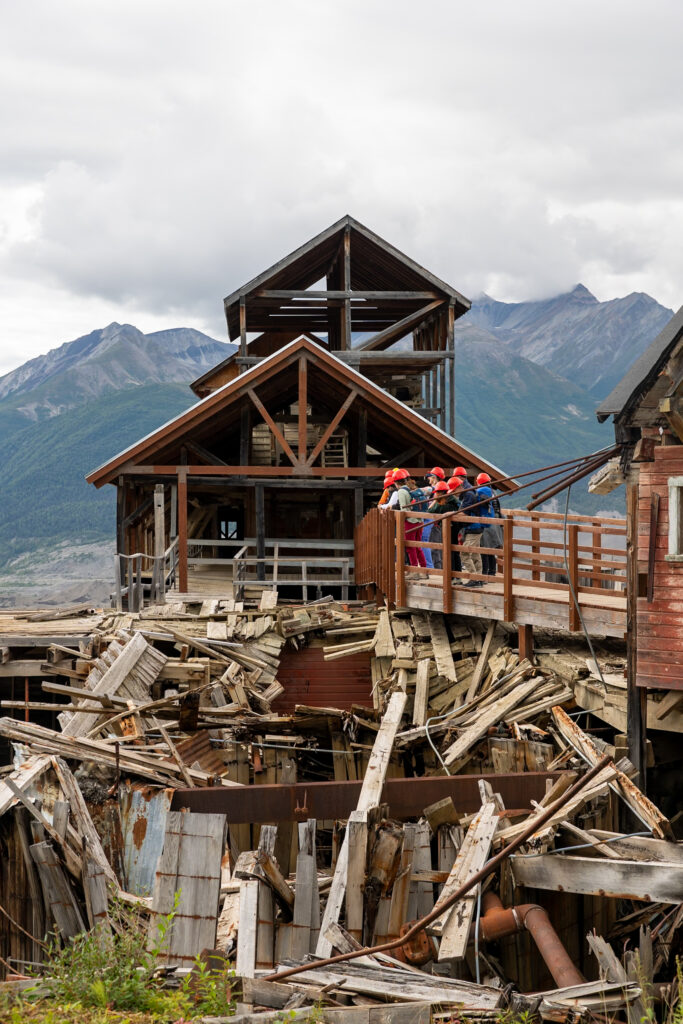
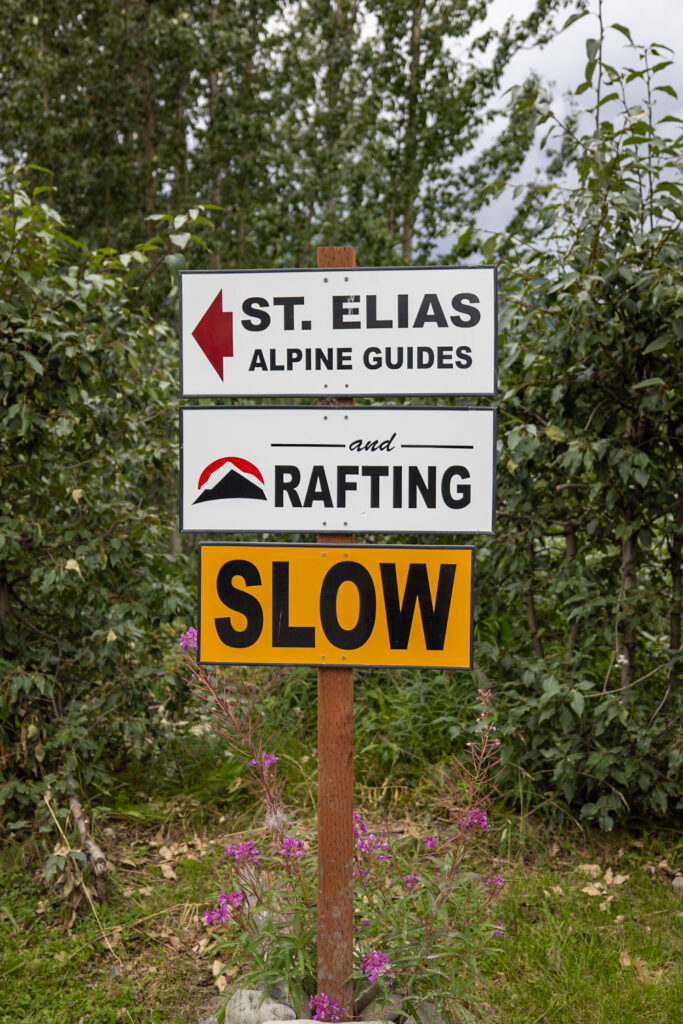
We joined the 2-hour Kennecott Mine Tour with St. Elias Alpine Guides, which took us from the very top of the mill down through its 14 stories. We were given hard hats to wear, which, beyond ensuring our safety, really made us feel like miners! There were about 12 people on the tour with us—the perfect amount for a tour group, in our opinion.
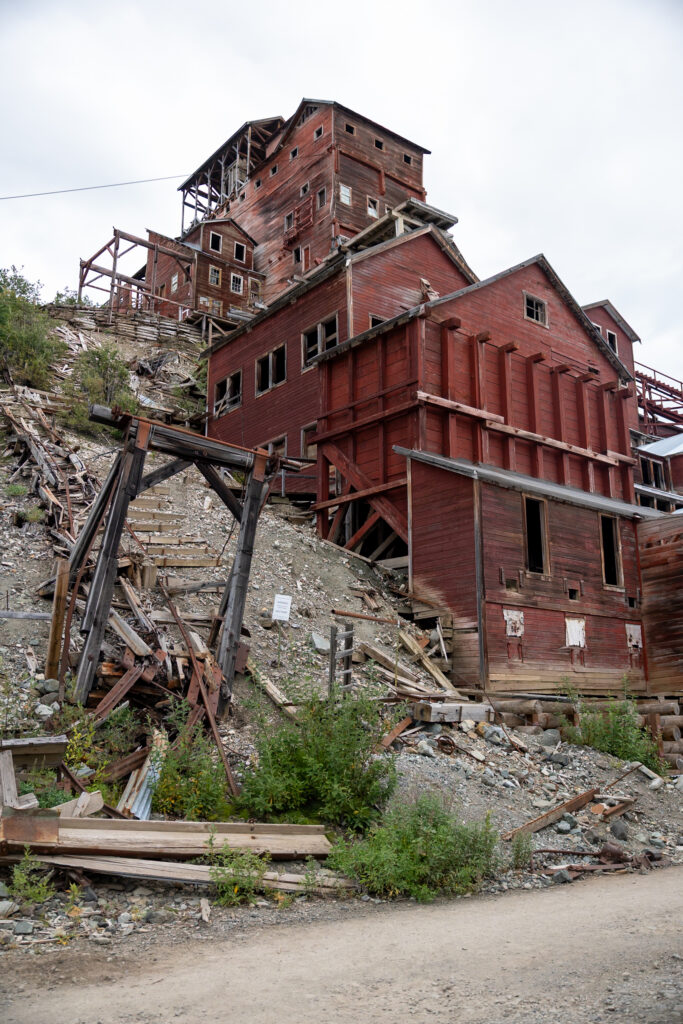
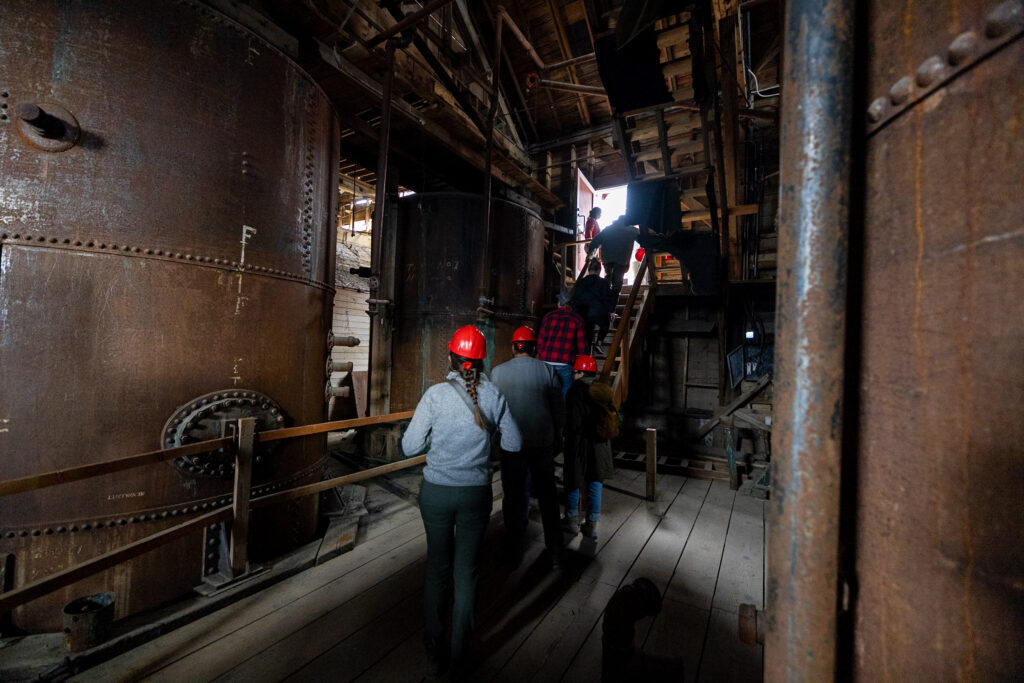

Our guide shared stories and photos of the immigrant workers who built this place and the innovations that made Kennecott a billion-dollar copper empire. Visiting the mine is a must-do for anyone visiting Wrangell–St. Elias, though, be prepared for steep ladders and lots of walking. If you have any concerns about your ability to do this tour, don’t hesitate to reach out to the tour company.
8. Hike the Root Glacier Trail
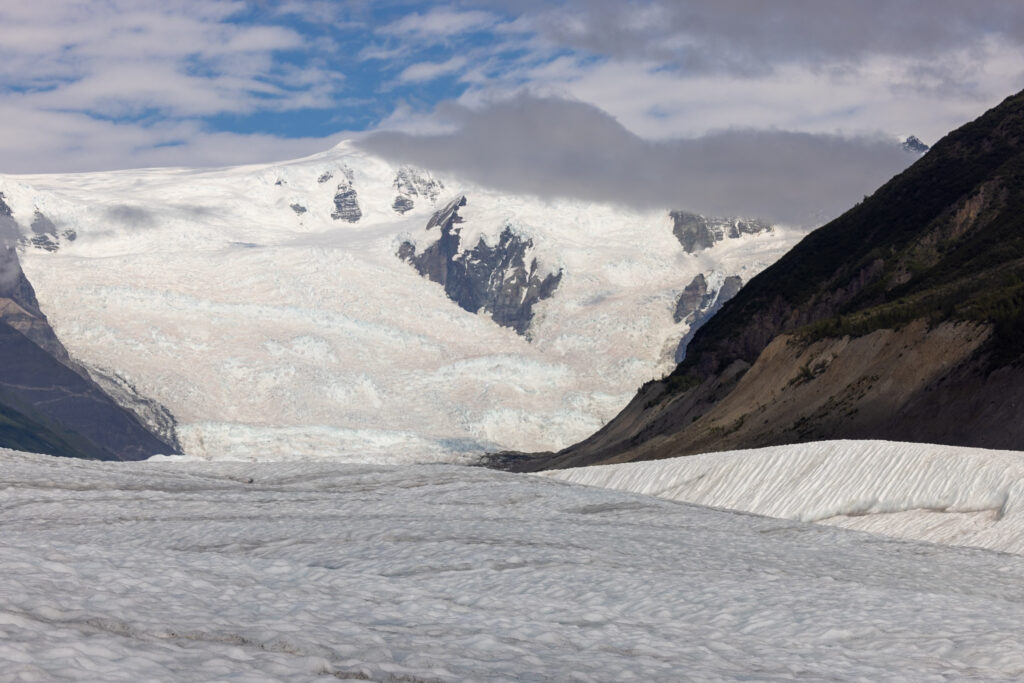
Within walking distance from the town of Kennicott, the Root Glacier Trail is one of the most popular hikes in Wrangell–St. Elias (quickly becoming one of our top hikes in Alaska). This 5.7-mile (9.2-km) out-and-back takes about 2.5–3 hours with 840 ft (256 m) of elevation gain, winding through alpine terrain before dropping you right off at the base of Root Glacier.
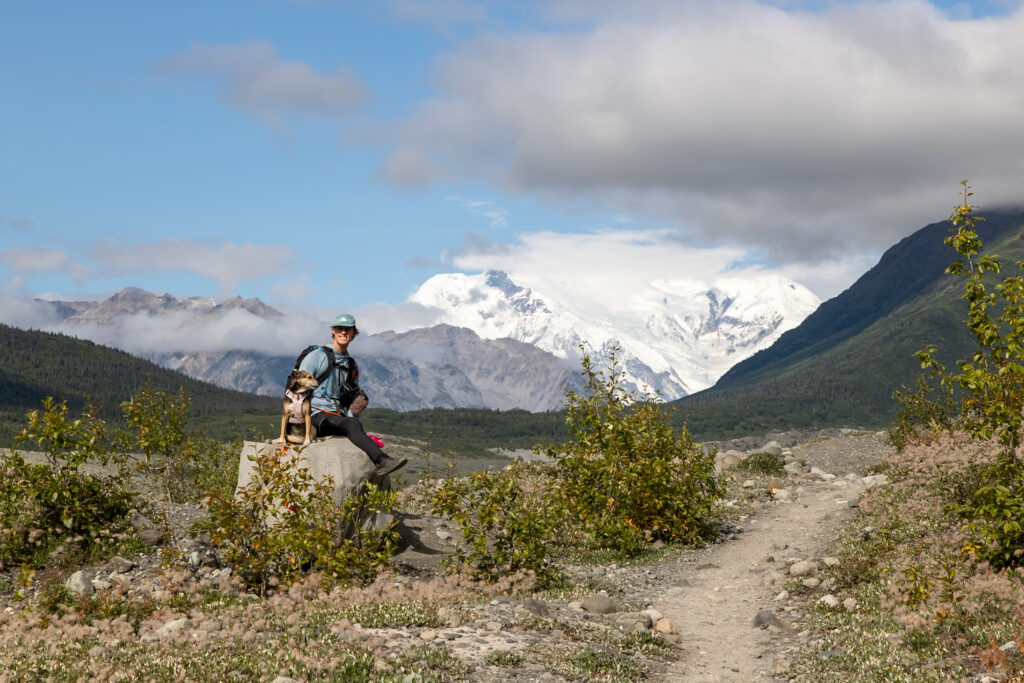
Once you reach the glacier, you’re free to explore as much as you like. The microspikes we brought were game changers for traction, but you can also rent crampons (similar to microspikes) and boots through St. Elias Alpine Guides. If you’re new to glacier hiking, this same company offers guided hikes of Root Glacier, though we found this glacier to be very beginner-friendly.
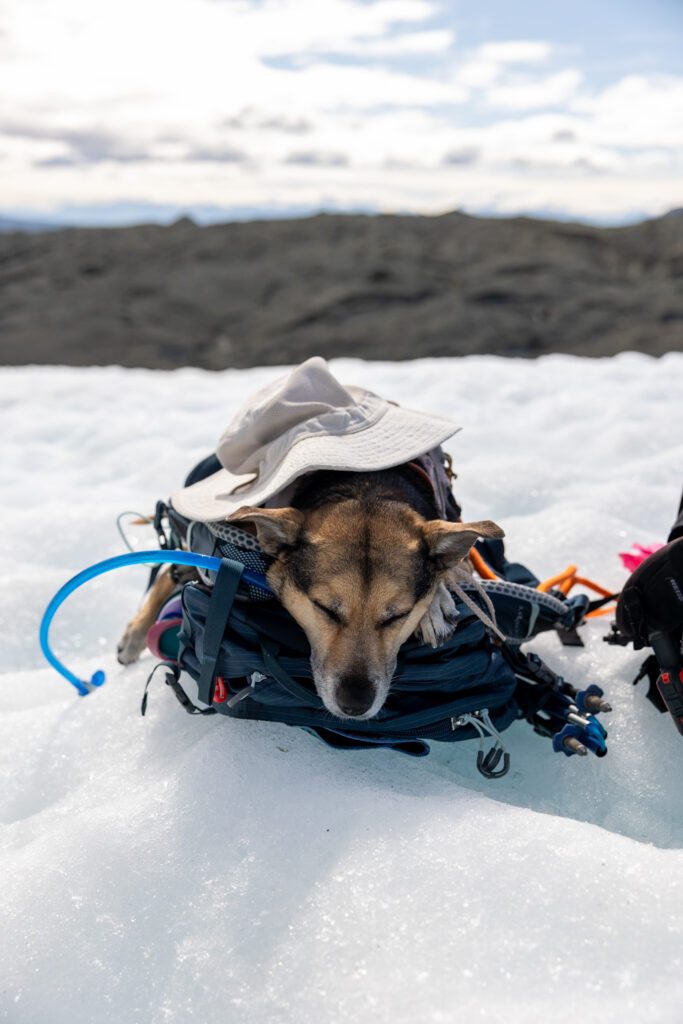
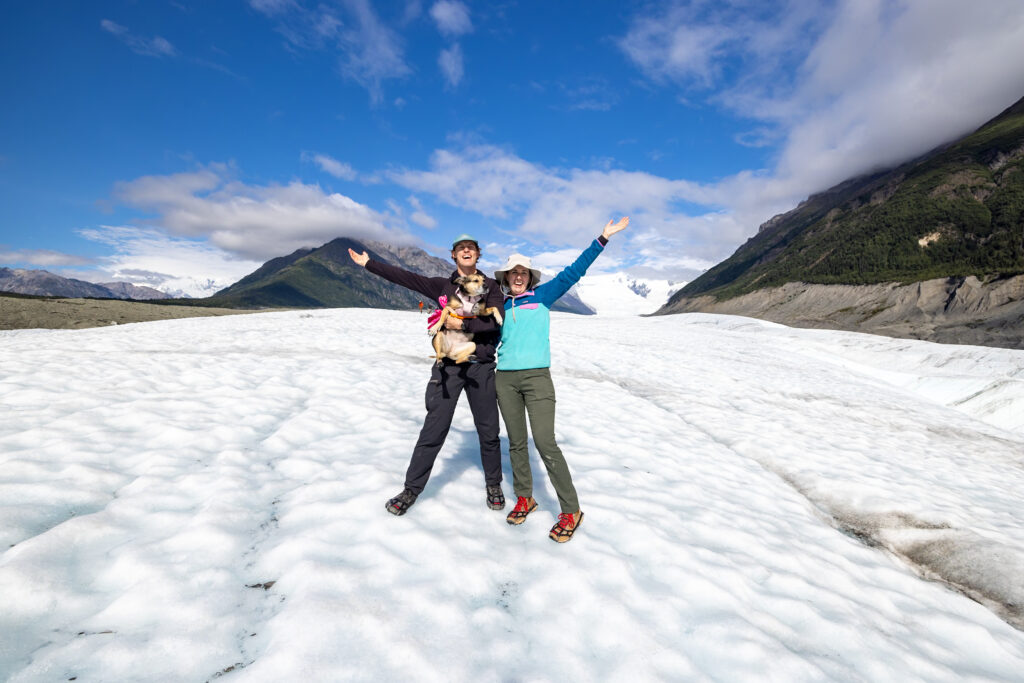
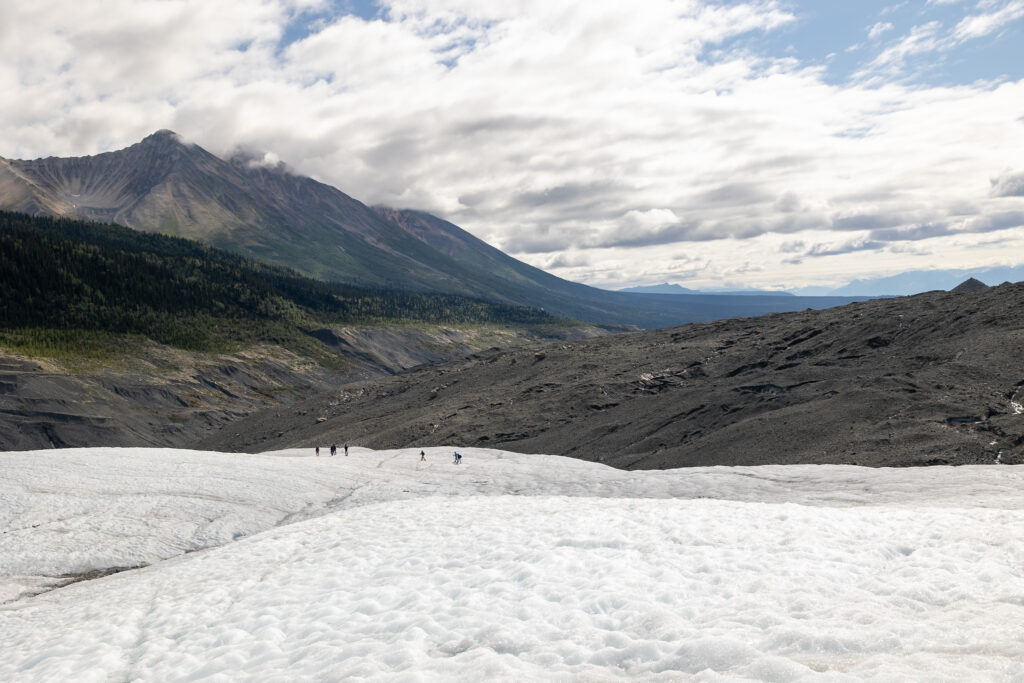
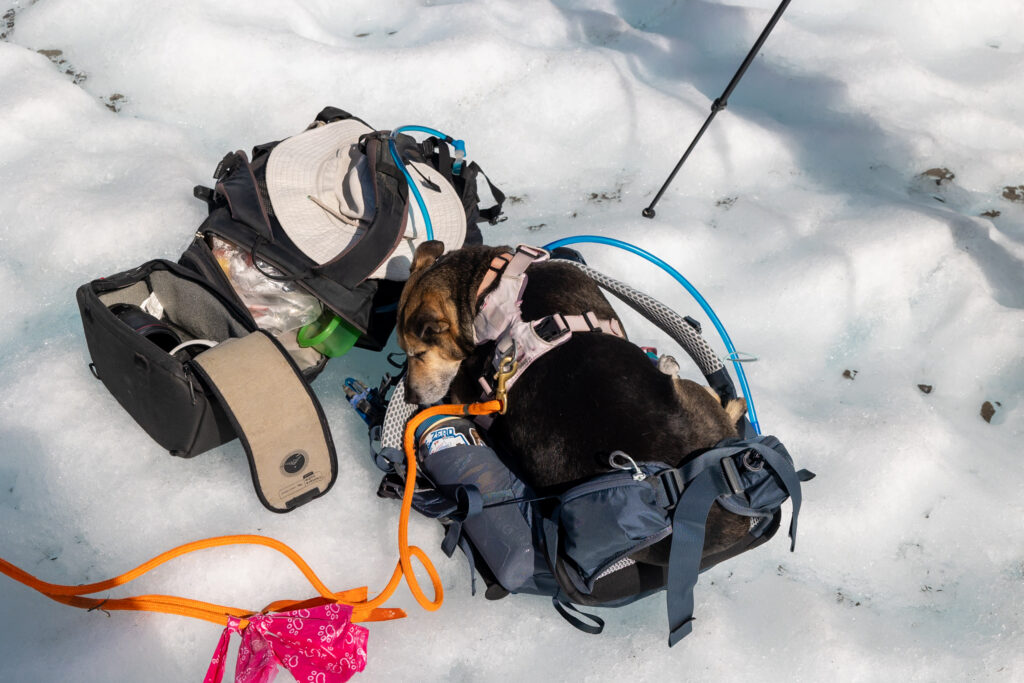
Dogs are allowed on the trail, but the sharp ice was a bit tough on our dog, Ollie’s paws, so we recommend bringing dog booties. The trail itself isn’t too difficult. As long as you take it slowly, trust your instincts, and avoid stepping in puddles (you can’t always tell how deep the cravases are), you’ll do great.
🎒 Great Backpacking Area! There are backpacking sites with food lockers on this trail if you want to stay overnight. If we return, we’d love to do this and catch the sunset or sunrise over the glacier.

With offline maps, wrong-turn alerts, and extra planning features, make the most of every outside adventure with AllTrails Plus. Get 7 days of AllTrails Plus for free!
9. Hike the Bonanza Mine Trail
Another trail that can be accessed right from Kennicott is the Bonanza Mine Trail. This 8.5-mile (13.5-km) out-and-back trail takes about 7 to 8 hours to hike. Its length, as well as steep elevation gain of 3,930 feet (1,198 m), bumps this hike up to a very strenuous trail.
That being said, those who push through are rewarded with sweeping views of the Wrangell Mountains, alpine wildflowers in summer, and the chance to explore the ruins of the Bonanza Mine.
ℹ️ Use Trekking Poles! We highly recommend using trekking poles to help you navigate the sometimes uneven terrain and take some weight off of you.
10. Drive Nabesna Road
If you’re looking to explore an even more remote area of the park, head to Nabesna Road in the north. This 42-mile (68-km) gravel drive sees far fewer visitors than McCarthy Road, making it ideal if what you’re looking for is solitude, wide-open landscapes, and sweeping views of the Wrangell Mountains (home to some of the highest peaks in North America).
On average, this road takes about 90 minutes to drive each way, not including stops, and cell service is limited. Because of this, we recommend downloading the offline Google Maps before starting down this road, just like McCarthy Road.
💡 Listen to this Free Audio Tour of Nabesna Road while you drive, offered by the NPS!

The first 27 miles (43 km) of this road are manageable for most vehicles and include scenic pullouts, short trails, and the Kendesnii Campground. Beyond that, the road becomes more rugged, with three creek crossings between mile 29 and 35. Below, we’ve listed the mile markers where you can expect creek crossings:
- Mile 29.8: Trail Creek crosses the road (doable for most cars without rain)
- Mile 31.2: Lost Creek crosses the road (gets quite muddy after rainfall)
- Mile 34.3: Boyden Creek crosses the road (deepest of the three; exercise caution when crossing or turn back)
🥾 Check Water Depth! Walk across creek crossings first. This way, you can check their actual depth before driving over. This also allows you to feel how quickly the water is moving.
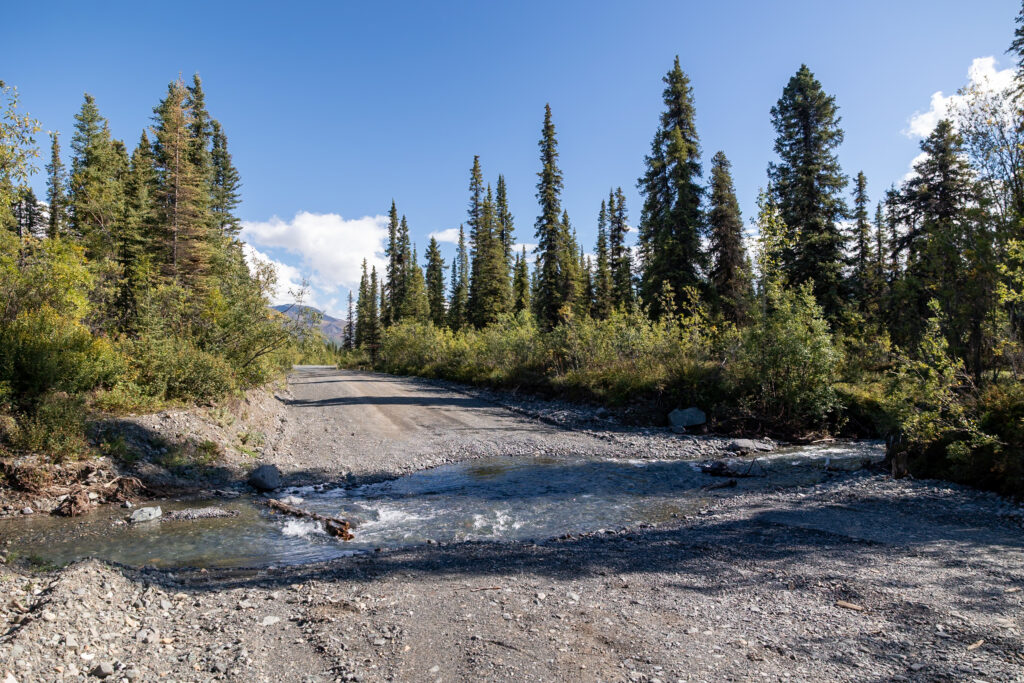

At the very end of the road lie the remnants of historic mining sites you can explore, although the drive itself was what made the trip worth it. The AllTrails map we’ve included below includes some popular pull-offs, rest areas, and trails.
We initially planned to drive the entire length of the road, but decided otherwise after speaking with the ranger at the Slana Ranger Station. She explained the current creek-crossing conditions, and we weren’t comfortable doing it in our van.
With offline maps, wrong-turn alerts, and extra planning features, make the most of every outside adventure with AllTrails Plus. Get 7 days of AllTrails Plus for free!
11. Go Hiking Off of Nabesna Road
Several hiking trails are accessible from Nabesna Road itself. Our favorite was the Caribou Creek Trail, located at mile 18.9 of Nabesna Road. This 7-mile (11.4-km) out-and-back trail takes about 3.5 to 4 hours in total, and although it wasn’t too technical, there were a few creek crossings to keep things interesting. We found rocks to step on over the creeks, which helped keep our hiking shoes dry.
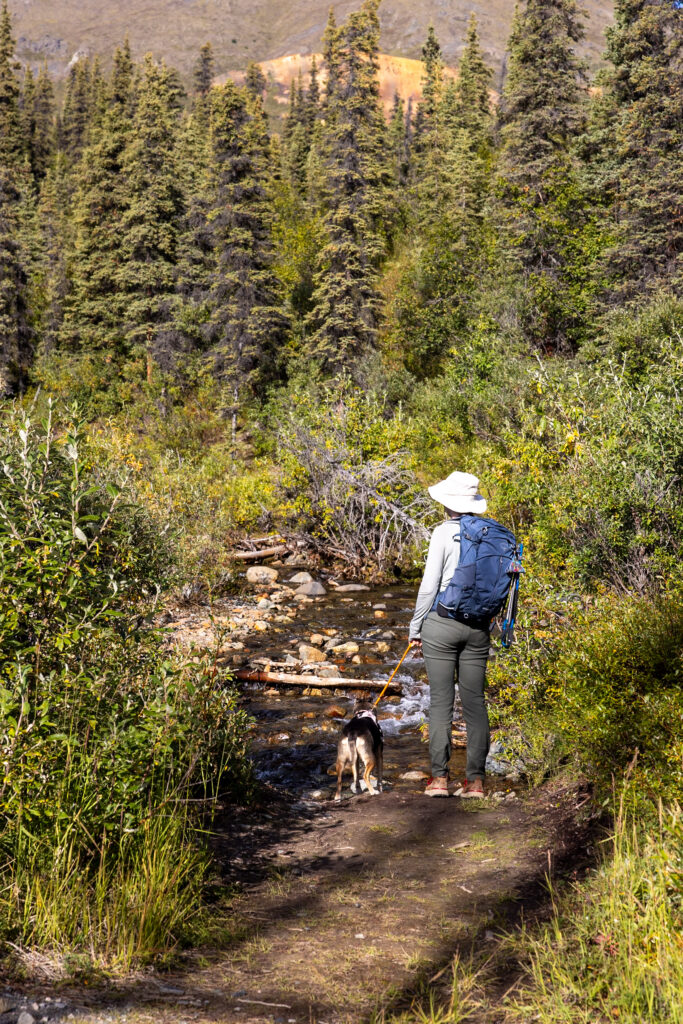
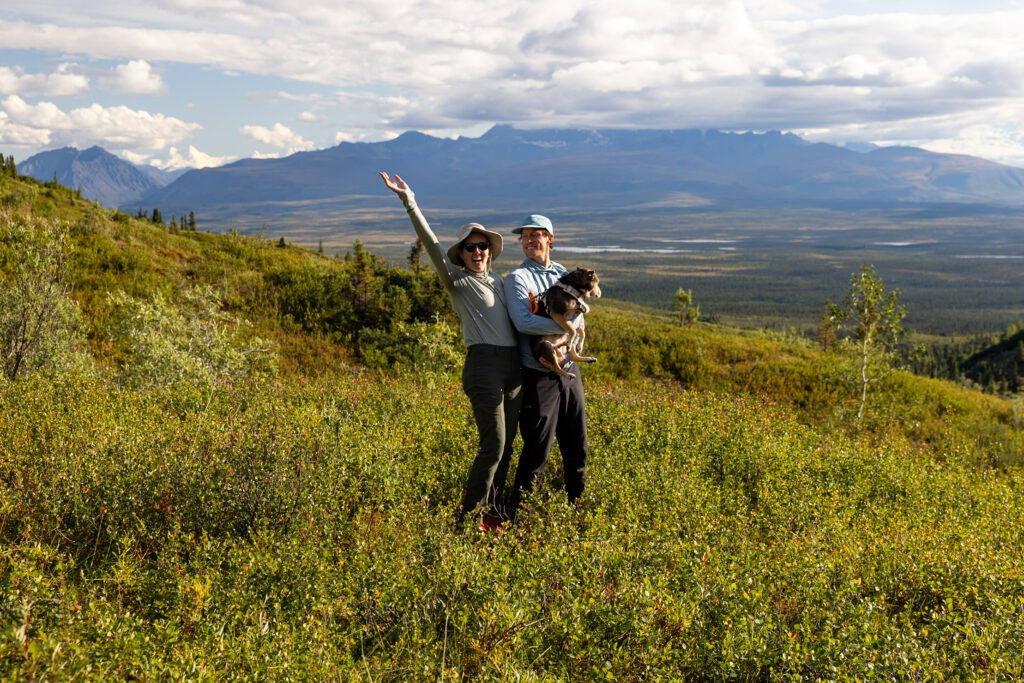
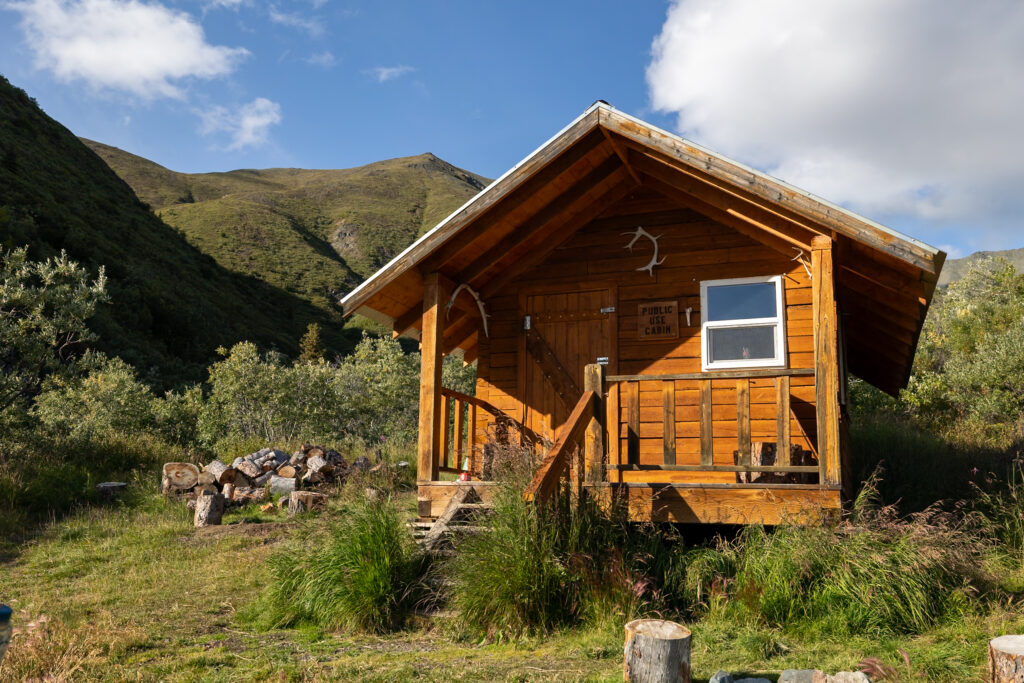
If you hike off-trail towards the end, summiting the ridge just beyond the pit toilet, you get some incredible views of Mount Blackburn (the highest peak in the park). At the turnaround point, you’ll reach the Caribou Creek Cabin, where you can step inside, spend some time, and make a warm fire before heading back.
🫐 Blueberry Picking! The beginning of this trail is filled with blueberry bushes that you can pick as you walk.
Other trails that you can hike further down Nabesna Road include:
- Trail Creek to Lost Creek Loop (Hard): 11 to 12-hour hike at mile 29.8 of Nabesna Road
- Skookum Volcano Trail (Hard): 2.5 to 3-hour hike at mile 36.8 of Nabesna Road
- Rambler Mine Trail (Moderate): 1 to 1.5-hour hike at mile 42.0 of Nabesna Road
12. Go Camping in Wrangell-St. Elias
If you really want to experience the wilderness of Wrangell-St. Elias National Park, consider spending a night (or a few) under the stars. Whether you’re looking for free, primitive camping, or want to go glamping by a lake, Wrangell-St. Elias has something for you! Below, we’ve compiled a list of popular public and private campgrounds in the Nabesna and McCarthy areas.
| Campgrounds | Price | About |
| Base Camp Kennicott | $35-45 | Foot of pedestrian bridge, no-frills campground, convenient location. Tent, truck campers, vans, glamping tents, and RVs can stay here. |
| The Boneyard Campground | Free | No-frills tent-only campground in downtown McCarthy. |
| Glacier View Campground | $25-35 | Basic campground just off McCarthy Road before Base Camp Kennicott. No water, electricity, or sewer. |
| Camp McCarthy | $175+ | Glamping campground with riverside views. |
| Jumbo Creek Campground, Glacier Campground, and Donoho Basin Group Campground. | Free | Basic campgrounds off of Root Glacier Trail. |
| Kendesnii Campground | Free | Located off of Nabesna Road, this NPS campground is free to stay at! No water, electricity, or sewer. |
| Free Pull-Offs (Various) | Free | Basic campgrounds off the Root Glacier Trail. |
In McCarthy, we stayed one night at Base Camp Kennicott, right at the foot of the pedestrian bridge. This campground was pretty no-frills as far as established campgrounds go, with no showers, electricity, or running water. And although the price is steep, it’s offset by its convenient location and stunning views. We were right on the Copper River and had our own picnic table, where we enjoyed our dinner while watching the sunset.
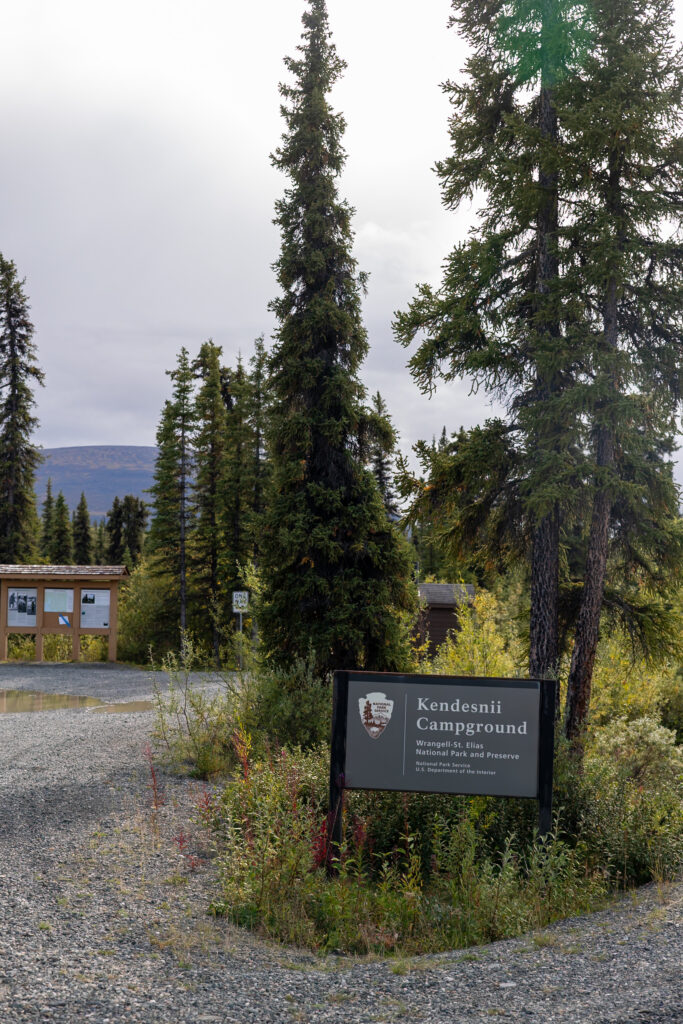

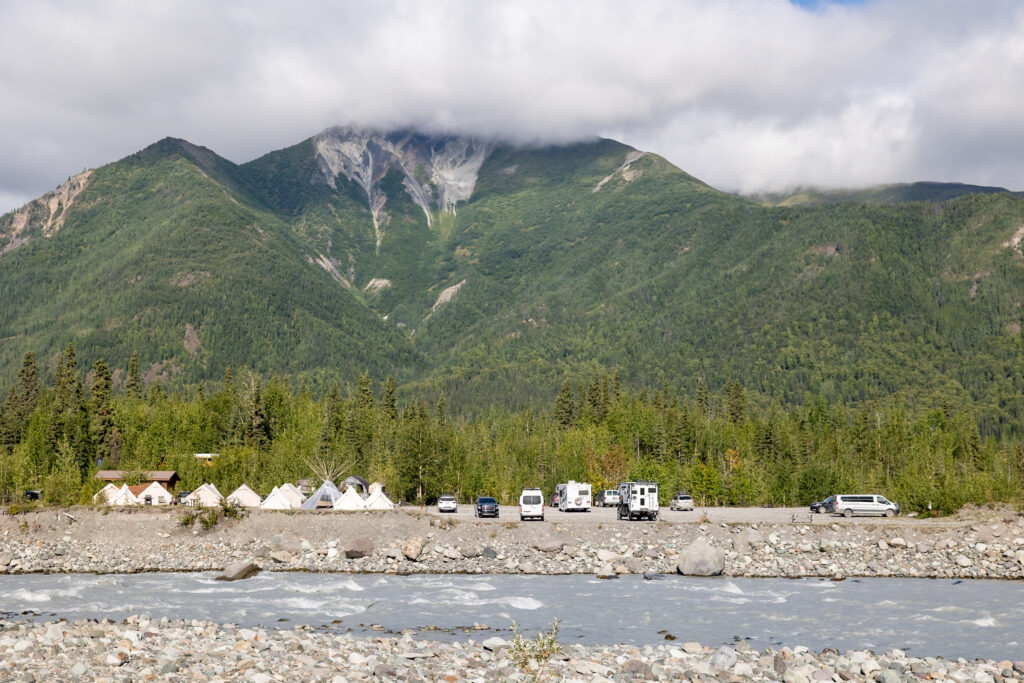
Other than our one night at Base Camp Kennicott, we camped for free at pull-outs off of McCarthy Road and at Kendesnii Campground in the north during our stay. This is what we recommend doing if you’re also travelling on a budget.
13. Spot Wildlife
From Dall sheep to golden eagles, Wrangell–St. Elias is home to an incredible range of wildlife. Some of the best places to spot animals are along rivers, in alpine tundra, and in wide-open valleys, especially the areas away from the main roads. Dawn and dusk are the most active hours, and a pair of binoculars can help you scan from a distance.

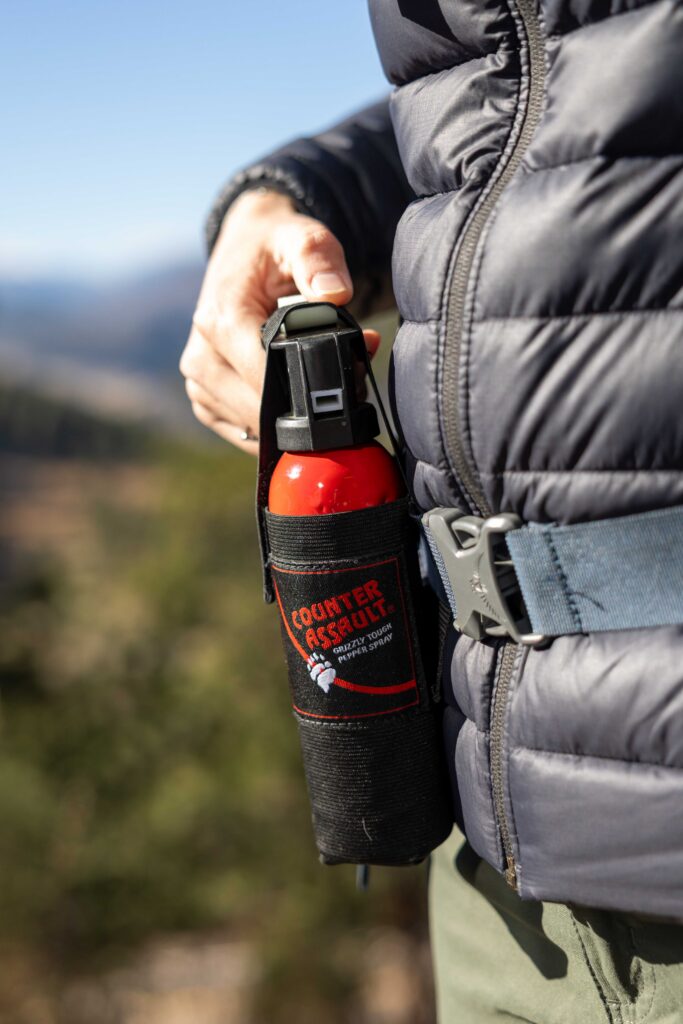
As always, prioritize safety for both you and the animals. Carry bear spray when hiking or camping, never approach wildlife, and remember the rule rangers shared with us: if your presence is influencing their behavior, you’re too close.
🐻 Rent Bear Spray! If you want to save some money, you can rent bear spray in Anchorage at a spot like Alaska Bear Spray Rental instead of buying a whole canister. Also, if you plan on flying at any point, you’ll have to dispose of your bear spray anyway.
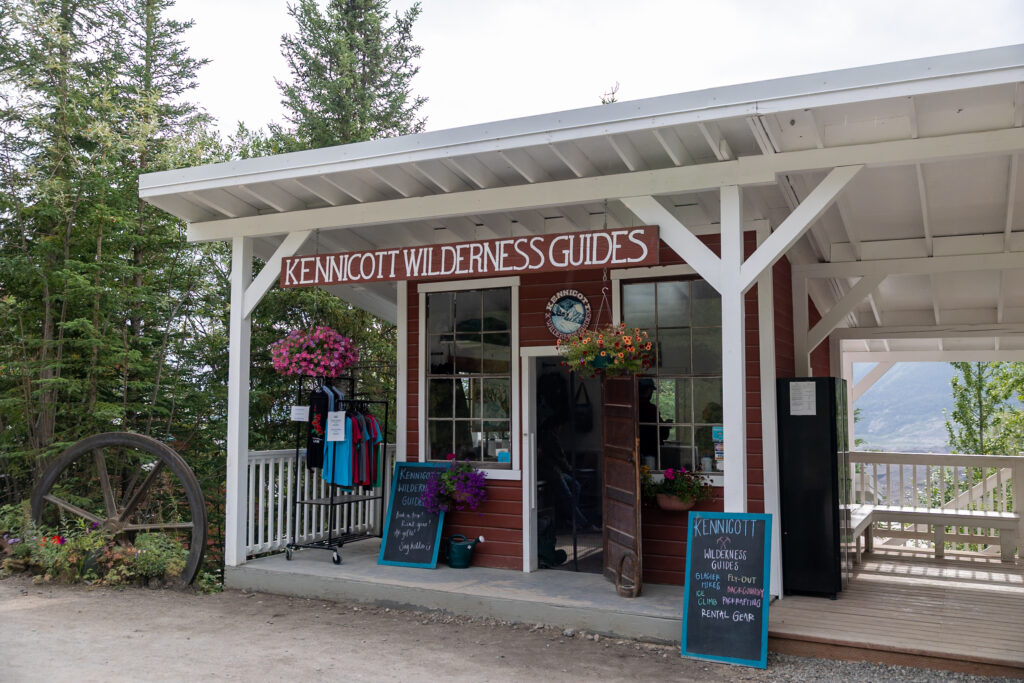
14. Go on a Guided Experience with a Local Outfitter
Going on a guided experience with a local outfitter allows you to do an activity that you wouldn’t be able to do alone. Whether you’re interested in kayaking trips, horse riding, or even multi-day backcountry hikes, the NPS maintains a full list of local and licensed guide companies here. Here’s a breakdown of some of the most popular guided experiences offered:
- Backpacking Trips: Multi-day backcountry routes (often fly-in or point-to-point) with logistics handled by your guide.
- Kayaking & Rafting: Paddle past glaciers and wildlife on guided lake tours like Kennicott Glacial Lake, or multi-day river expeditions down the Nizine, Copper, or Chitina rivers.
- Guided Hikes: Local experts lead glacier walks, historic mine hikes, and scenic ridge routes.
- Ice Climbing: Beginner-friendly glacier climbs to full alpine routes with instruction and gear included.
- Mountaineering: Technical summit expeditions on remote high peaks with full guiding support.
- Skiing (Backcountry & Touring): Spring fly-in ski trips with expert routing and avalanche awareness.
15. Visit in the Winter
If you decide to visit the park in the winter, you’ll enjoy spectacular scenery, but you have to be self-sufficient and prepared, as all the visitor centers, ranger stations, and local businesses close. If you do choose to visit during the winter, here are a few activities that you can do:
- Skiing & Snowshoeing: In winter, you can ski or snowshoe the Copper River Bluff Trail, Boreal Forest Trail, and Valdez Trail near the Copper Center Visitor Center. Trails aren’t groomed often, so expect to break trail. Day parking is available at the entrance circle outside the park gate (don’t park inside, as the gate closes at 5 PM year-round).
- Snowmobiling (Snowmachining): Snowmobiles are allowed on public land throughout the park as long as there’s adequate snow on the ground. No permit is required.
- Hiking: You can hike any trail in the park during winter, but expect to break your own trail and plan for zero services or support. Only go if you’re fully prepared for extreme conditions and self-reliance.
⛅ Best Time to Visit Wrangell-St. Elias National Park
The most popular time to visit Wrangell–St. Elias National Park is summer (June through August) when the days are long, most services are open, and roads and trails are fully accessible. This is the ideal time for hiking, glacier trekking, kayaking, flightseeing, and exploring McCarthy and Kennecott. Expect the warmest temperatures of the year and the most reliable conditions—but also the most visitors.
- Summer (June to August): The sweet spot for most travelers is during the summer months. This is when adventure opportunities are at their peak, and the park is at its most welcoming.
- Shoulder Seasons (May & Sept): The last half of May and the first half of September experience fewer visitors, while still offering doable weather conditions. The other half of these months, there’s usually snow on the ground.
- Winter (October to April): Winter transforms the park into a remote, frozen, and mostly inaccessible place. Nearly all services are closed, and access to McCarthy and Kennecott requires careful planning.
🗓️ How Many Days in Wrangell-St. Elias National Park?
With its size and remoteness, Wrangell–St. Elias is not a quick stop. How long you stay will shape what you’re able to experience, so here’s a realistic breakdown based on different trip lengths:
- 2 Days: Perfect for first-timers who want to see the essentials. Spend Day 1 exploring McCarthy and Kennecott, touring the historic mill, and taking in the town sites. Use Day 2 to hike the Root Glacier Trail.
- 3 to 4 Days: This is how long we stayed. You’ll experience the highlights without rushing. In addition to everything above, you’ll have time for something big: a flightseeing tour, Bonanza Mine Trail, or even some time up by Nabesna Road. This timeframe felt perfect to us—full but not hectic.
- 5+ Days: Best for adventure-bound travelers. With this amount of time, you can take on multiple major hikes, backpacking trips, or combine both sides of the park (McCarthy/Kennecott + Nabesna Road) with ease. When we return to Wrangell, we hope to do a backpacking trip and a rafting trip, making this the perfect time frame.
🚗 How to Get to Wrangell-St. Elias National Park
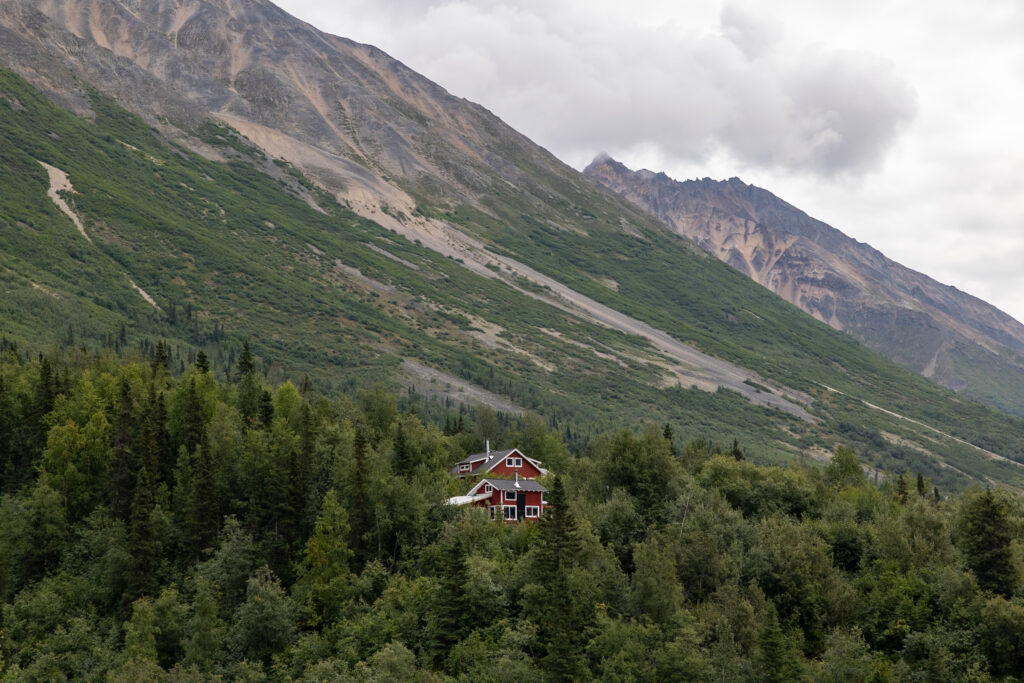
Located in southeastern Alaska, Wrangell-St. Elias National Park is massive and remote, spanning over 13 million acres. This massive size means there’s no single “main entrance.” Most visitors access the park via driving its two main roads (McCarthy and Nabesna), flying in from small regional airports, or coming in on guided tours. The most popular region of the park is Kennecott and McCarthy. Here’s a breakdown of how to reach the park:
- Car: You can drive into the park via the McCarthy Road from Chitina or the Nabesna Road from Tok. Both are gravel roads offering scenic views, but conditions vary—check with park rangers before heading out. If you don’t have your own vehicle, consider renting a car.
- Shuttle to McCarthy: If you don’t want to drive McCarthy Road yourself, the Kennicott shuttle can take you from Glennallen, Chitina, and other nearby towns into McCarthy for $119-169 round-trip, depending on where you leave from.
- Plane: Wrangelll Mountain Air offers charter flights between McCarthy and Chitina 3 times a day and cost around $220 each way, per person.
- In-park shuttles: Once at the McCarthy footbridge, services like the Copper Town Shuttle and Blackburn Heritage Shuttle (907-406-9599) can bring you to downtown McCarthy and Kennicott.
🏨 Where to Stay Near Wrangell-St. Elias
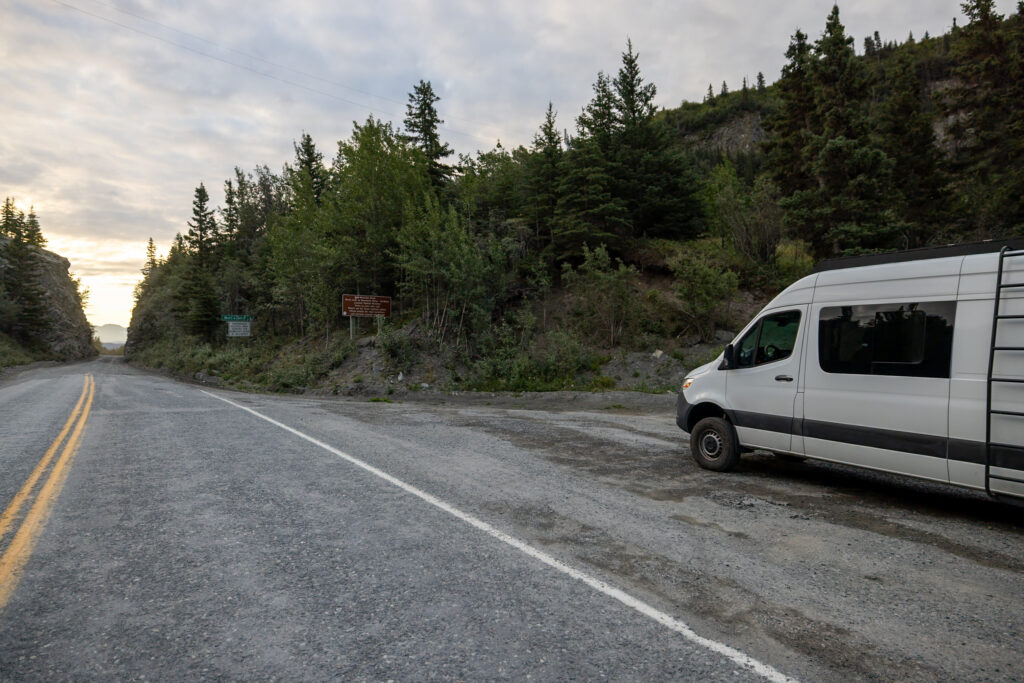
Wrangell-St. Elias offers a wide variety of accommodation options, from camping under the stars to cozying up in a cabin. Here’s a breakdown of where you can stay the night, with some specific recs after each:
- Hotels, Lodges, & Cabins: We’ve heard great things about Kennicott Glacier Lodge (Kennicott), Ma Johnson’s Hotel (McCarthy), McCarthy Guesthouse (McCarthy), and Blackburn Cabins (McCarthy). There are also plenty of options outside of the park, in and around Copper Center.
- Established Campgrounds: Kendesnii Campground (Free, on Nabesna road), Copper River Campground (on McCarthy Road), and Base Camp Kennicott (right at the footbridge into McCarthy) are just a few of your options.
- Primitive Camping: You can also check for primitive camping spots on iOverlander, which we always refer to when looking for public land to stay on. Along Nabesna Road and McCarthy Road there are tons of pull-outs where you can spend the night for free.

Try Harvests Hosts and receive a free month on us!
Members get unlimited overnight stays at thousands of small businesses, including farms, wineries, breweries & distilleries, and attractions, that invite RVers to park for safe and convenient stays.
Use code schoandjo20 at checkout for an extra discount!
💰 How Much Does a Trip to Wrangell-St. Elias Cost?
Wrangell-St. Elias National Park doesn’t charge an entrance fee, but you will likely spend money on tours, meals, souvenirs, and other activities during your visit. To give you a sense of what to budget, here’s a breakdown of the average costs for the main expenses in the park.
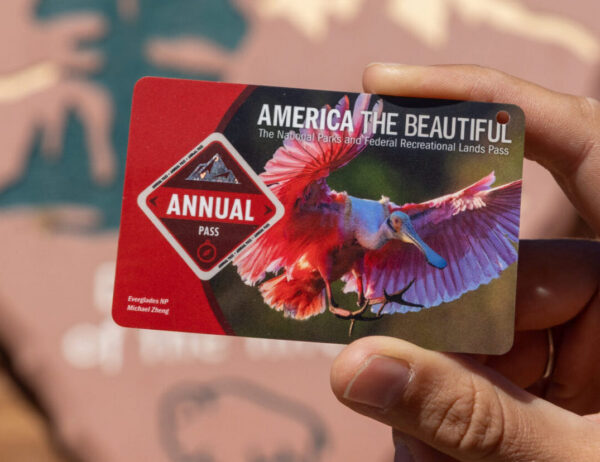
🎫 Consider investing in the America the Beautiful pass for $80 like we did if you’re planning on travelling to several parks within the year.
| Activity | Price | Notes |
|---|---|---|
| Flightseeing Tour with Wrangell Mountain Air | $320 to $520 per person (50 minutes to 2 hours) | We tipped our flightseeing guide $20. |
| Copper Mill Tour | $36 per adult | We tipped our guide $20. |
| Parking at Pedestrian Bridge | $6-12 per day | We didn’t pay for parking as we “parked” as campers at their campground. |
| Shuttle to Kennecott | $10-$20/person for 1 day to a week | $1-5 tip to drivers per person |
| Dinner | $25-35 per person | This number is based on average prices for a hotel or lodge in Kennicott. |
| Hotels or Lodges | $250+ per night | This number is based off of average prices for a hotel or lodge in Kennicott. |
| Campgrounds | Free to $45 per night | We paid $65 at Base Camp Kennicott (1 night of camping + unlimited shuttle pass), but also enjoyed two nights of free camping at Kendesnii Campground. |
🥾 Packing Essentials for Wrangell-St. Elias
Below, we’ve outlined all the gear that came in handy for us when visiting Wrangell-St. Elias National Park. In this first section, we’ve highlighted specific pieces that you might need to purchase or rent if it’s your first time visiting the area.
Essentials for Wrangell-St. Elias
- Tire Tools – If you plan on driving McCarthy and/or Nabesna Road, we recommend this deflator, this inflator, and a tire repair kit.
- Bear Spray – Become familiar with bear safety practices, among which include packing away food, minimizing bear disturbance, and carrying bear spray for emergency use.
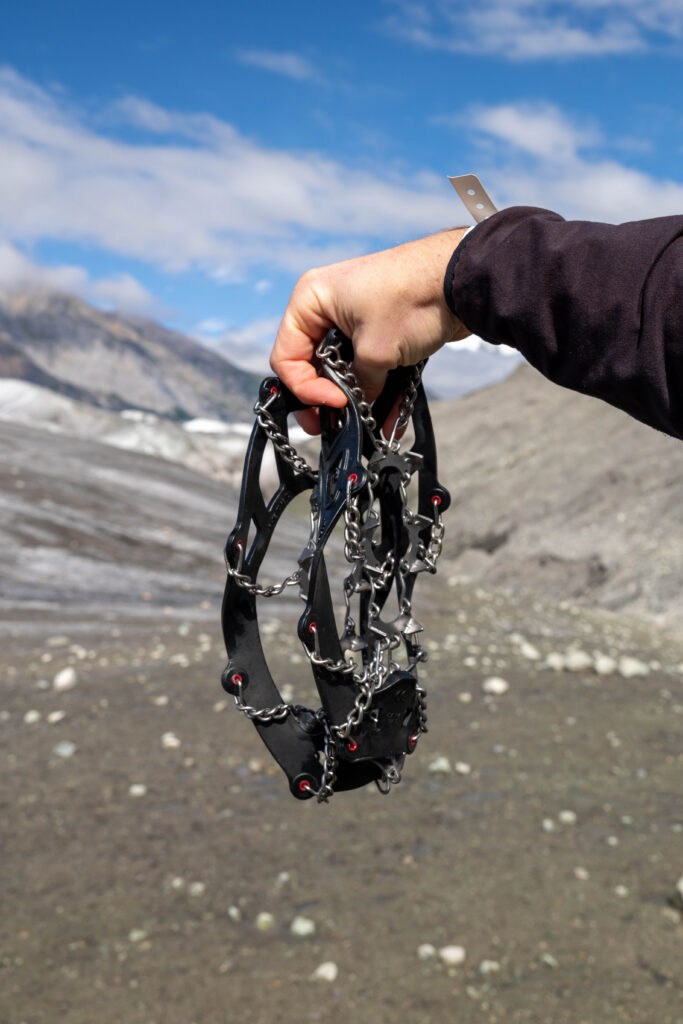
- Microspikes – Microspikes can be attached to the bottom of your hiking shoes to improve traction when hiking over snow and/or ice. If you’re planning to hike in areas with ice and snow in the summer or at any point in the winter, microspikes will become your best friend.
- Hiking poles – Especially on long, high-elevation hikes, a solid pair of hiking poles really helps take the pressure off of joints.
🐻 Rent Bear Spray! If you want to save some money, you can rent bear spray in Anchorage at a spot like Alaska Bear Spray Rental instead of buying a whole canister. Also, if you plan on flying at any point, you’ll have to dispose of your bear spray anyway.
Hiking Essentials
Read next: Hiking Gear for Beginners!
Sun Protection
Safety Essentials
🪧 Learn More: How to Help Wrangell-St. Elias
Wrangell-St. Elias National Park is a spectacular region of rare wildlife, ancient icefields, and some of the last truly untouched wilderness in North America. As visitors, the best way to help conserve this park during your visit is by following Leave No Trace Guidelines, maintaining distance from all wildlife, and packing out all trash.
If you wish to financially support the park, consider donating directly at a visitor center or to their non-profit, tax-exempt partner, Alaska Geographic. You can also donate to the National Parks Conservation Association, who help fund conservation efforts throughout the entire US National Park system. 💚

📰 Related Articles
- How to Choose an Unforgettable Flightseeing Tour of Wrangell-St. Elias
- How to Drive McCarthy Road to Wrangell-St. Elias: Step-by-Step
- How to See Wrangell-St. Elias National Park in 48 Hours
- The 9 Best Hikes in Wrangell-St. Elias National Park, Alaska
- 11 Best Things to Do in McCarthy, Alaska: Ultimate Travel Guide
- More Coming Soon!
📺 Watch on YouTube
- Coming Soon!
🔍 Ready to Visit Wrangell-St. Elias National Park?
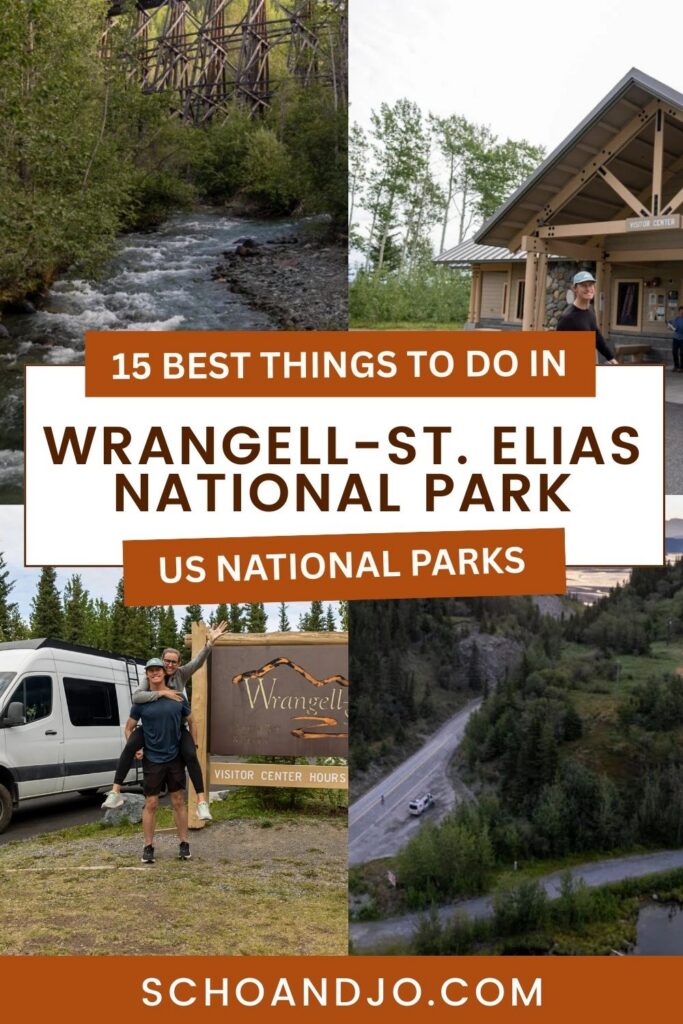
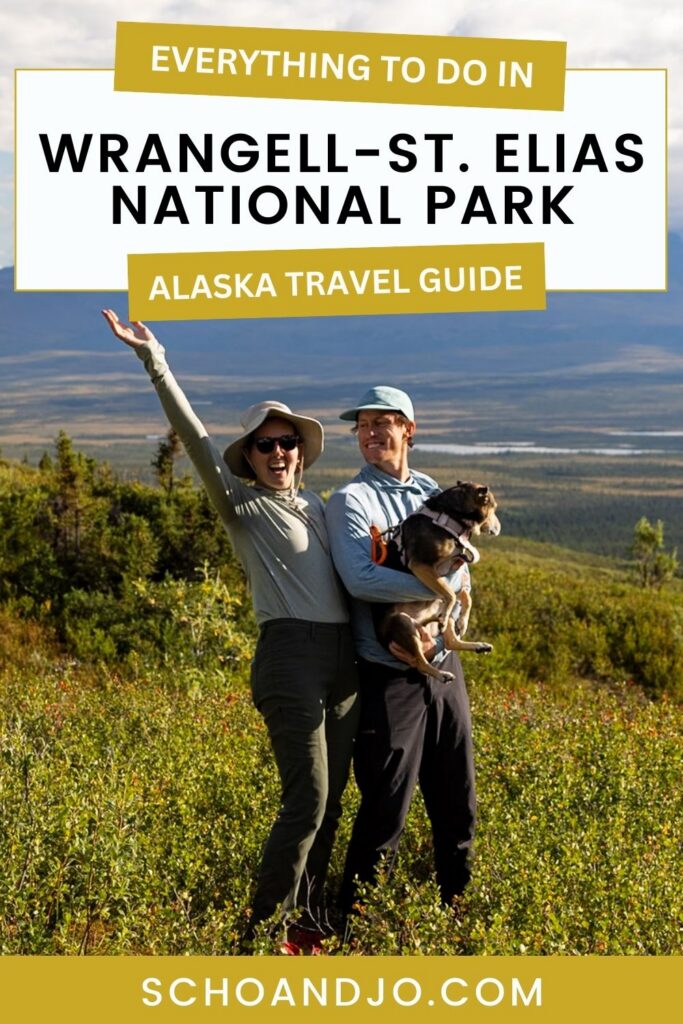
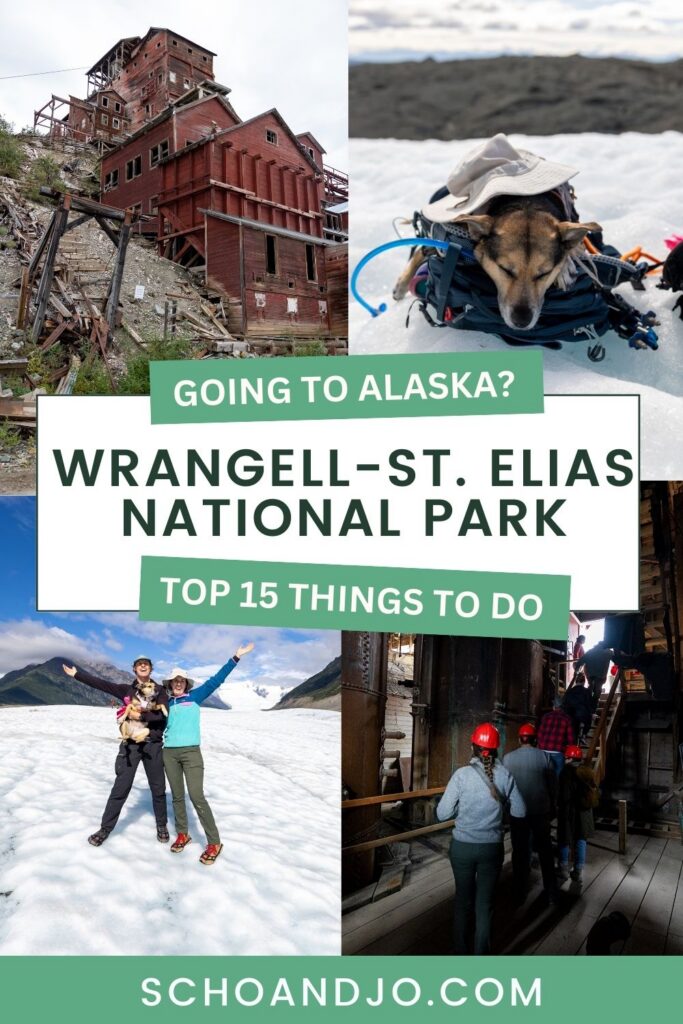
Pin this guide to the best things to do in Wrangell-St. Elias National Park to make planning your upcoming trip a breeze!


Leave a Reply
You must be logged in to post a comment.