

Saguaro National Park in the Sonoran Desert is an amazing place to go camping. With gorgeous night skies and tons of hiking trails, this Arizona park is a camper’s paradise. Although there are six backcountry camping spots within Saguaro East, the park has no front-country camping. The surrounding Tucson area offers more options for tents and RVs.
In this post, we’re sharing our #1 favorite campground near Saguaro National Park, as well as 22 other options in case that one is filled up. Stay tuned to the end of this post for more useful travel info like what to pack, when to visit, and more!
Note: We use affiliate links which provide us a little kickback each time you use one of our links and make a purchase, without any additional cost to you. We do not recommend products that we don’t already love or have heard great things about, so you can trust we’re only suggesting great products to you.
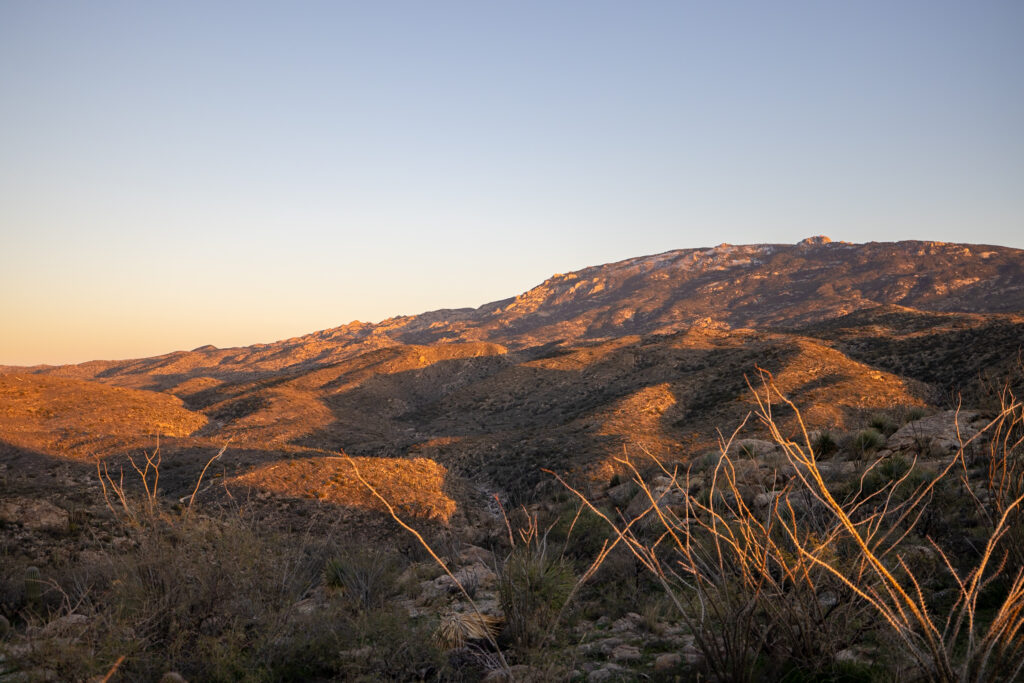
⛺ Campgrounds Near Saguaro National Park
Below, we’ve rounded up all your best options for camping in or near Saguaro National Park. Click the name to jump down to an expanded section where you can read more, see photos of some campgrounds, and reserve your spot, if applicable!
💚 We’ve put a heart next to our favorite spot we camped at near Saguaro National Park!
| Campground | Price per Night | Tent or RV |
|---|---|---|
| Saguaro’s Backcountry (Various) | $8/person | ⛺ |
| Gilbert Ray Campground 💚 | $10-40 | ⛺ 🚐 |
| Arizona State Parks (Various) | $25-50 (+fees) | ⛺ 🚐 |
| Colossal Cave Mountain Park | $15 | ⛺ 🚐 |
| Coronado National Forest (Various) | Free to $20-28 | ⛺ 🚐 |
| Tucson KOA Resort | $45-75+ | ⛺ 🚐 🛏️ |
| Ironwood Forest National Monument | Free | ⛺ 🚐 |
| Arizona Trust Land | $20 one-time permit | 🚐 |
🗺️ Map of Campgrounds Near Saguaro National Park
The brown tent symbols on this map are the six backcountry campgrounds that are within Saguaro National Park, which require hiking. The other green tents stand for all the campgrounds outside of the official bounds of the park.
How to use this map: We have saved the locations from this guide on this map. You can save this map to your Google Maps by pressing the star icon. In your Google Maps, click the menu icon and then Saved Maps, where this map will appear.
Saguaro National Park Backcountry Camping
Although Saguaro National Park does not have a drive-in campground, the National Park Service does permit backcountry camping on the eastern side of the park. There are a total of 6 wilderness camps, each with 3-6 sites, that can be reached by foot or livestock (no RV spots).
| Campsite Name | Number of Sites | Campground Elevation | Nearest Trailhead | Distance from Nearest Trailhead |
|---|---|---|---|---|
| Manning Camp | 6 sites | 7,920 feet | Turkey Creek | 7.5 miles |
| Spud Rock Spring | 3 sites | 7,400 feet | Turkey Creek | 5.3 miles |
| Happy Valley Saddle | 3 sites | 6,200 feet | Miller Creek | 4.1 miles |
| Juniper Basin | 3 sites | 6,000 feet | Tanque Verde Ridge | 6.9 miles |
| Grass Shack | 3 sites | 5,200 feet | Loma Alta/ Hope Camp | 10 miles |
| Douglas Spring | 3 sites | 4,800 feet | Douglas Spring | 6.3 miles |
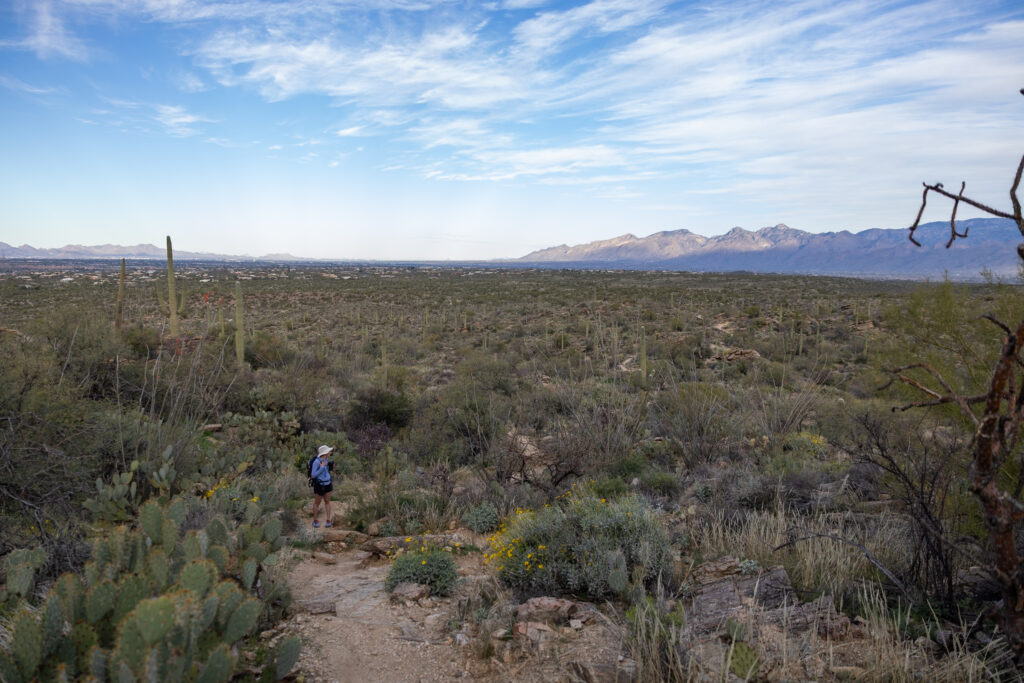
Amenities at each include pit toilets, hitch rails for livestock, and natural water sources, depending on the season. If you do decide to use natural water, you have to treat it. As these spots are hike-in only, expect to walk anywhere from 4 to 10 miles to reach your campground. The campground with the shortest hike is Happy Valley, at only 4.1 miles from the nearest trailhead.
To reserve a spot in the Saguaro Wilderness Area, you must take out a permit, which cost $8/person, per night. You can get your permit and specific camping spot at Recreation.gov.
⛺Type: Tent
💲Price: $8/person, per night
📞 Reservations: Permits Here
☎️ Contact: Recreation.gov
Gilbert Ray Campground
Gilbert Ray Campground is the closest established campground to Saguaro National Park, located just a 13-minute drive from the Red Hills Visitor Center in Saguaro West. There are 138 drive-in campsites, divided into three types of sites:
- RV Sites (20, 30, and 50-amp hookups)
- Tent Sites
- Education-Only Group Sites
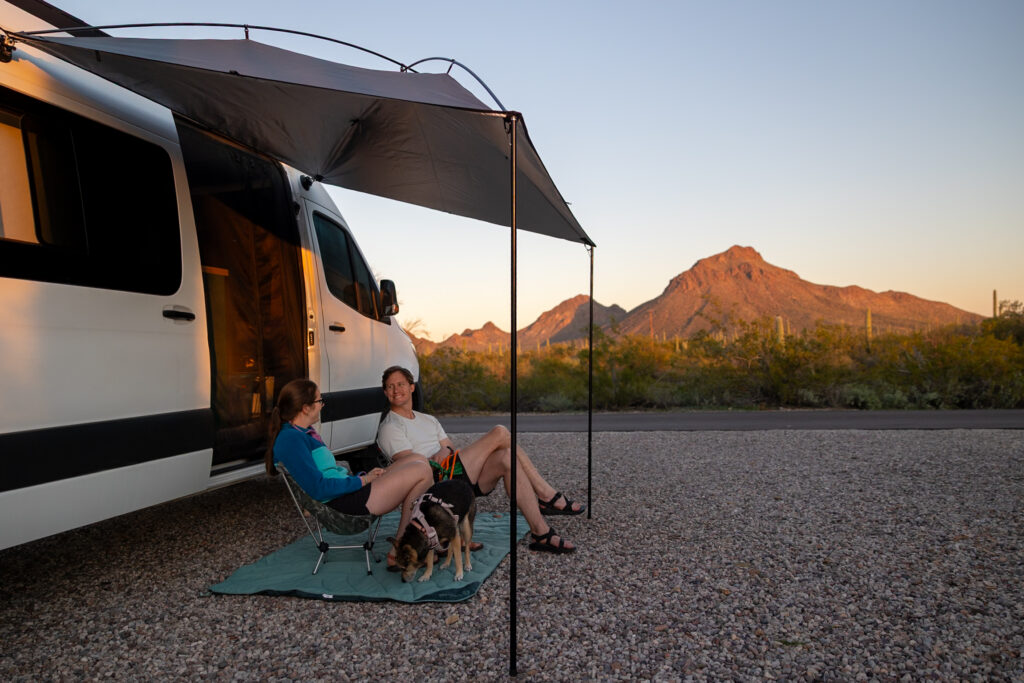
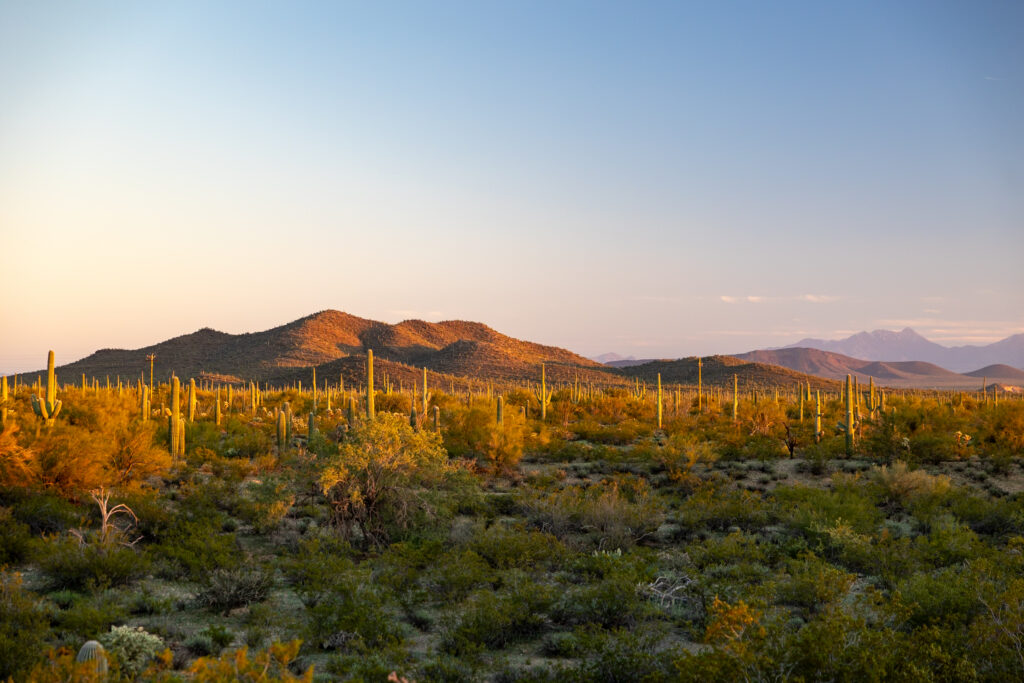
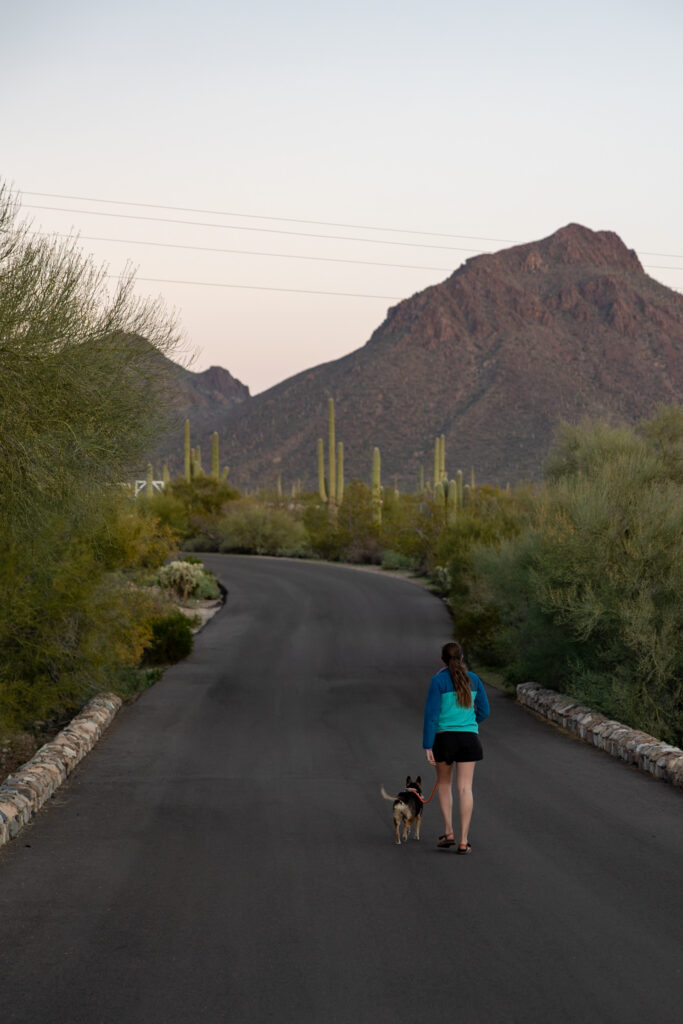
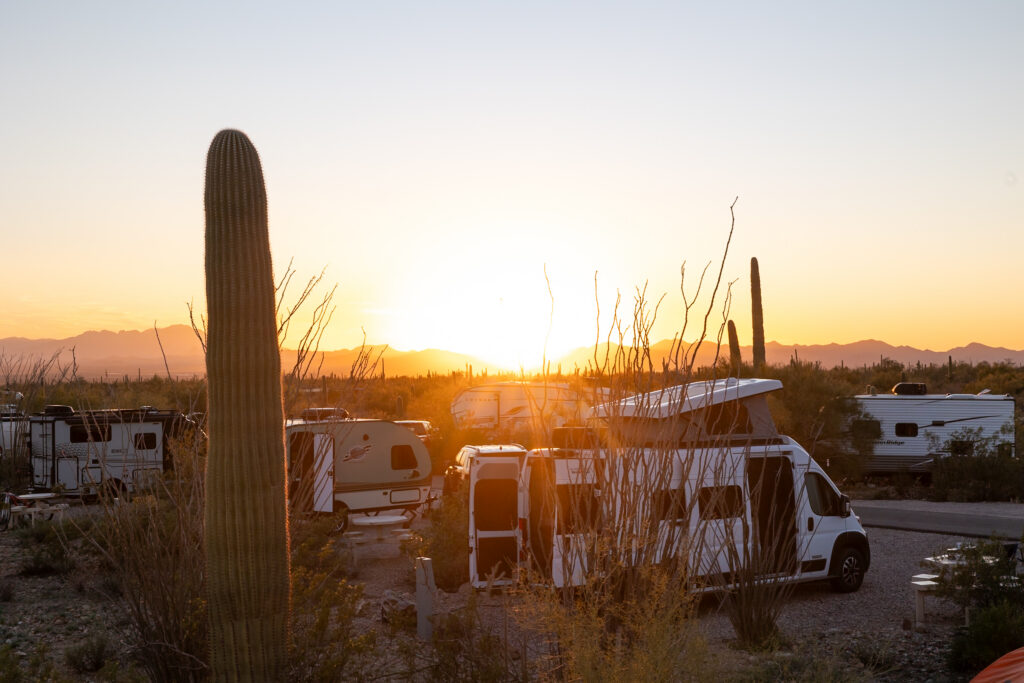
We stayed at this campground ourselves and loved it! It was super close to the Wasson Peak Hike we did, as well as the Red Hills Visitor Center in Saguaro West. We also loved the amazing views we got here of the Tucson Mountains and saguaros! This campground felt like a national or state park campground rather than a commercial one, which we really enjoyed.
You can reserve up to 1 year in advance and have a 7-day limit in the park. Facilities include restrooms (no showers), electric hookups, a dump station, and clean, running water.
⛺Type: Tent & RV
💲Price: $10/night (Tent) $30-40/night (RV)
📞 Reservations: Reservations Here
☎️ Contact: 520-724-5159
Arizona State Parks
There are a variety of Arizona State Parks with their own campgrounds near Saguaro National Park. Below, we’ve listed three of the closest Arizona State Parks with campgrounds:
- Catalina State Park is a 30-minute drive from Saguaro East, with 120 tent and RV campsites.
- Picacho Peak State Park is a 30-minute drive from Saguaro West, with 85 tent and RV campsites.
- Kartchner Caverns State Park is a 45-minute drive from Saguaro East with 64 tent and RV campsites. This state park also has cabins starting at $129/night.
These campgrounds all include restrooms, showers, dump stations, electric and water hook-ups, and picnic tables and BBQ grills, among other amenities. All of their fees include a $3.60 reservation fee, a $25-50 site fee per night, plus a park entrance fee of $10-20 per vehicle (depending on the number of people in the car).
⛺Type: Tent & RV
💲Price: $25-50/night + entrance and reservation fees
📞 Reservations: Reservations Here
☎️ Contact: 877-MY PARKS (697-2757)
Colossal Cave Mountain Park
Colossal Cave Mountain Park is located just a 20-minute drive south of Rincon Mountains Visitor Center in Saguaro East. It has 30 first-come, first-served sites, which are all primitive. This means no electricity or hook-ups, with the closest water/restrooms located in El Bosquecito and La Selvilla.
An important detail about camping here is that the park gate is only open from 8 am to 4 pm for safety purposes. After 4 pm, you can’t go in or leave this park, so you’ll have to plan accordingly. Once you arrive, you have to check in at the Cave Shop before trying to grab a campsite for yourself.
⛺Type: Tent & RV
💲Price: $15/night (Tent, Car, RV, Horse)
📞 Reservations: First-come, first-served
☎️ Contact: 520-647-7275
Coronado National Forest
Coronado National Forest is a huge, mountainous area located off the Catalina Highway, just 16-30 miles north of Tucson, with tons of camping opportunities. Here, you’ll find cabins for rent as well as paid campsites and even dispersed free camping open year-round!
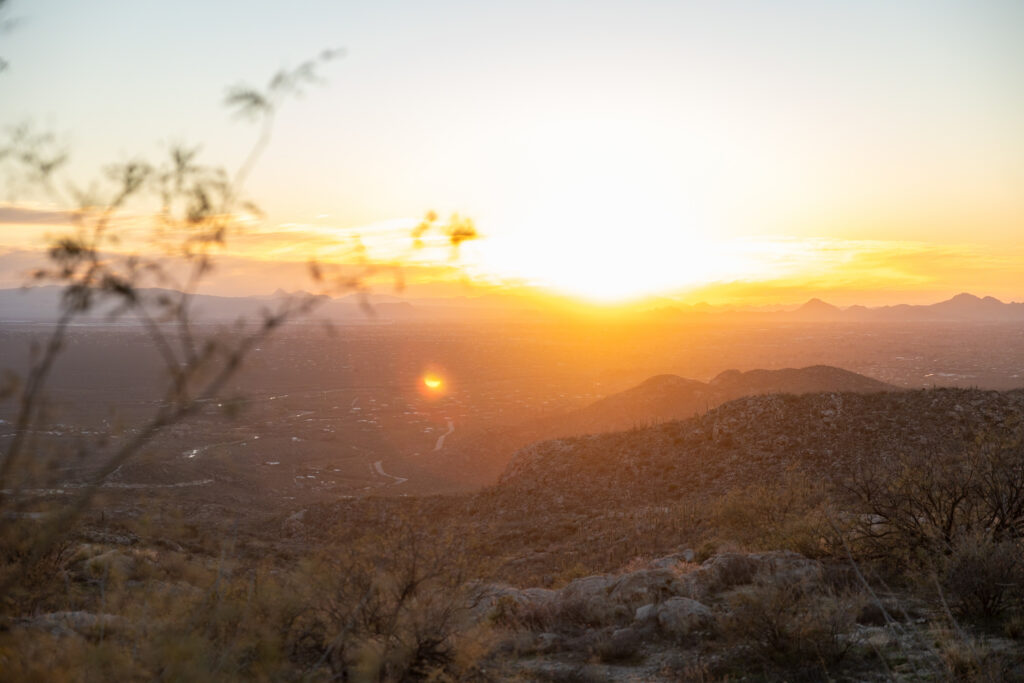
Prices range from $20-50 per night, depending on the spot and whether you’re in a tent or RV. If you’re in an RV, keep in mind that 22 feet is the length limit. As there are so many camping spots throughout the park, we’ve listed four of the closest ones to Saguaro National Park:
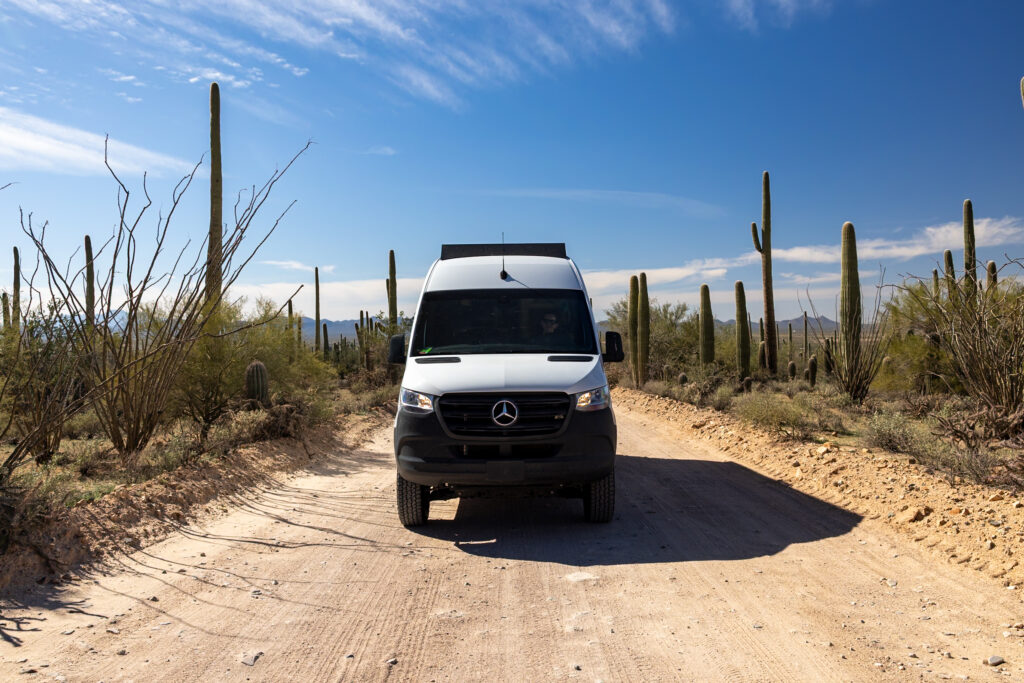
There is also free dispersed camping within this national forest. We camped at Redington Pass Dispersed Camping for two nights and honestly found the road extremely rough. We highly recommend having a high-clearance AWD or 4WD vehicle, especially for longer rigs or vans.
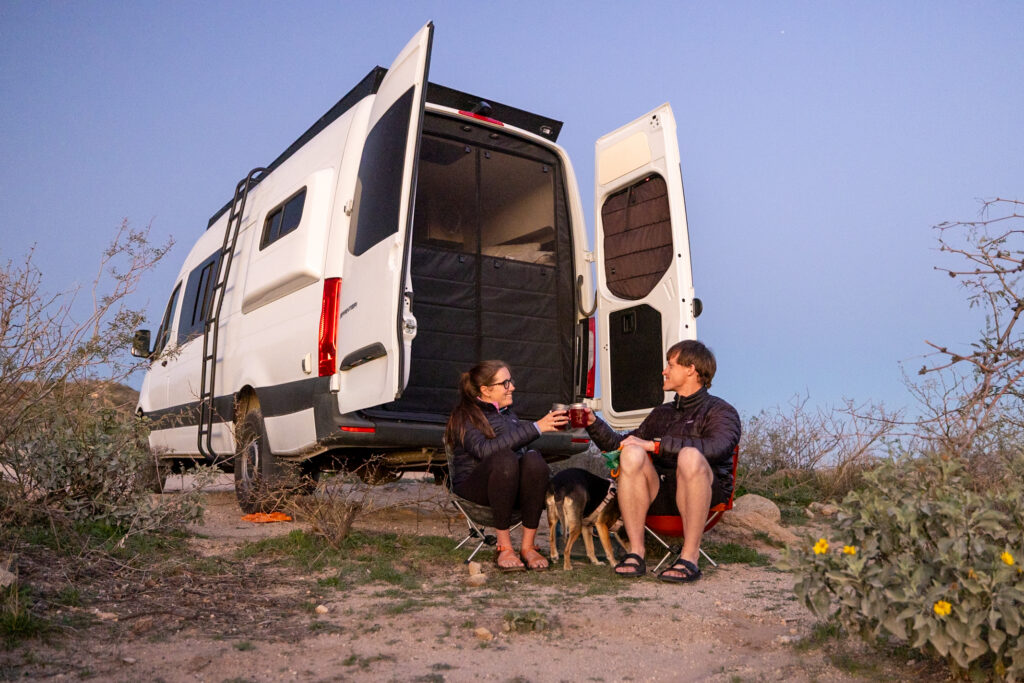
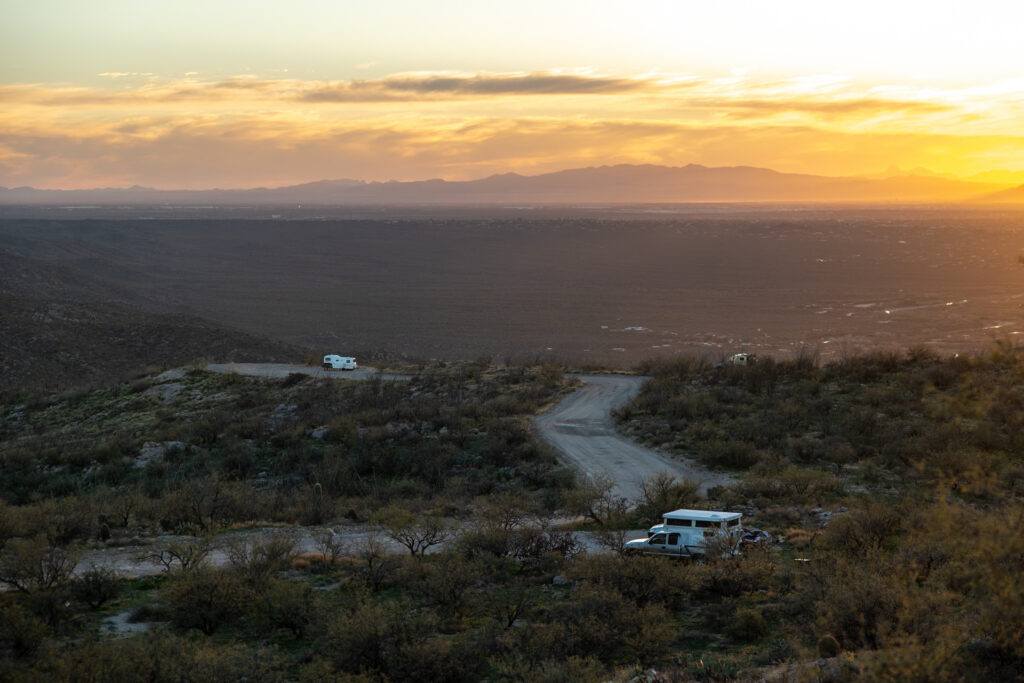
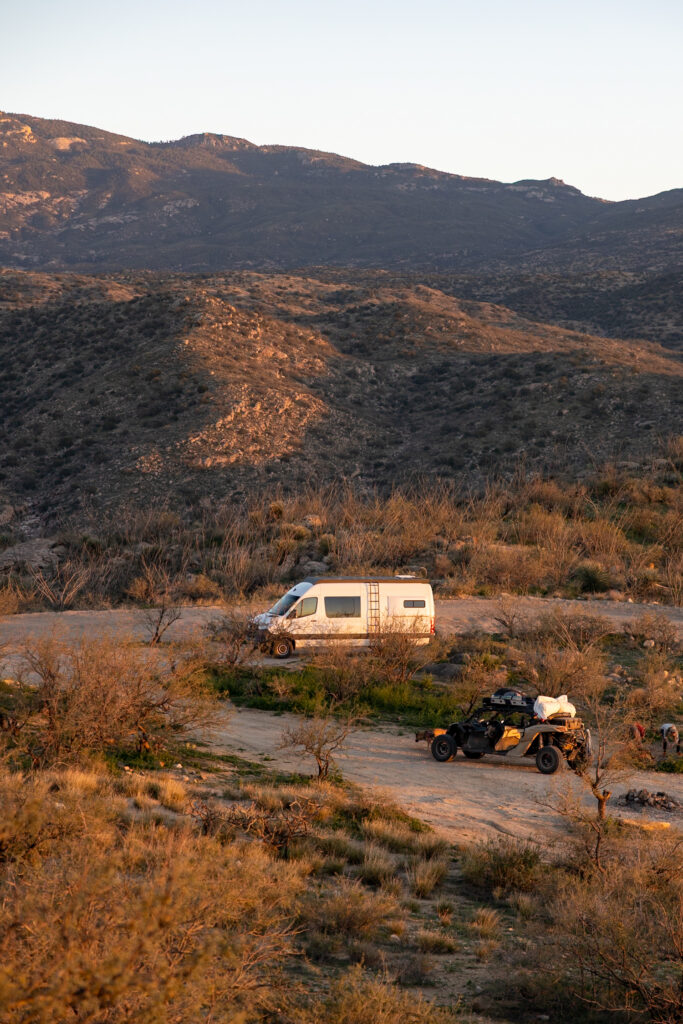
While the cooler temps were a nice break from Tucson’s heat, the constant off-road traffic made the area feel less peaceful than other dispersed campsites.
⛺Type: RV & Tent
💲Price: Free to $20-50
📞 Reservations: Reservations Here
☎️ Contact:
Tucson KOA Resort
Tucson KOA Resort is located a 30-minute drive from both Saguaro East and West, making it a convenient stay to explore both sides of the park. This campground has spaces for tents, RVs, and even deluxe cabin lodging!
While it comes at a higher price point than municipal campgrounds, you can enjoy electrical hookups, wifi, a hot tub, sauna, pool, and lots more amenities! KOAs are known for being well-kept, family-friendly, and overall a reliable stay.
⛺Type: Tent, RV, & Lodging
💲Price: $45/night (Tent), $45-70+/night (RV), $135-165/night (cabin)
📞 Reservations: Reservations Here
☎️ Contact: 520-799-3701
Ironwood Forest National Monument
Ironwood Forest National Monument is located to the west of Tucson, Arizona, making it a great spot for visitors who are going to Saguaro West. Managed by the Bureau of Land Management (BLM), this area is free to camp in for up to 14 days within a 28-day period. The two free campsites that are closest to Saguaro West are Agua Blanca Ranch and Ironwood Monument Wild Camping.
⛺Type: Tent & RV
💲Price: Free
📞 Reservations: N/A
☎️ Contact: N/A
Arizona Trust Land
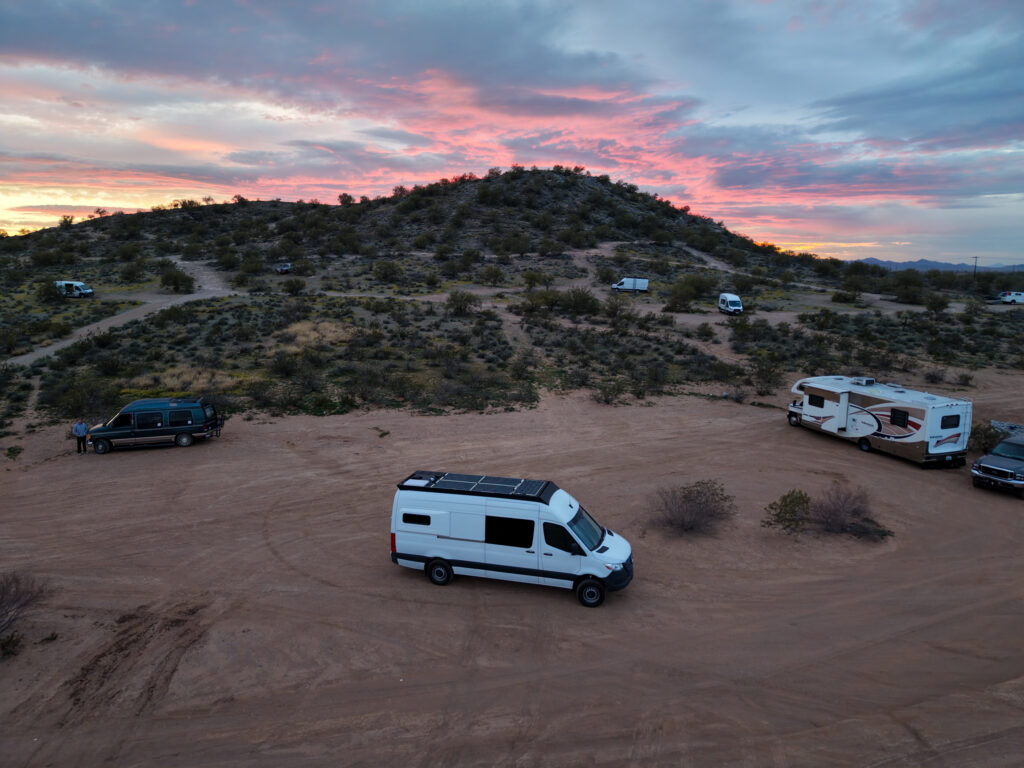
We stayed at two spots on Arizona Trust Land just south of Saguaro East. To stay here, you need to get an annual pass, which we purchased for $20. This was the first spot we stayed at, and this was the second spot we stayed at. Both had room for multiple vehicles to park there. Make sure to display your permit, clean up after yourself, and don’t overstay the 14-day limit.
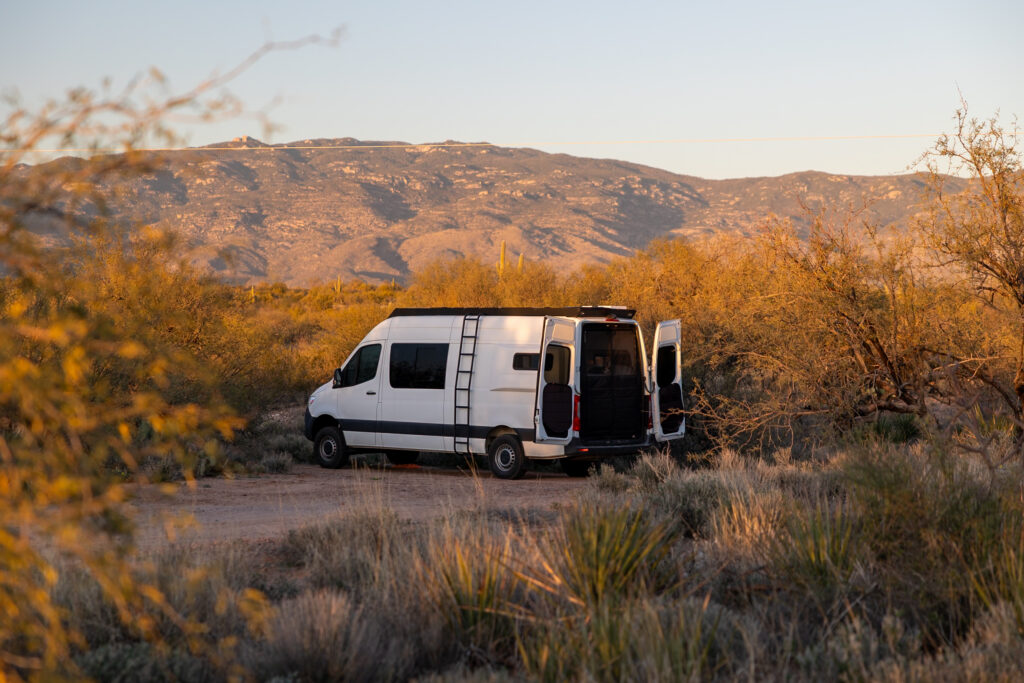
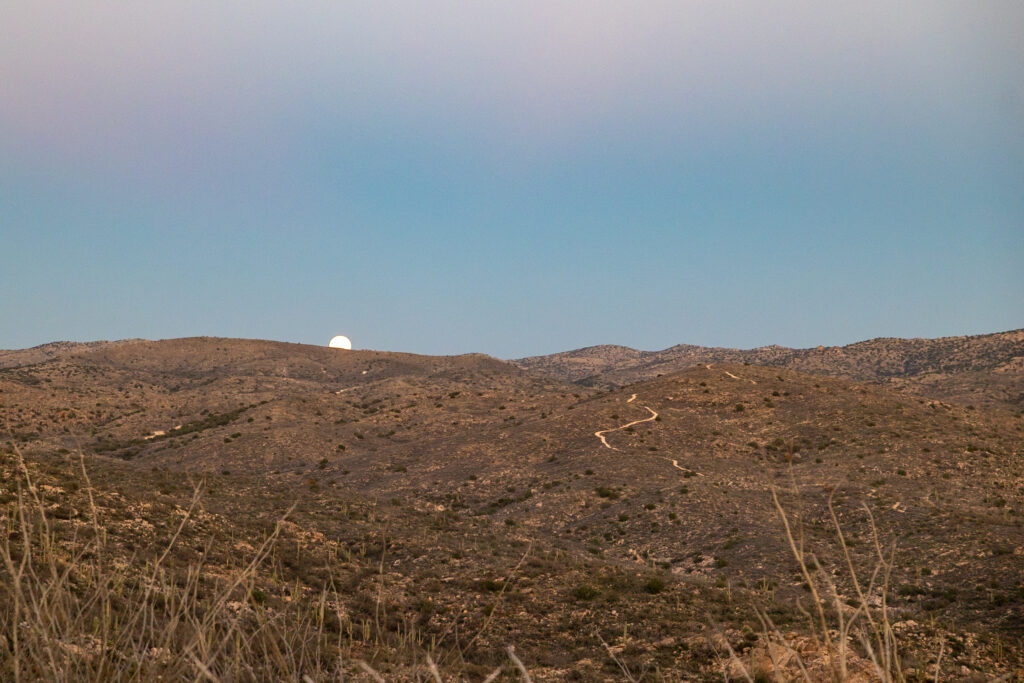
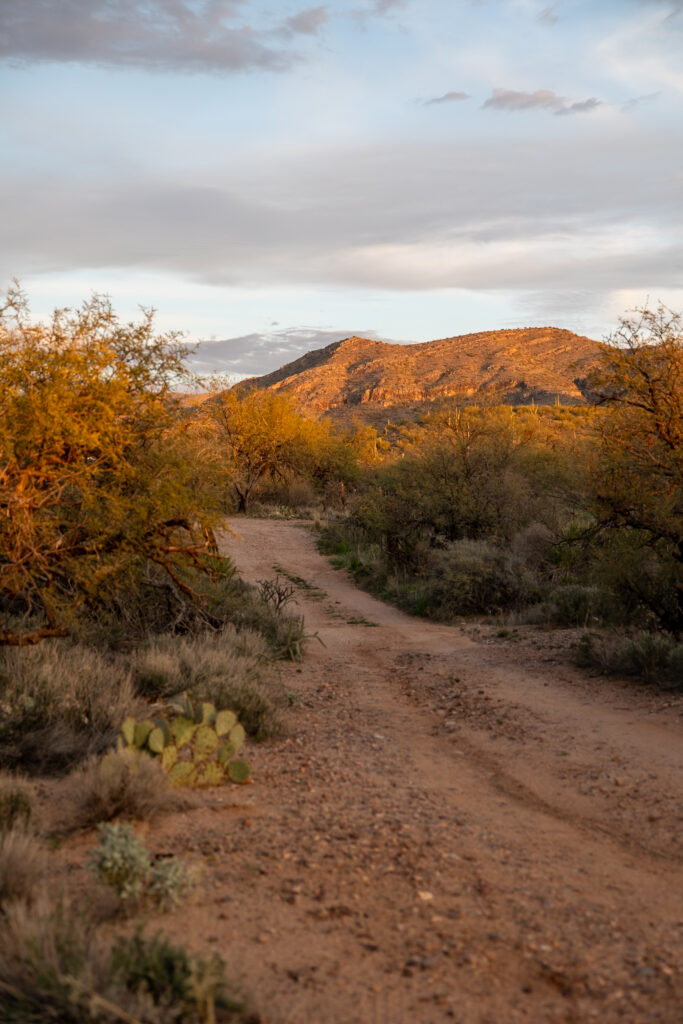
We stayed at a few other boondocking spots in our van while in the Tucson area and wanted to mention them. The first free one was this Snyder Hill BLM site, just south of the park, for one night. There was another just down the road, an Old Ajo Highway Campground with more free camping. There aren’t any facilities at either, but they are great spots to spend a night for free near Saguaro West.
⛺Type: Best for vans and RVs
💲Price: Free to $20
📞 Reservations: Permit for Arizona Trust Land
☎️ Contact: N/A
🎒 What to Pack to go Camping in Saguaro
Here’s everything we recommend for camping in Saguaro National Park. This list is geared towards tent camping, as that usually requires some special items that people in vans or RVs don’t need to worry about as much.
Camping Supplies
- Tent: Our favorite car camping tent is this Coleman 4-person tent. However, we currently use this lightweight backpacking tent.
- Sleeping Pads: For a comfortable night’s rest, we love using these cushioned sleeping pads.
- Sleeping Bags: Staying warm is easier with insulated sleeping bags.
- Camping Pillows: Small but adds extra comfort, we bring along these compact camping pillows.
- Stove: When car camping, we have an older version of this Coleman stove. We love this compact cookset and this cutting board set to not take up a lot of room in our car while still having everything we need for a complete meal. For backpacking, we use this quick and efficient Jetboil stove since it’s compact and lightweight. Don’t forget to bring sufficient fuel too!
- Compact Table and chairs: We use this collapsible table for both car camping and in our van. When car camping, we put our stove and any cooking items on it. When in our van, we often eat meals outside on this table and lightweight chairs.
- Coffee: For both car camping and backpacking, we love this Aeropress Go Travel Coffee Press.
- Cooler: We store all of our cold and perishable items in this cooler when we car camp.
- Food: What food you bring is up to you! Make sure to account for all meals, especially if you’re in a remote campground. We love things like instant oatmeal, Cliff Bars, pre-made sandwiches, Chomp meat sticks, and these easy freeze-dried meals, which have breakfast and lunch options.
- Utensils: This long lightweight titanium spork is long so it can scoop up food in the dehydration bags without getting your hands covered with food.
- Campsuds: Campsuds is an all-purpose biodegradable cleaner we use to clean our hands while camping.
- Folding Water Cube: Depending upon where we car camp, if we don’t have access to water, we’ll fill up one or two of these collapsible water cubes.
- Water Bottles: For hydration, we bring 48oz Nalgene water bottles. Typically, on day hikes, we love using water bladders for their convenience, but if backpacking, we prefer a water bottle in our side pocket.
- Water Filters: We use two water filters—one primary and one backup—to filter natural water sources while backpacking and camping. Our main filter is the Katadyn BeFree AC-1 bottle, with a backup Sawyer Squeeze system.
- Headlamp: For any kind of camping, we love using this headlamp to keep our hands free.
- Toiletries: Make sure to bring your go-to toiletries and any personal items you might need. Jen carries a Kula cloth when backpacking. We also take a shovel and toilet paper if we’re in an area that doesn’t require wag bags.
- Dog Food: If you’re also travelling with your pet, don’t forget their meals and dog bowl!
- Camp Shoes: We highly recommend these comfortable camp shoes for relaxing at camp.
☀️ Best Time to Go Camping in Saguaro National Park
Winter is actually the peak season in Saguaro, running from December to February. This is when daytime temps are at their lowest, ranging from 60-75°F. That being said, the park experiences lots of visitors during this time, so although the weather is nice, keep in mind that there tend to be more crowds. Since there isn’t much shade on the trails, it makes for the best hiking weather, in our opinion.
March-April and October-November are also great months to visit. During these months, the park experiences pleasant daytime temperatures, ranging from the mid-60s to mid-80s°F, and fewer crowds. March and November will be a safer bet, though, as April and October can still be hot, depending on the year. The spring brings beautiful spring blooms of the wildflowers and cactus blooms, creating a spectacular sight.
The summer season in Saguaro runs from June to September, and is not recommended for most visitors. Daytime temperatures can soar to 115°F, so while early morning hikes might be doable, the daytime heat poses a serious risk. July to September is also the monsoon season in the park, adding another layer of difficulty to travel during this time. The monsoon season would be incredible to witness, but it wouldn’t be the ideal time to explore the trails.
We visited in February 2026 and had excellent weather. Cool morning temperatures for long hikes and warm afternoons that were perfect for shorter hikes, scenic drives, and admiring the viewpoints.
🗓️ How Many Days in Saguaro National Park?
We personally spent 3 full days exploring Saguaro National Park, but 2 days is also doable to see all the must-sees. One day allows you to see some of the highlights, but you probably won’t be able to see everything. If you can swing a second day, we highly recommend it to see both sides of the park at a leisurely pace. Have time to squeeze in a third day? Even better!
💡 Plan your Saguaro trip using our flexible 1 to 3-day itinerary: Saguaro National Park Itinerary: 1, 2, or 3 Days!
🚗 How to Get to Saguaro National Park
Located in southern Arizona, on both sides of the city of Tucson, Saguaro National Park is most easily reached by car. If you aren’t within driving distance of the park, your best bet is to fly into Tucson International Airport (TUS) and rent a car from there to the park. Both Saguaro East and Saguaro West are just a 30-minute drive from downtown Tucson.
Love finding cheap flights?
Going (formerly Scott’s Cheap Flights) is one of our favorite tools for discovering insane airfare deals.
We’ve been members since 2015 and it has saved us thousands! The membership practically pays for itself if you use it once a year.
📖 Books about Saguaro National Park
We love reading books about the places we’re visiting! Here are some books about Saguaro National Park that would be perfect to read before or during your trip, and will surely give you a greater appreciation for the park, wildlife, people, and the local environment of the Sonoran Desert, Tucson, and the surrounding area.
📰 Related Articles
- 11 Best Things to Do in Saguaro National Park (Free & Paid)
- Saguaro National Park East vs West: Which Side Should You Visit?
- 11 CAN’T MISS Hikes in Saguaro National Park (Easy, Medium, & Hard)
- Saguaro National Park Itinerary: 1, 2, or 3 Days!
Pin this guide!
Pin this guide to the best camping in Saguaro National Park to make your upcoming trip a breeze to plan!

Leave a Reply
You must be logged in to post a comment.