

If you only have two days in the Grand Canyon, don’t fret! We were surprised at just how much we were able to fit in each day, specifically in the South Rim (the most popular rim).
Below, you’ll find our 2-Day Grand Canyon Itinerary to optimize your time spent at the park. We’ve balanced each day with a mix of hiking as well as more laid-back activities, so that you don’t end up completely exhausted.
Stay tuned to the end for more useful trip-planning info like where to stay, where to eat, and more!
💡 Hiking FYI: Since this park is at a pretty high elevation of 7,000 feet (in the South Rim), all hikes below the rim are labeled as difficult because of the elevation gain on the way up.
Note: We use affiliate links which provide us a little kickback each time you use one of our links and make a purchase, without any additional cost to you. We do not recommend products that we don’t already love or have heard great things about, so you can trust we’re only suggesting great products to you.
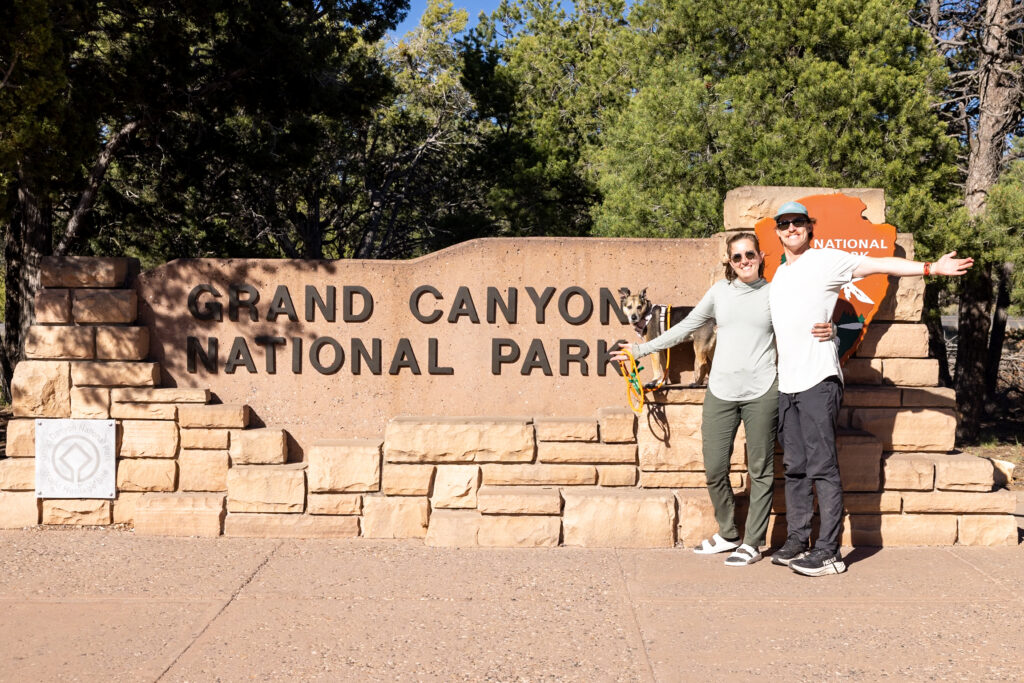
2 Day Grand Canyon Itinerary Breakdown
In this Grand Canyon 2 Day itinerary, we’ve included the four things that we believe would make a successful first trip: walking the rim trail, hiking below the rim, watching epic sunsets, and seeing the Colorado River!
It took us a solid week to see all of the big attractions on the South Rim, so you definitely won’t be seeing everything, but you’ll cover a lot of ground! If you need to swap anything out (or add something in), hop down to our More Things to Do Section for even more planning inspo.
Day 1 Itinerary
Morning
Sunrise at Yavapai Point, Breakfast at a Lodge, Hike Bright Angel Trail
Afternoon
Lunch, Grand Canyon Village, and Hermit Road via Bus
Evening
Sunset along Hermit Road and Dinner at the Lodge
Day 2 Itinerary
Morning
Hike South Kaibab Trail, Sunrise at Ooh Aah Point, Breakfast, Visitor Center
Afternoon
Lunch at Desert View Market and Deli, Explore Desert View Drive, Rest
Evening
Enjoy a Final Sunset, Farewell Dinner in Grand Canyon Village
🗺️ Looking for a map? Use our Map of the Grand Canyon South Rim to easily find all of the spots we mention in this itinerary!
Day 1 Grand Canyon Itinerary
Morning
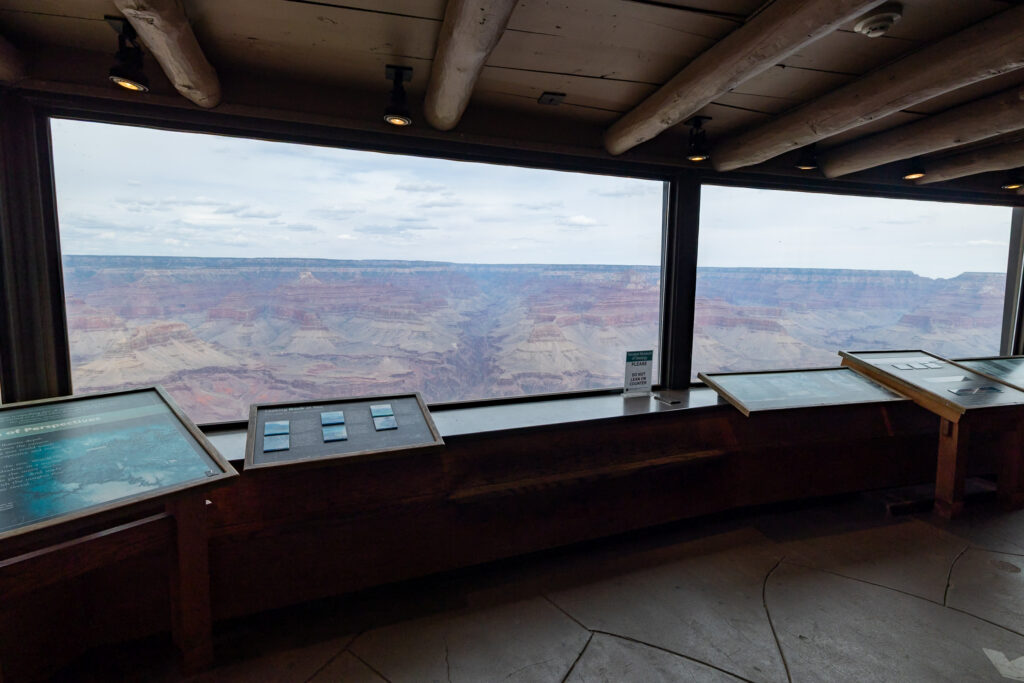
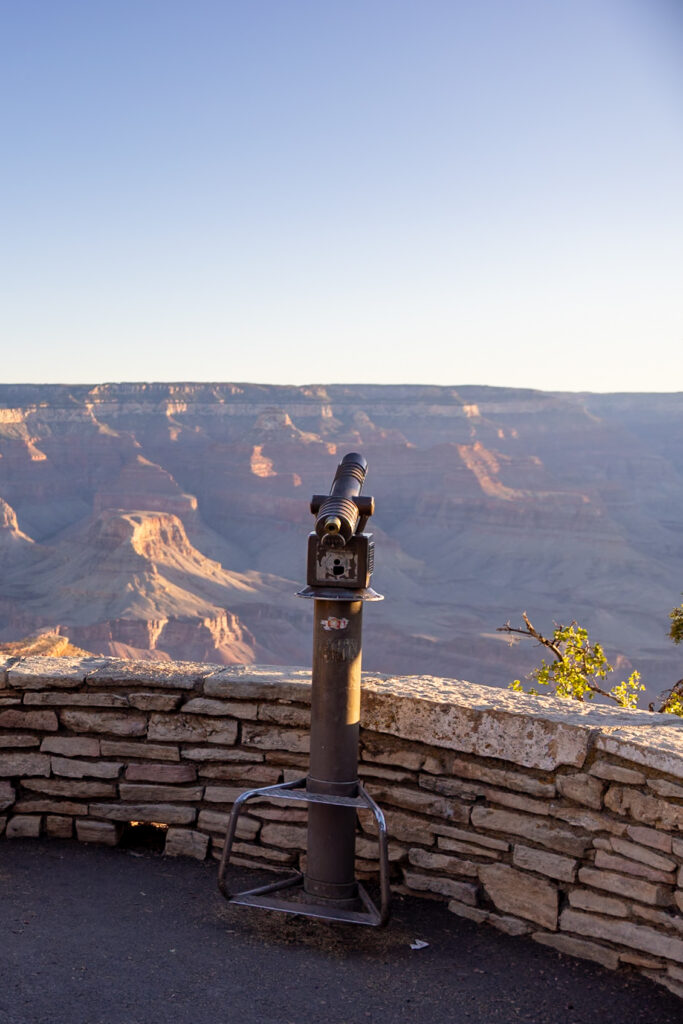
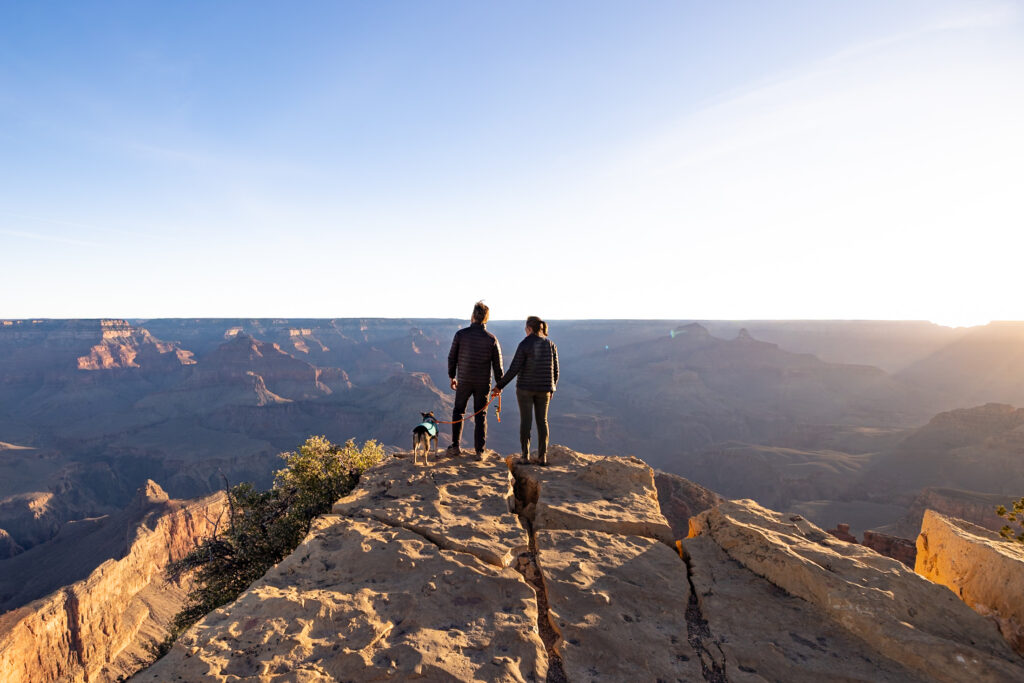
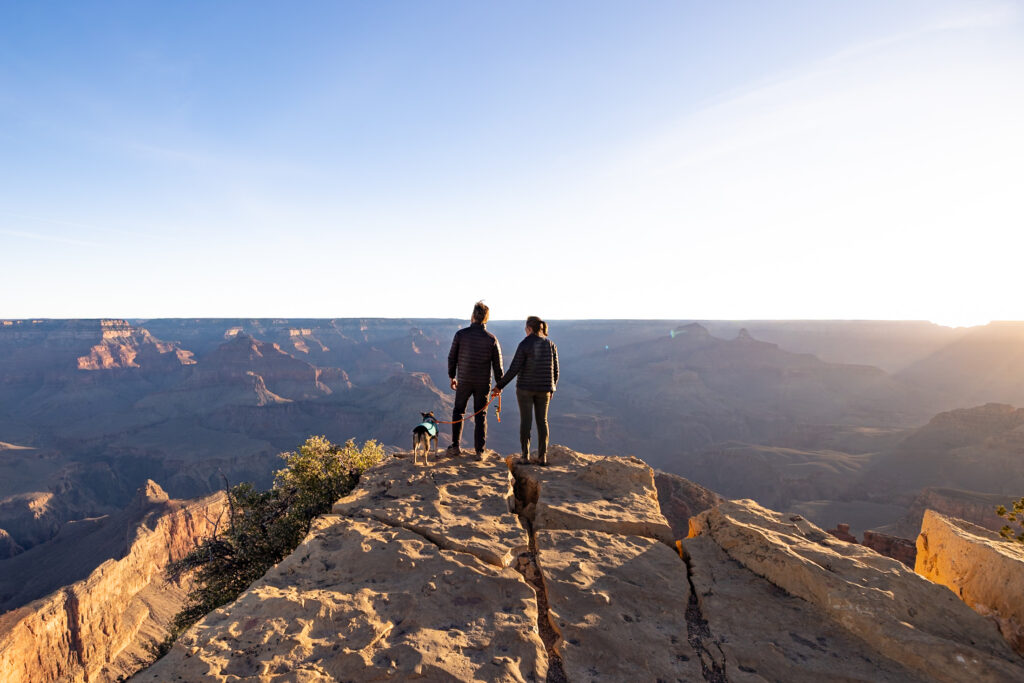
We’re kicking off Day 1 with probably the most popular thing to do in the South Rim: watching the sunrise over the canyon! We recommend watching from Yavapai Point, which is a short 1-mile walk from the parking lot. Seeing the first light hit the canyon walls is one of those experiences that’s hard to put into words, but leaves a lasting impression.
If you’d prefer less of a walk so early in the morning, you could watch the sunrise from Mather Point as an easier backup option. But be warned, it’s much more crowded.
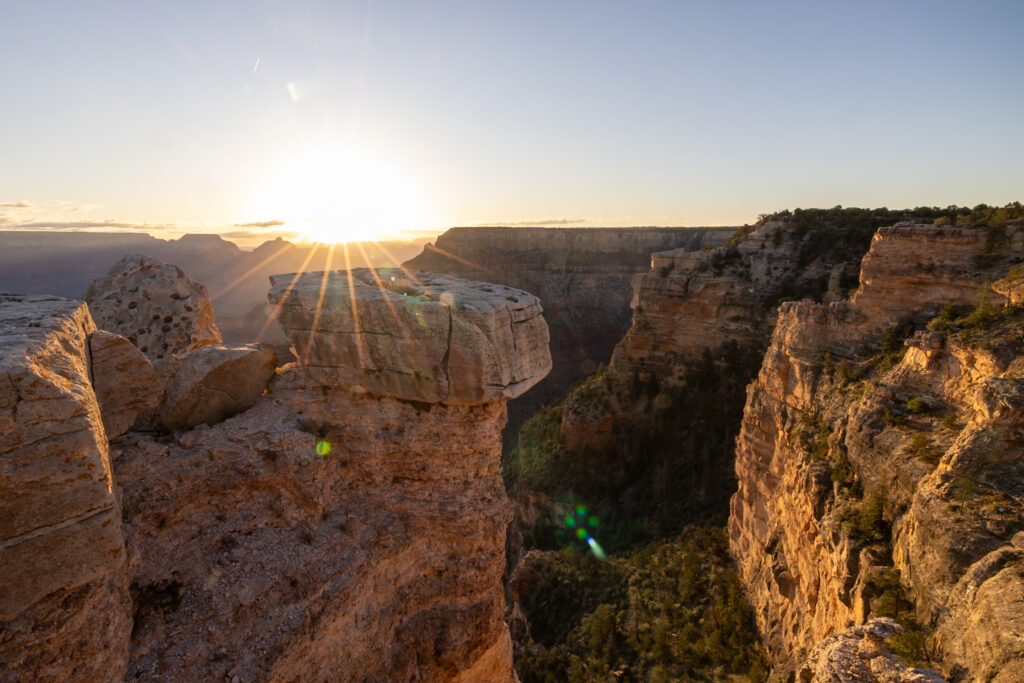
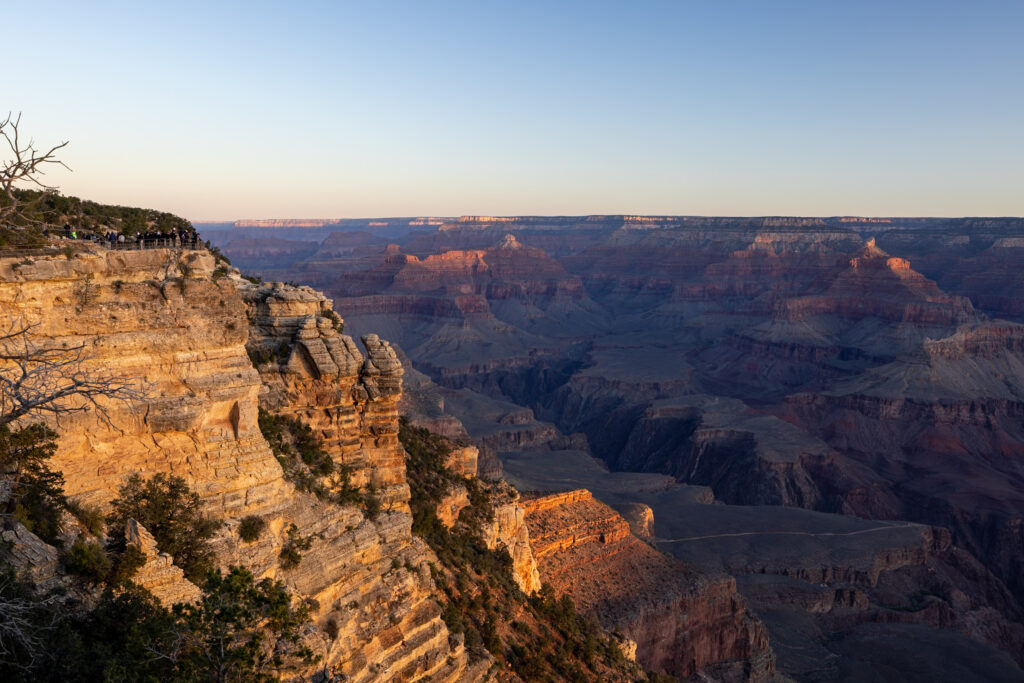
Since you’ll likely enter the Grand Canyon from the southern entrance, we recommend driving to this parking lot located at the Grand Canyon Visitor Center. We think this is the most convenient parking lot because it’s easy to find, has plenty of spaces, and is close to the bus depot. All perfect things for a first-time visitor! If you’re not a morning person, you can visit after the sun is up too.
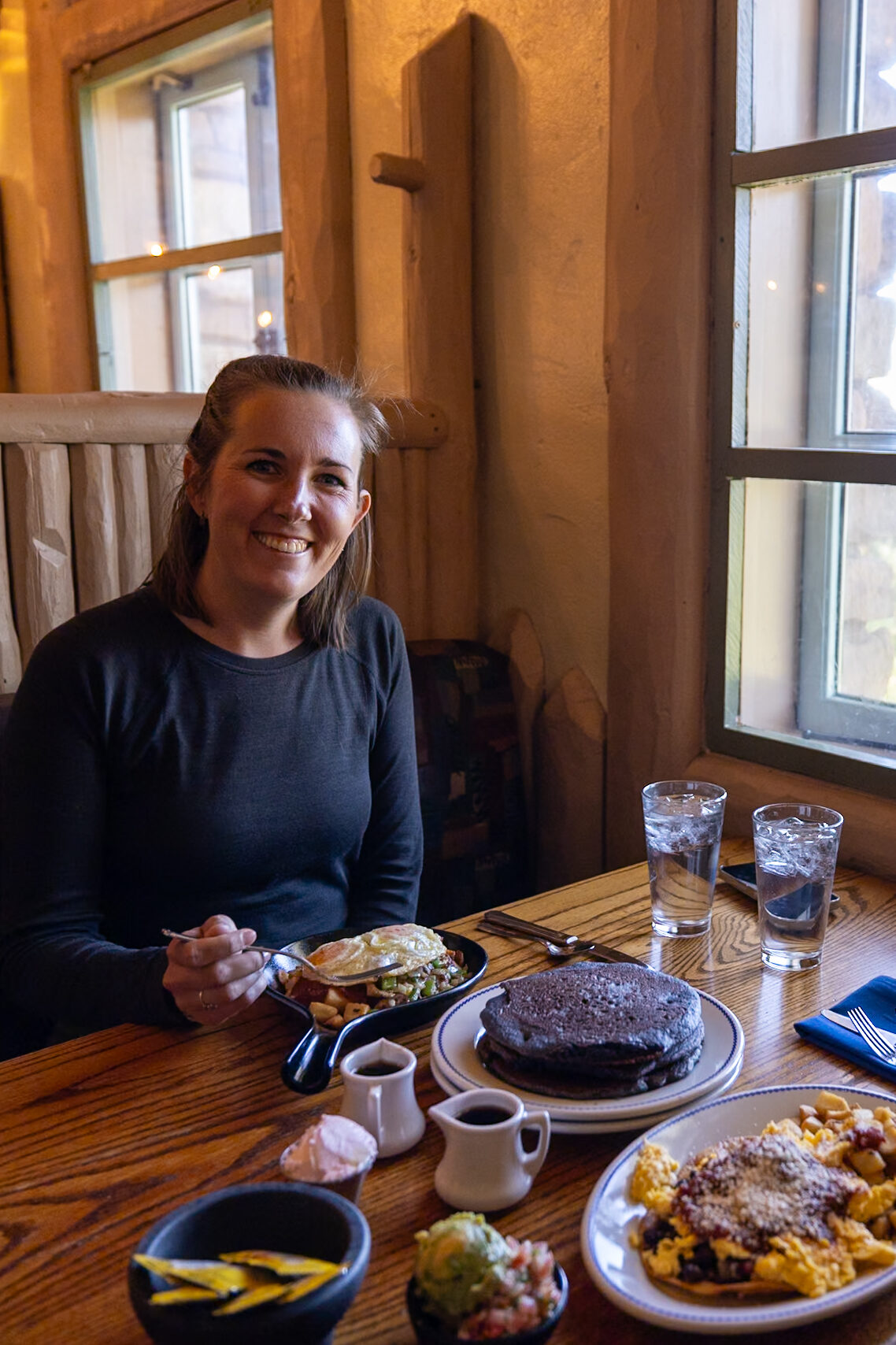
Afterward, take the Village (Blue) Route to Grand Canyon Village and hop off the shuttle for breakfast. Once you’re close to Grand Canyon Village, grab some breakfast at one of the historic lodges. We ate at Harvey House Cafe in the Bright Angel Lodge and enjoyed a hearty breakfast of hash browns, eggs, and pancakes!
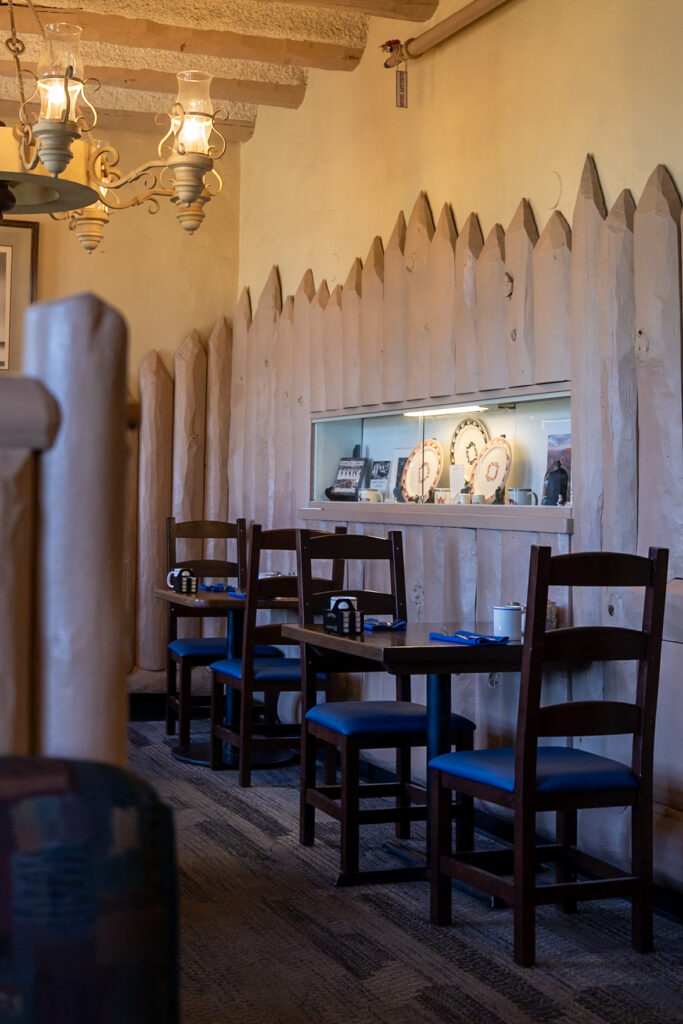
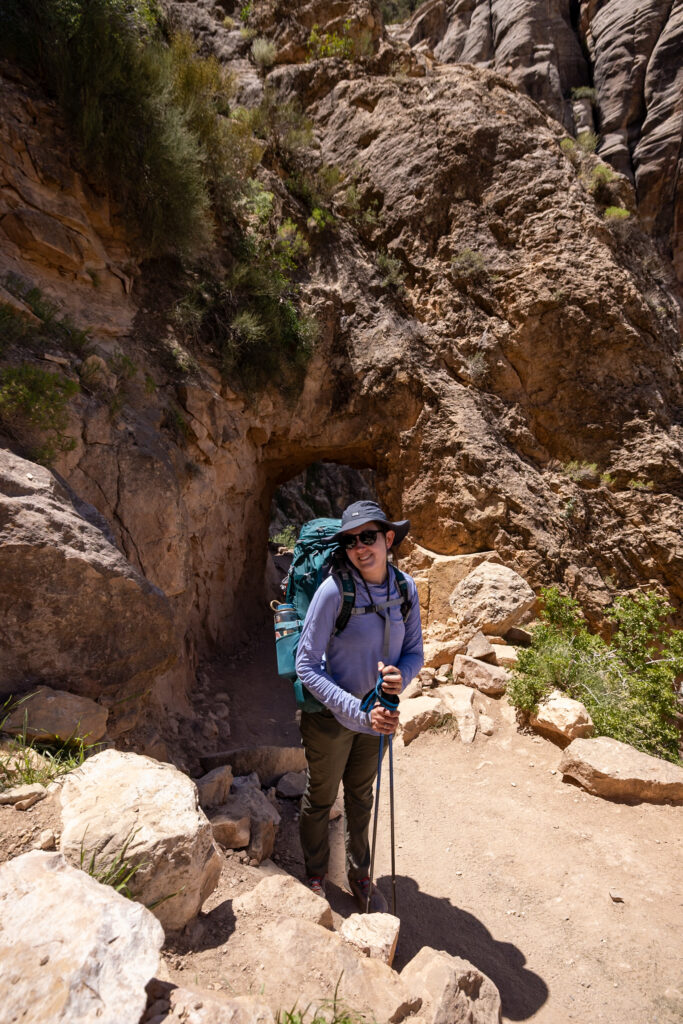
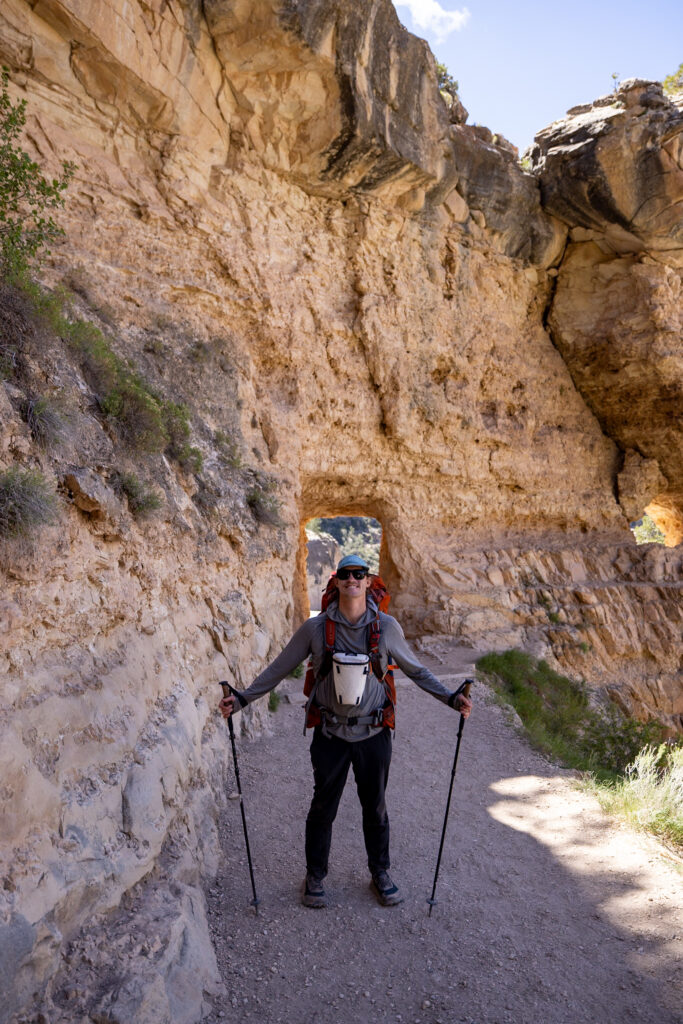
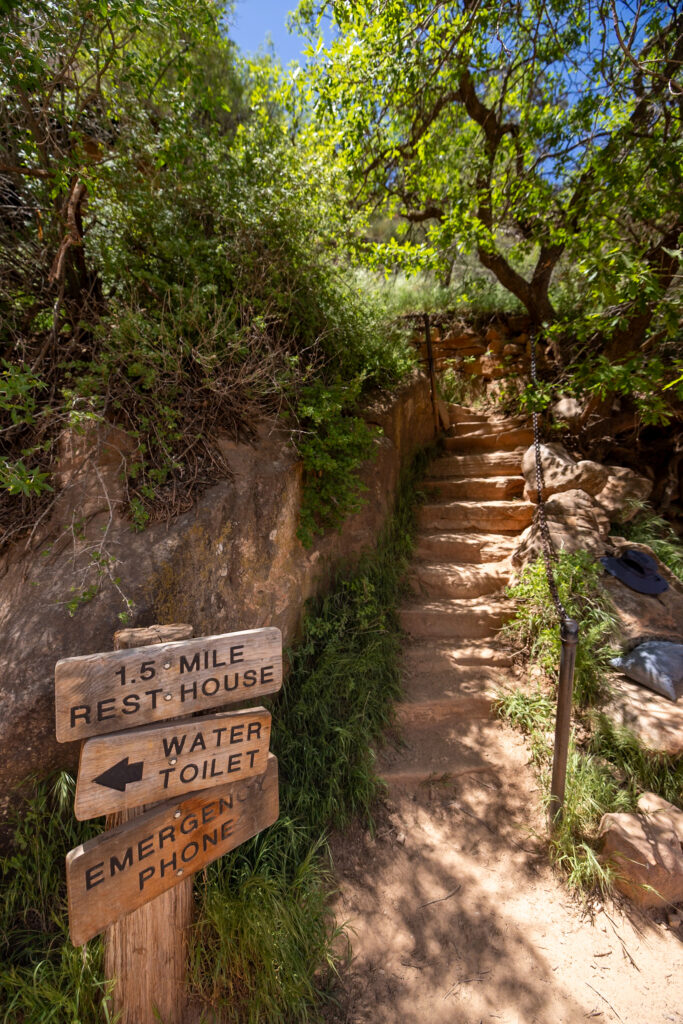
Once you’re full with a delicious breakfast, it’s time to go down into the canyon. We recommend hiking the Bright Angel Trail into the canyon for your first hike below the rim because it has pit toilets, water access (available seasonally), and the most gradual descent. We only recommend hiking to 1.5 Mile Resthouse because it’s a 3-mile round-trip hike with 1,150 feet of elevation gain. That’s a lot of elevation gain!
Afternoon
After you complete your hike, it’s time to grab lunch. We usually opt for a picnic, but there are plenty of restaurants or deli available in Grand Canyon Village. Depending on how you feel after the hike and lunch, you can slow the pace down and rest. We prioritized a calmer afternoon to get you out of the harsh Arizona afternoon heat.
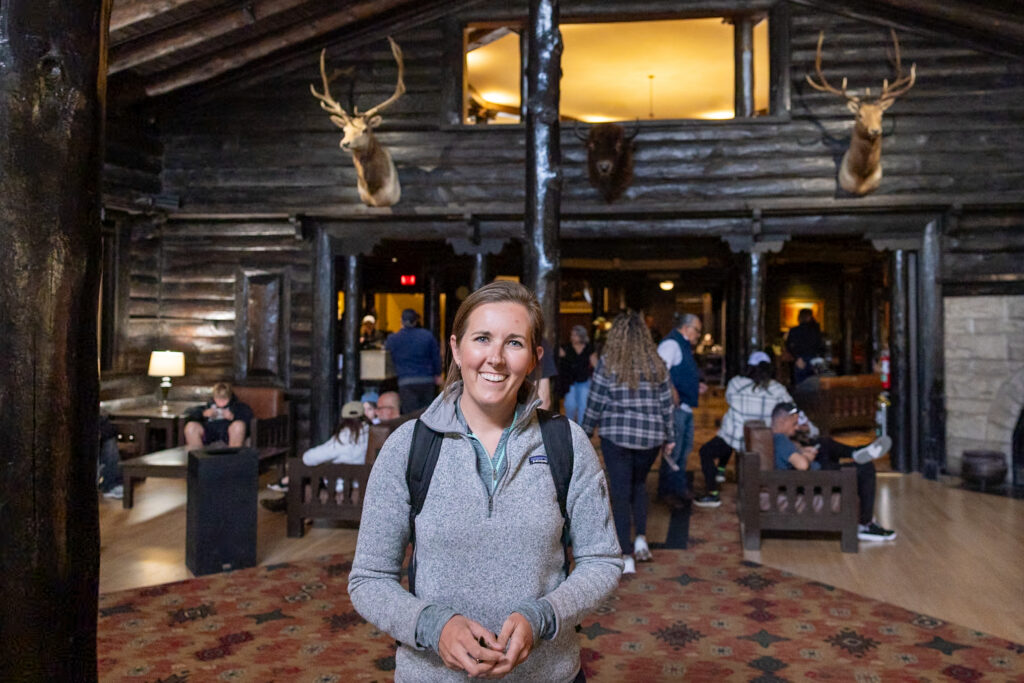
The Grand Canyon can be surprisingly tiring between the elevation, dry air, and miles of walking, so you can either take a couple of hours to rest at your hotel or explore the historic buildings in Grand Canyon Village. If you do have energy to continue exploring, we recommend walking around Grand Canyon Village. There’s the historic El Tovar Hotel, Hopi House, Verkamp’s Visitor Center, Lookout Studio, or Kolb Studio.
This is a great area to pick up any souvenirs, postcards, or simply enjoy the unique Grand Canyon architecture. At 3 PM, there’s usually a free ranger-led geology talk at the Yavapai Geology Museum, so head over there first if this piques your interest!
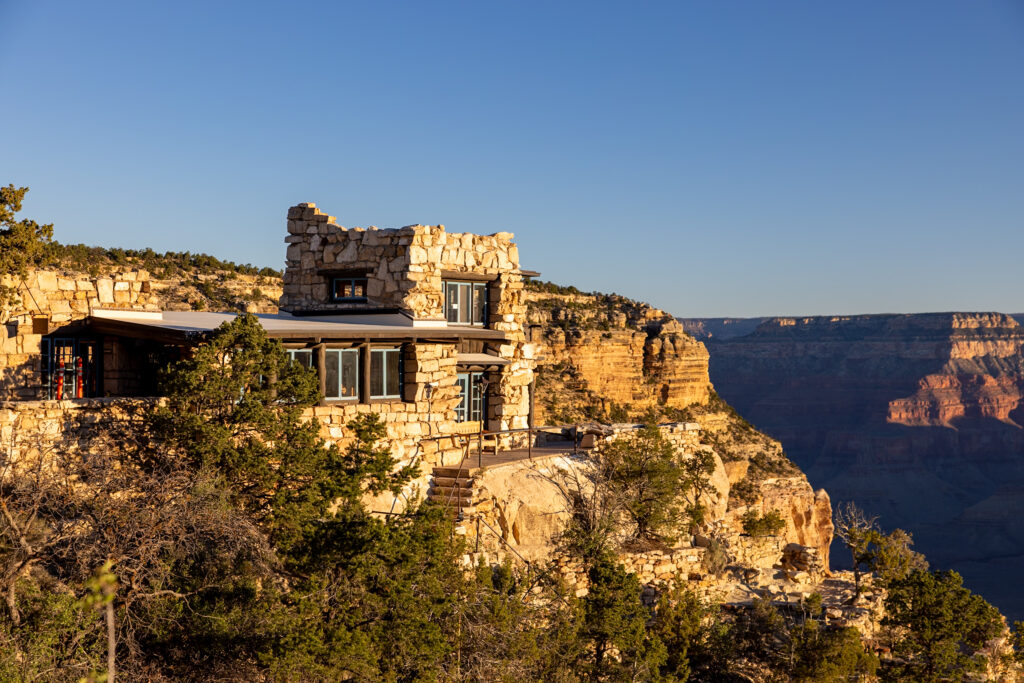
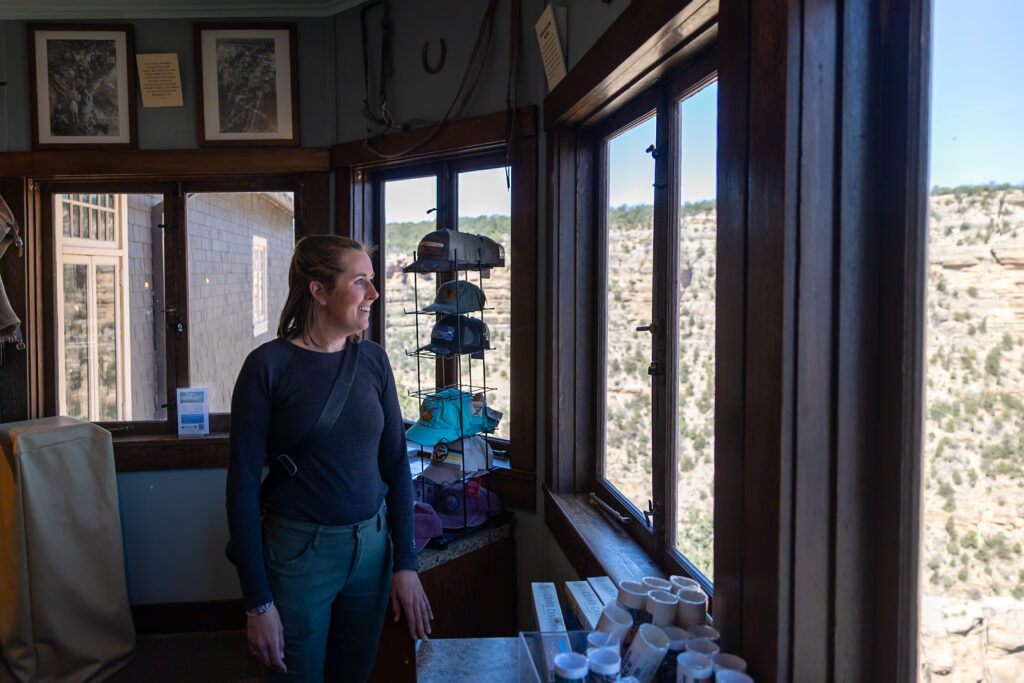
Later in the afternoon, hop aboard the free Hermit Road Shuttle (Red Bus) to explore the western end of the South Rim. Rather than riding all the way to the end, we recommend hopping off at as many of the 9 overlooks as you like.
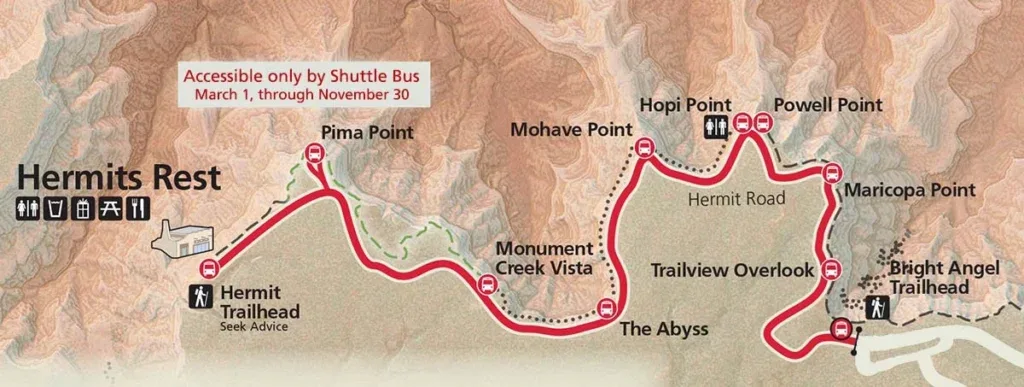
If you’d like to walk, the Maricopa, Powell, and Hopi section is a popular 1-hour hike one way that takes you to three of the most popular viewpoints. If you’re feeling up to it, we recommend walking from the bus stop at the beginning of Hermit Road to Hopi Point because the very first viewpoint is Trailview Overlook, and that provides a great look of Bright Angel Trail, which you hiked part of earlier in the day.
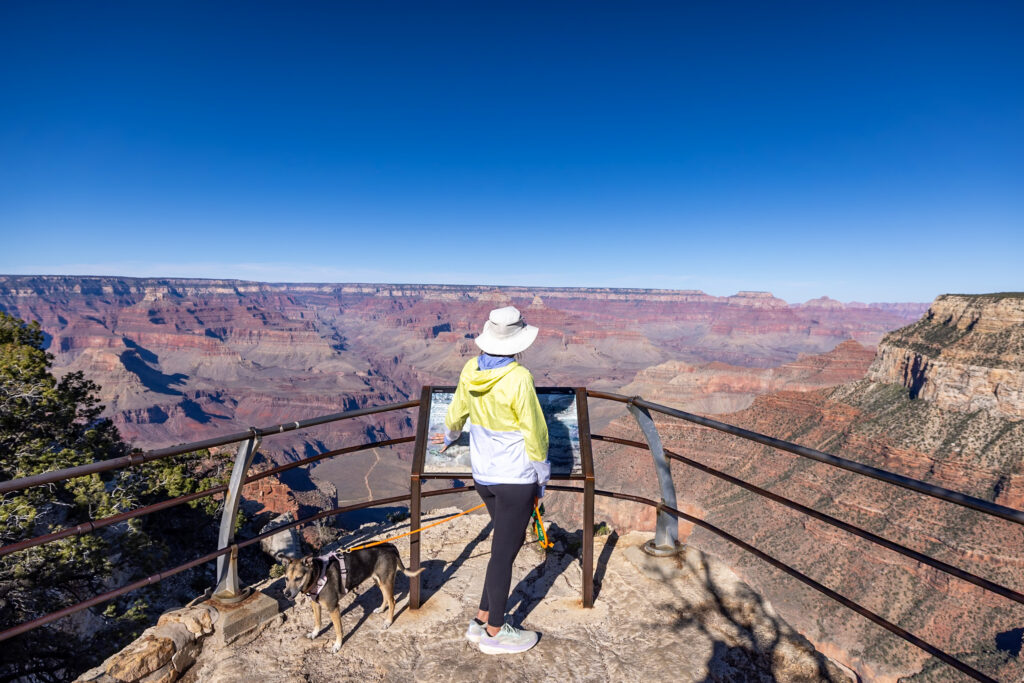
In our opinion, the Rim Trail is the most underrated trail and is easily one of the best hikes at the Grand Canyon. Its minimal elevation change, consistent views of the canyon, and the fact that it’s dog-friendly make it one of our favorite trails.
Evening
Hopi Point in particular is the most popular viewpoint in this area of the park to watch the sunset because it extends into the canyon the furthest and has access to a toilet. It can also be the most crowded spot.
If you want to avoid the crowds, we recommend taking the red shuttle to Pima Point, the second-to-last stop on the Hermit (Red) Route. Head here about 30 minutes before the sun goes down to watch the colors change on the canyon walls!
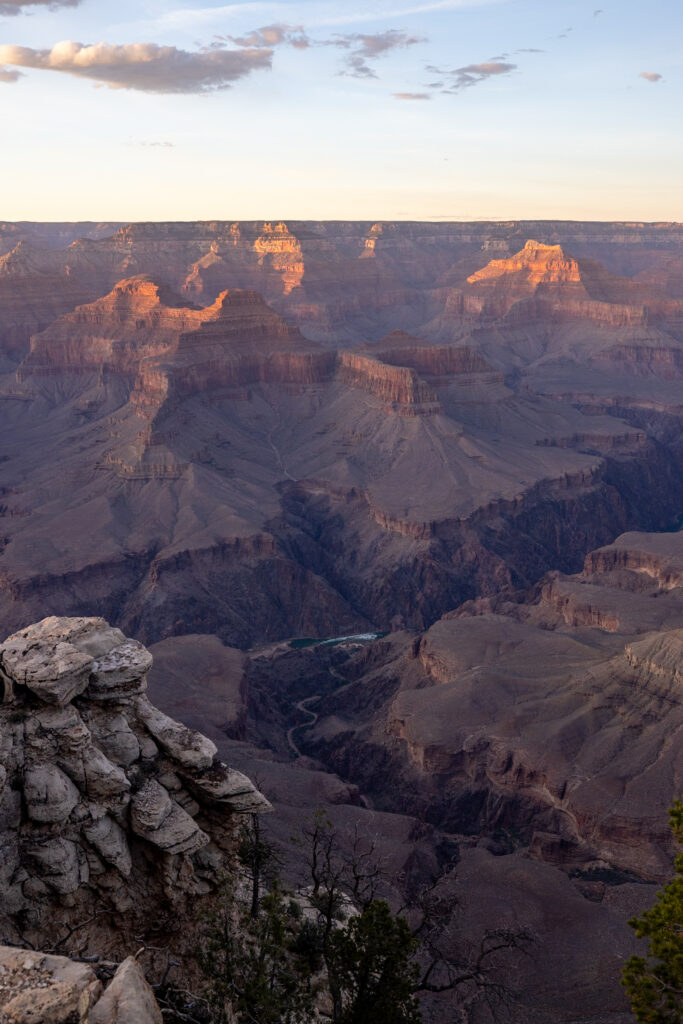
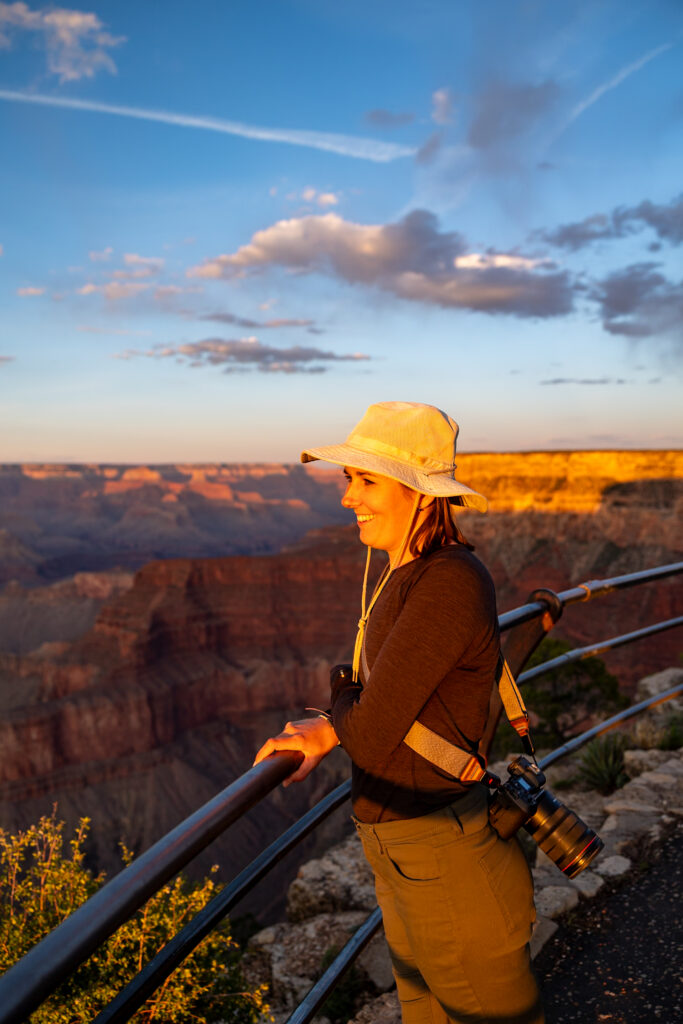
💡 Catch the last bus! The last Red Shuttle Bus leaves one hour after sunset, so as long as you aren’t lingering around for too long, you’ll have a ride back.
After sunset, head to one of the park’s many dining areas for dinner. Tomorrow will be an early start, so you’ll want to get to bed at an early hour.
Day 2 Grand Canyon Itinerary
Morning
Day two will start off by parking your car in the same parking lot as yesterday so you can take the Kaibab Rim (Orange) Route to the South Kaibab Trailhead. Although this trail goes all the way down to the canyon floor, the 2-mile (3.2-km) hike to Ooh Aah Point is a great introduction to hiking below the rim.
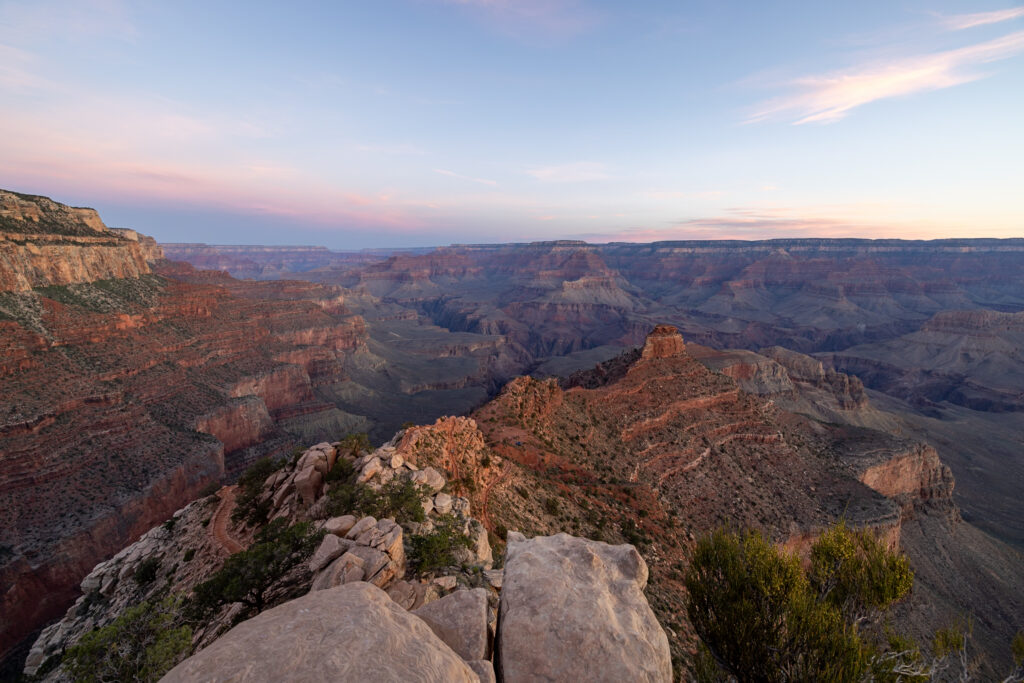
With incredible views almost immediately and a manageable distance for most visitors, this was our favorite short hike in the Grand Canyon! When comparing the Bright Angel Trail to the South Kaibab Trail, we personally prefer South Kaibab because you really get into the canyon and the views are more interesting.
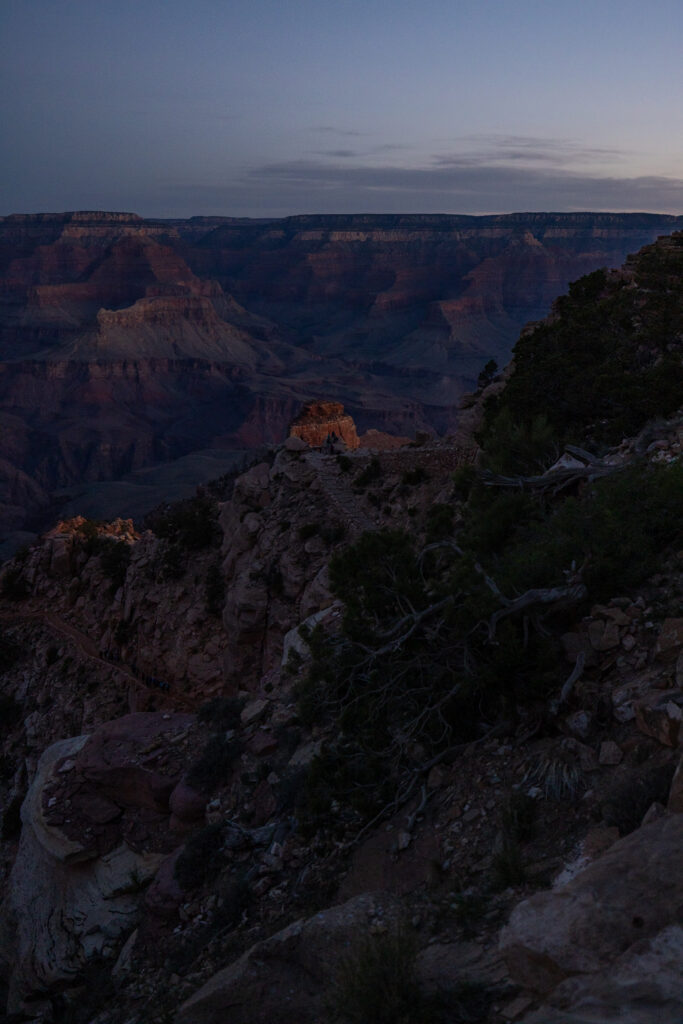
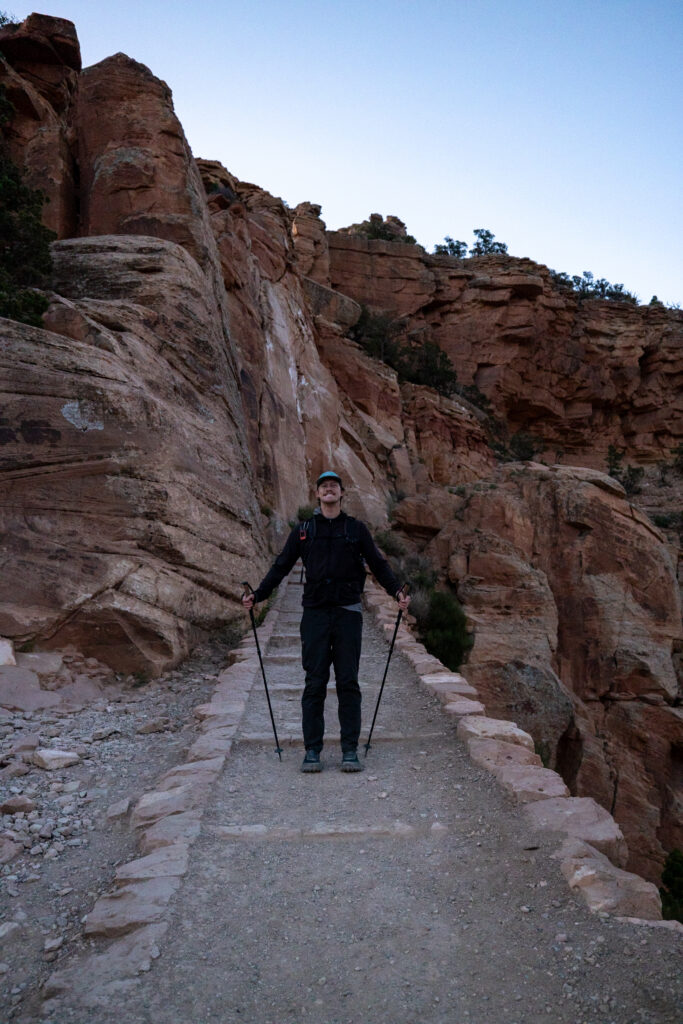
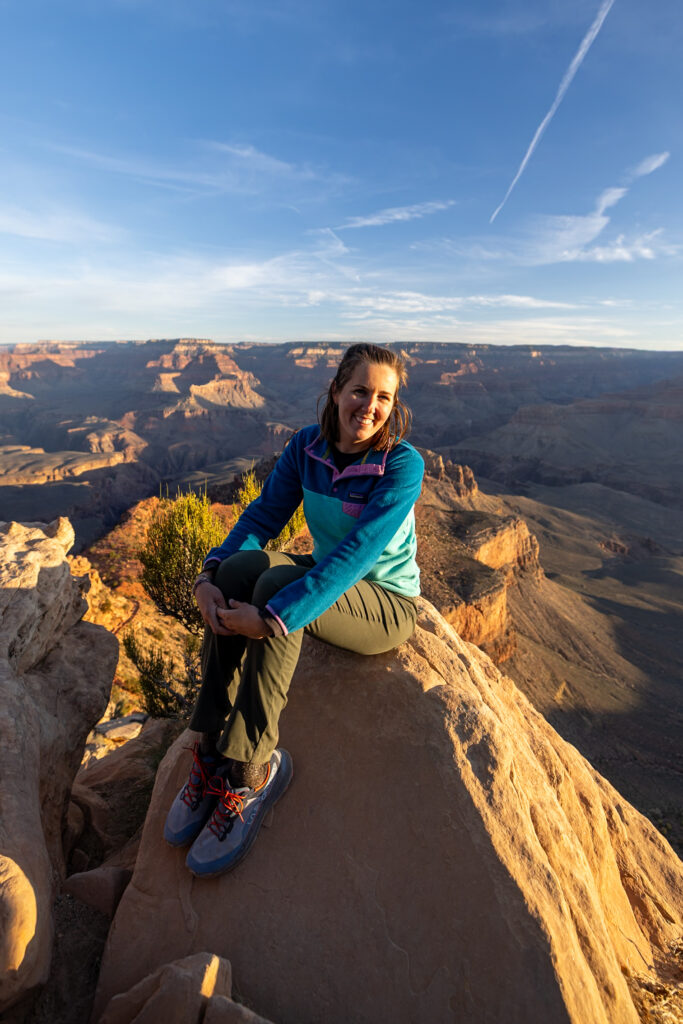
If you’re feeling up to hiking farther into the canyon after yesterday’s shorter hike, this is where we’d explore. A great option would be to hike to Cedar Ridge, which is 3.4 miles (5.5 km) with 1,181 feet (360 meters) of elevation gain.
It’s vitally important to be prepared for any hike in the Grand Canyon with the proper gear, food, and enough water. It’s not recommended to go any further than Skeleton Point, which is 6.1 miles round trip (9.8 km) and 2,027 feet (617 meters) of elevation gain. When hiking into the canyon, it’s best to start early so you can beat the heat of the day since it’s completely exposed.
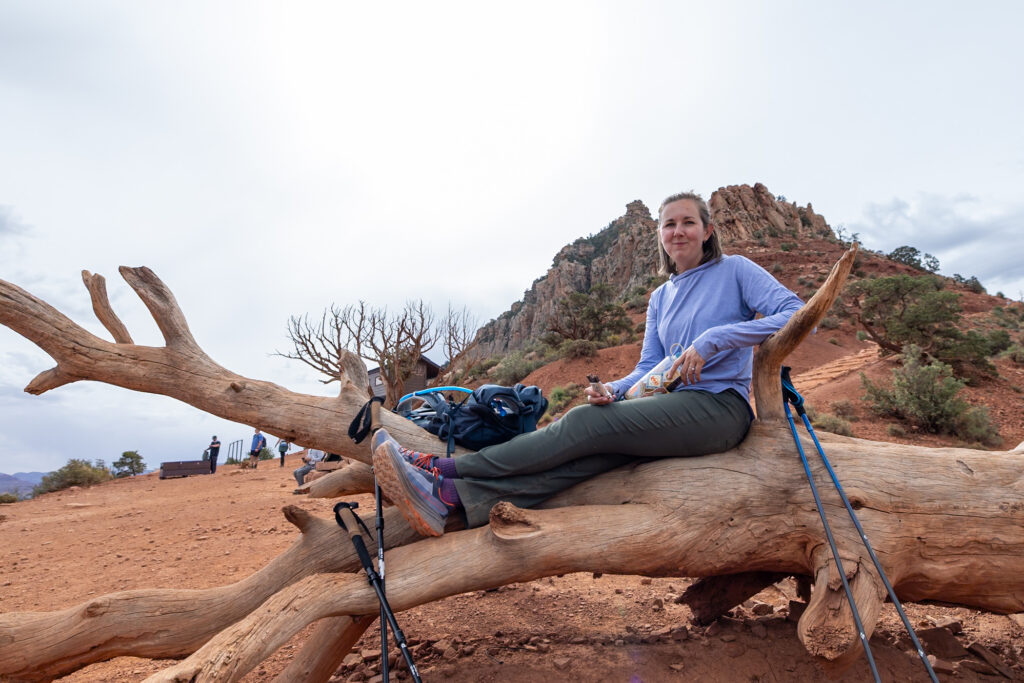
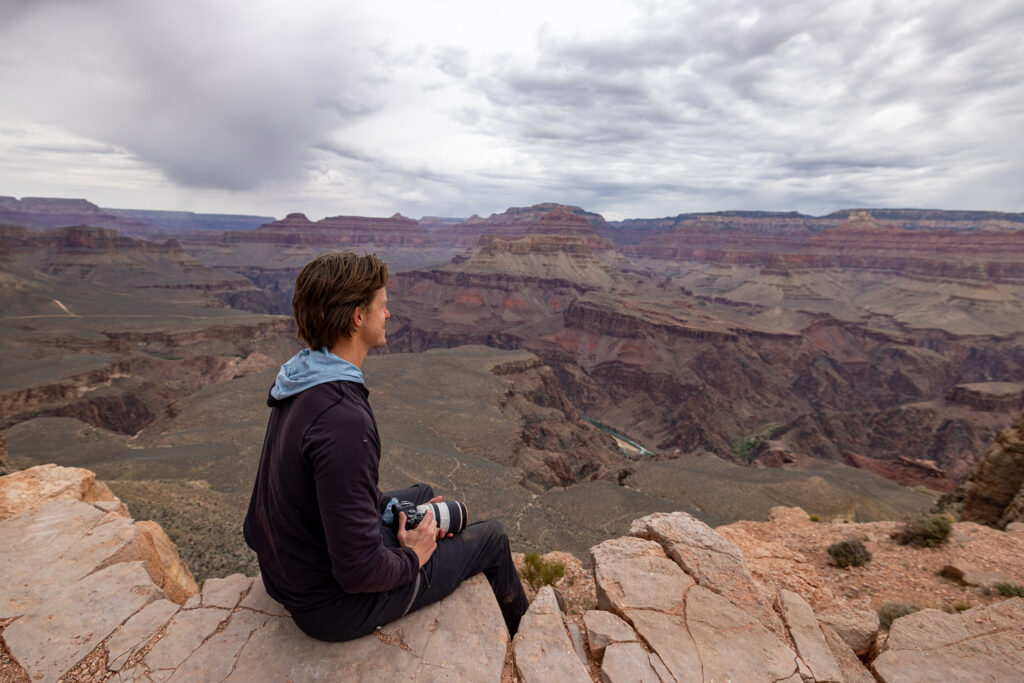
You can either pack an easy breakfast with you on the trail (like granola bars and fresh fruit) or eat at your hotel before leaving. We don’t have a planned breakfast stop today, and instead we recommend taking some extra time to enjoy your breakfast on the trail surrounded by the canyon.
If hiking into the canyon is a bit intimidating, feel free to explore this area of the Rim Trail. It’s much quieter than the section of trail near Grand Canyon Village.
💡 There’s no drinking water on the trail, so bring at least 1 liter of water per person, along with *salty* snacks and electrolytes.
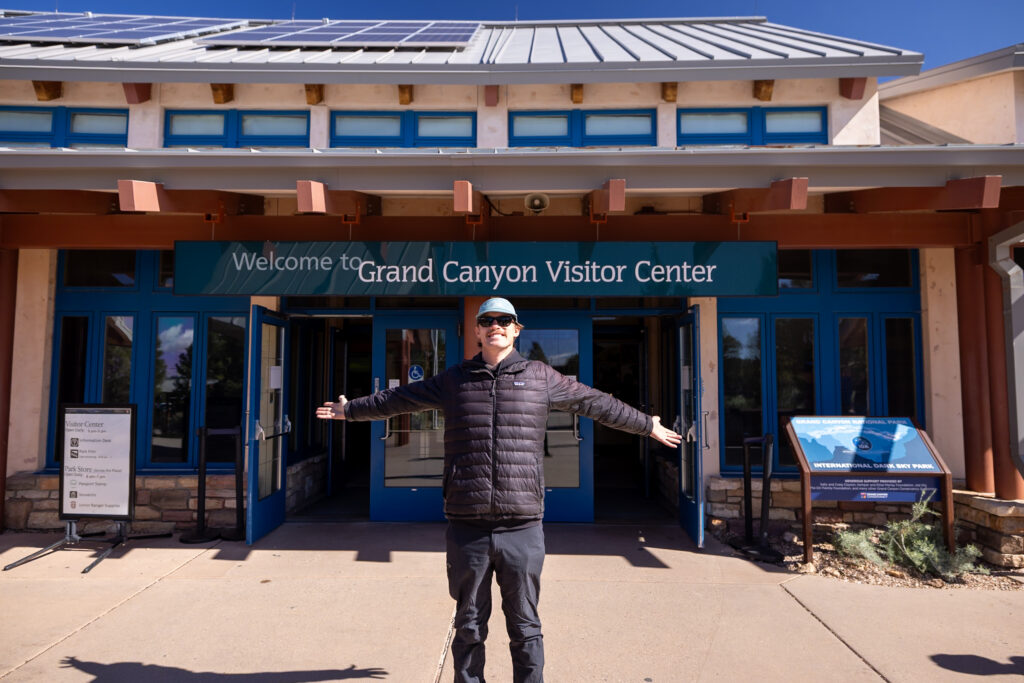
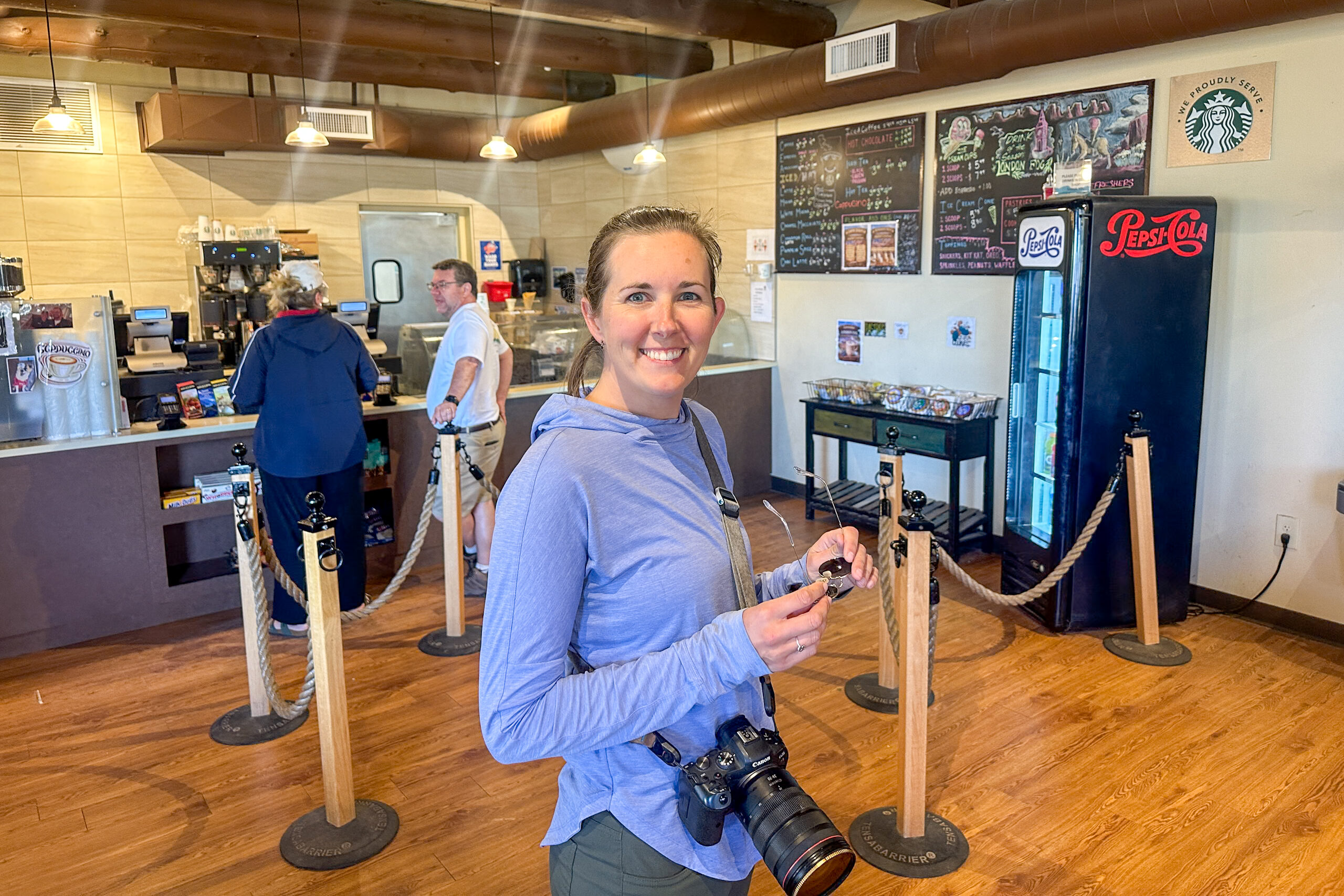
After hiking South Kaibab, take the Kaibab Rim (Orange) Shuttle back to the Grand Canyon Visitor Center. The Visitor Center opens at 8 AM, and we recommend watching the park films (there are two!) to learn more about the history of the park. If you’re in need of some coffee, we recommend picking up some from Canyon Adventures Bike Tours & Café.
Afternoon
Head back to your car and drive the 23-mile (37-km) Desert View Drive to the end of the road at Desert View. Unlike Hermit Road, personal vehicles can access this entire road. We recommend driving all the way down to the end of the Road and then stopping at the viewpoints on your way back. That way you can give your legs some extra time to rest and stay out of the sun during the middle of the day.
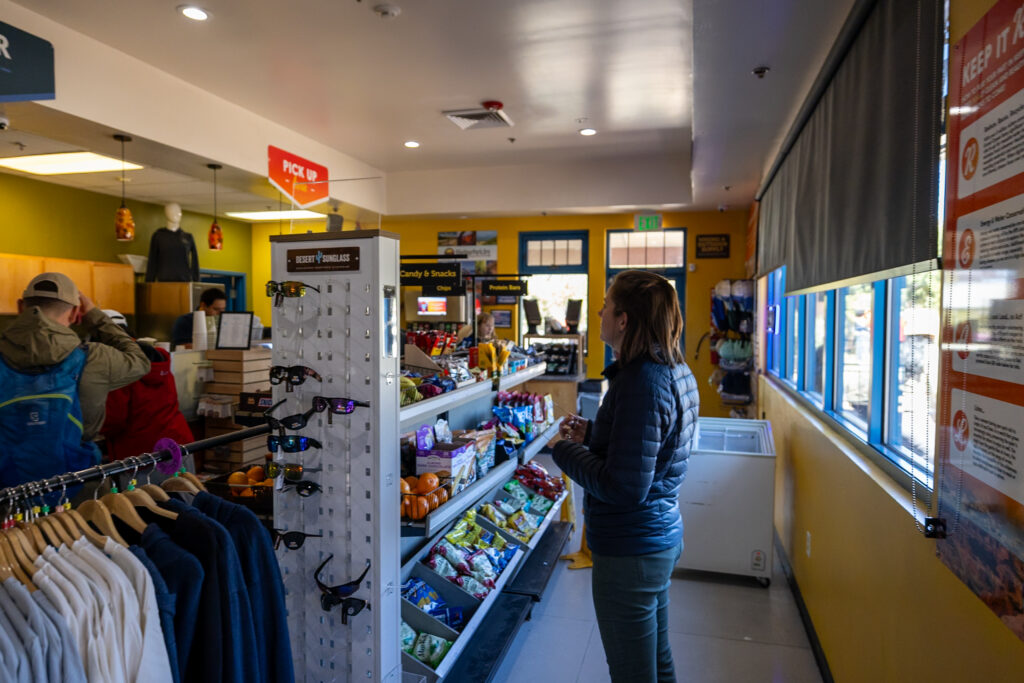
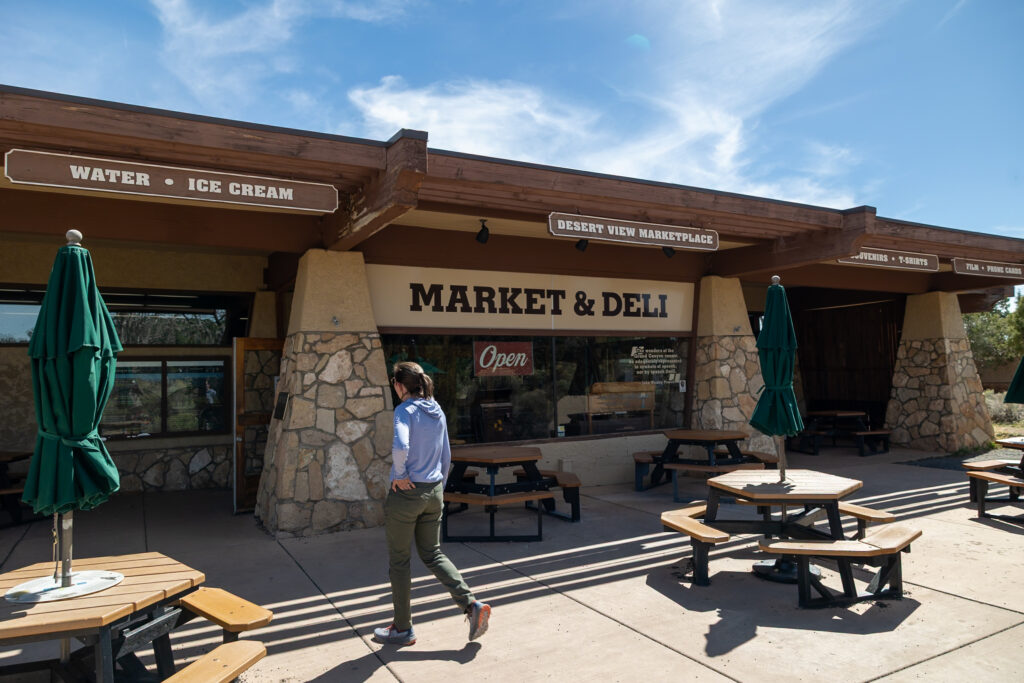
Once you’ve reached Desert View, the last stop of the road, feel free to take advantage of their picnic area and enjoy lunch. If you don’t have anything packed, you can pick up some food at Desert View Market & Deli.
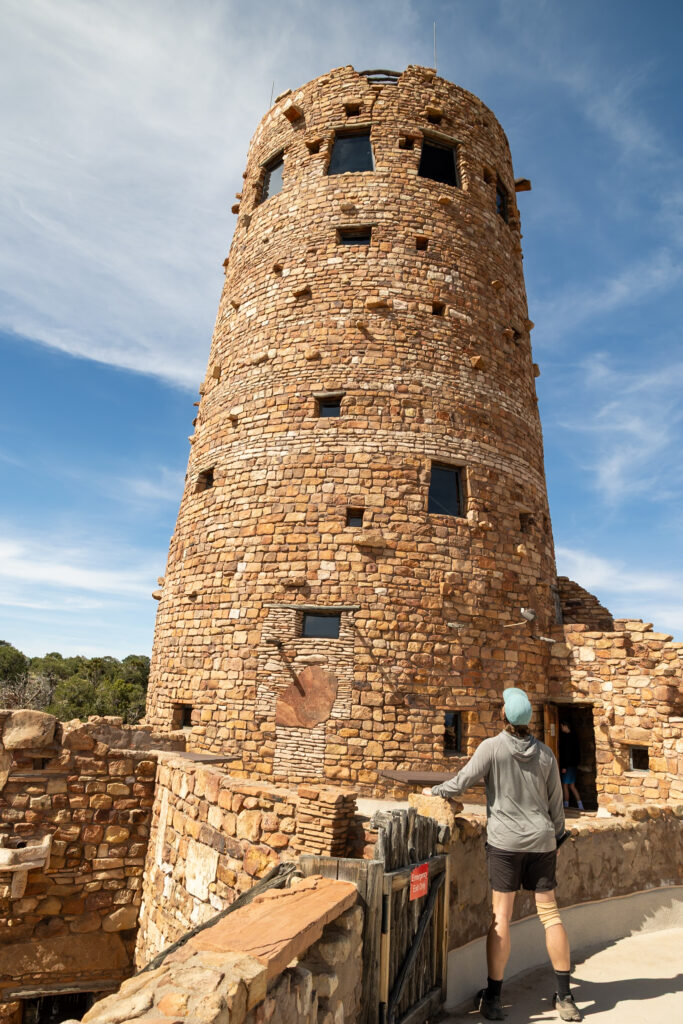
You’ll want to give yourself about 4 hours to explore at your own pace, stopping at as many viewpoints and points of interest as you can along the way. Some of our favorites include Grandview Point, Moran Point, Lipan Point, and Desert View Watchtower.
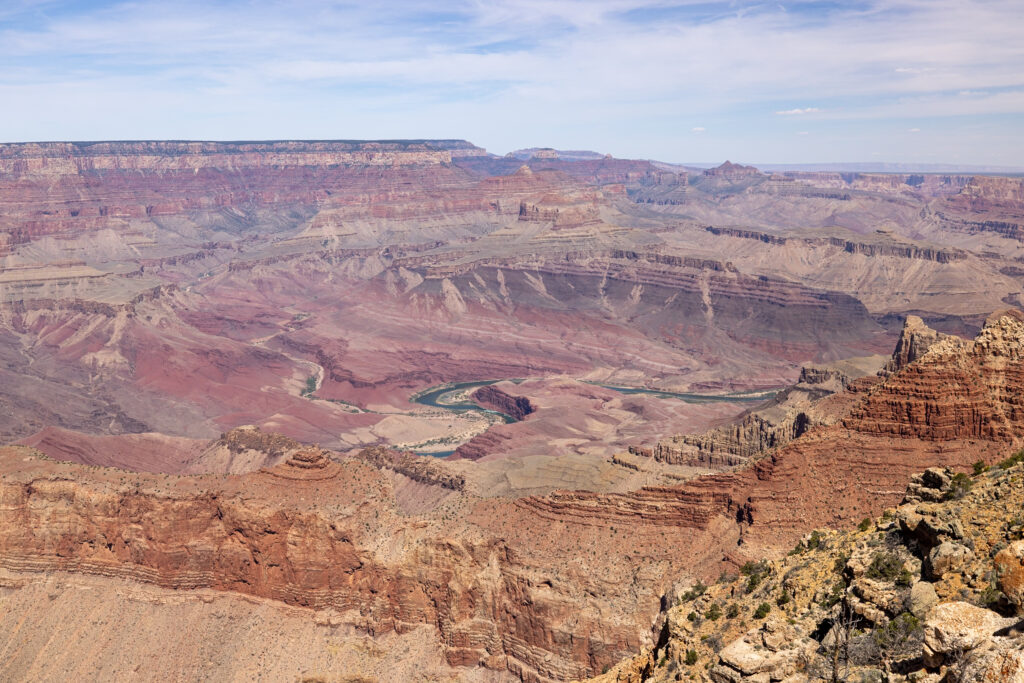
This side of the park has the best views of the Colorado River! Be sure to walk up Desert View Watchtower to get an awesome look at Unkar Rapids in the distance. If you’re lucky, you might be able to spot a rafting trip going down the Colorado River.
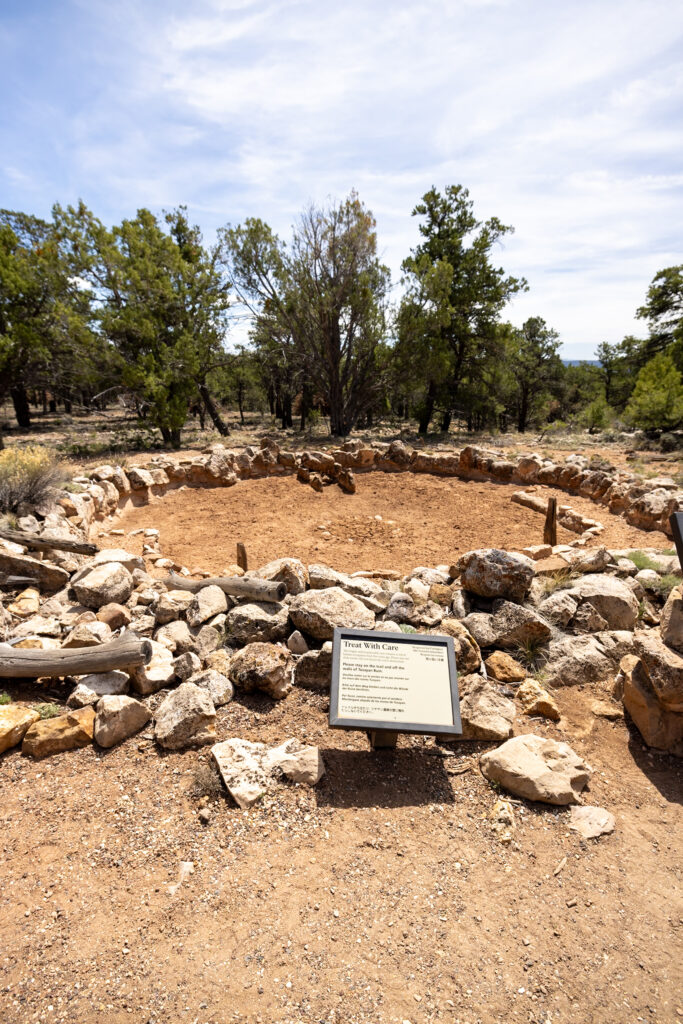
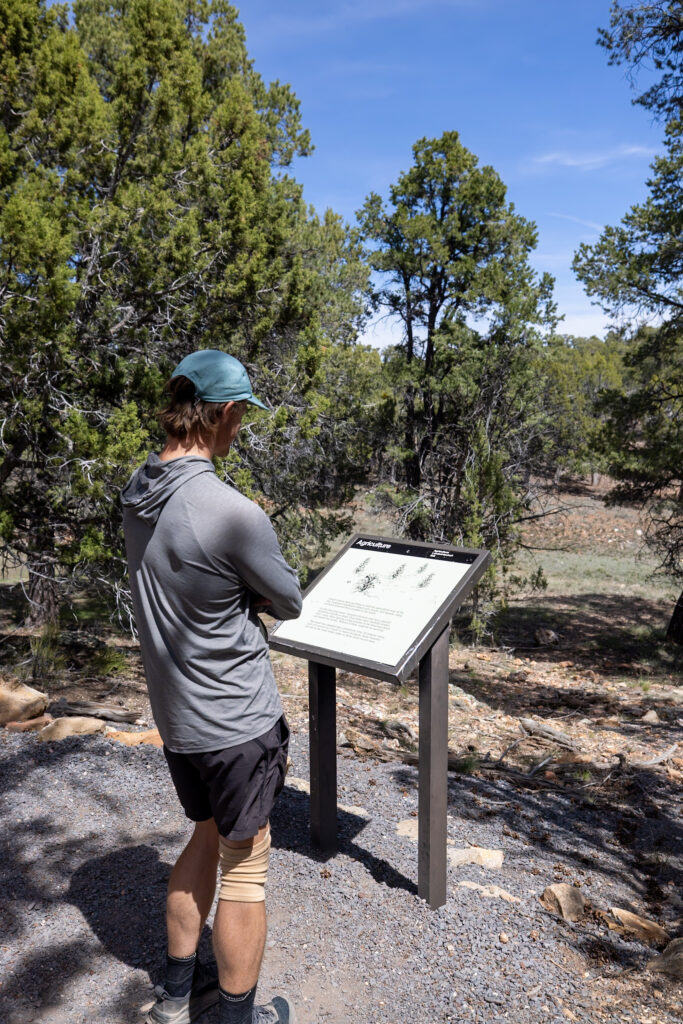
As you drive west toward the Grand Canyon Visitor Center, be sure to stop by the Tusayan Pueblo Site and Museum to learn about some of the human history at the Grand Canyon. They used to have ranger tours, but unfortunately, they were cut due to budget cuts. The museum also used to be open, but due to reduced staffing, it closed.
Evening
Once it approaches 6 PM, start making your way to the rim again to find a place to watch the sunset! If you’ve already been to Mather Point, we encourage you to go to a new spot like Yaki Point or Yavapai Point, quieter alternatives to Mather with equally impressive views. If you have time before setting out, enjoy a final dinner in the Grand Canyon!

With offline maps, wrong-turn alerts, and extra planning features, make the most of every outside adventure with AllTrails Plus. Get 7 days of AllTrails Plus for free!
Map of the Grand Canyon South Rim
How to use this map: We have saved the locations from this guide on this map. You can save this map to your Google Maps by pressing the star icon. In your Google Maps, click the menu icon and then Saved Maps, where this map will appear.
More Things to Do at Grand Canyon National Park
If you have an extra half-day, or want to swap out any of the above activities, there are even more things to do in the Grand Canyon! Here are a few that we didn’t fit into the above itinerary, but you might be interested in:
- Become a Junior Ranger: Whether you’re a kid or an adult, becoming a Junior Ranger is one of the best ways to really learn about the park during your visit and take home a special souvenir: the badge!
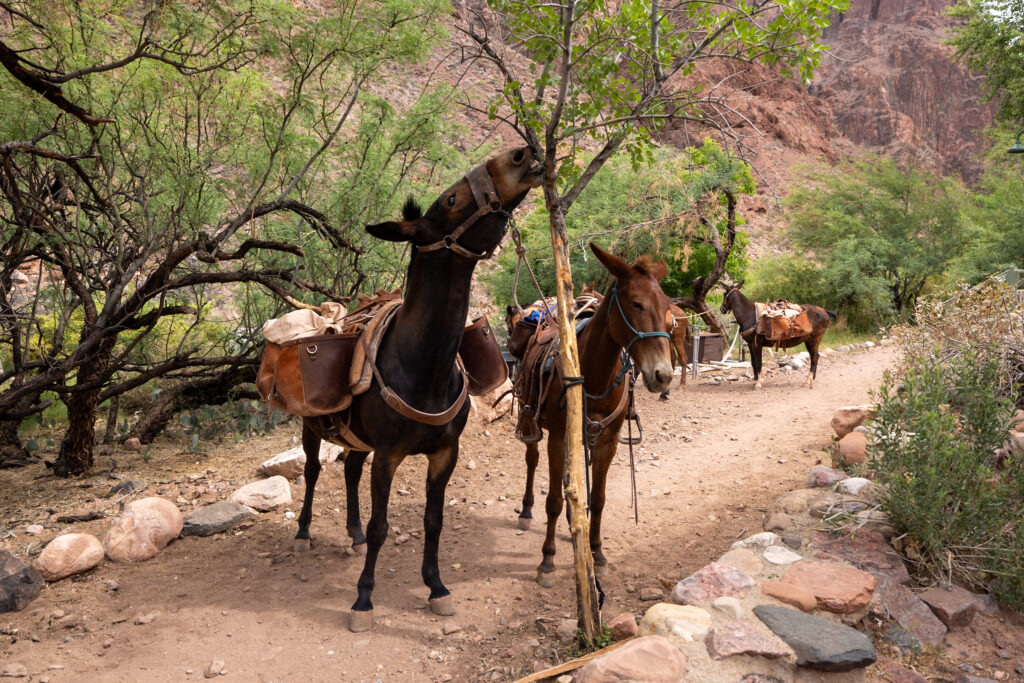
- Go on a Mule Ride: With tickets selling out as far as 15 months in advance, these iconic rides dating back to 1887 are highly sought-after. If you’re planning, they offer 2-hour, 1-day, and even 2-day rides. It’s a great option if you don’t feel up to hiking.
- Book a Helicopter Ride: If you have a higher budget, we had an amazing time on our helicopter ride of the park. And with the Grand Canyon National Park Airport just 15 minutes from the visitor center, you don’t have to go far to go on one! It’s definitely a once-in-a-lifetime experience, but completely worth it! This would add about 2 hours to your itinerary.
- Camp at the Bottom of the Grand Canyon: Hiking or booking a mule ride down to Phantom Ranch to camp overnight in the Grand Canyon itself would require an extra 2-3 days. This is a once-in-a-lifetime experience we highly recommend if you’re able to do something like this!
- Go on a Rafting Trip on the Colorado River: The ultimate Grand Canyon experience includes getting out on the river and floating down the Colorado surrounded by the steep canyon walls! It’s an epic adventure typically done as a half river (5-7 days) or full river (8-16 days) trip. We did a 10-Day Motor Rafting adventure and it was easily our favorite experience in the Grand Canyon!
🔍 Read More! Hop over to our related article, 13 TOP Things to Do at Grand Canyon South Rim, for a full list of activities.
How Many Days in the Grand Canyon?
The Grand Canyon is… grand. It’s a large park with a lot to do. There’s no way anyone could see everything in one trip, let alone in one day. Even after exploring the park for 3 weeks between hiking on the South Rim, a 4-day/3-night backpacking trip, a helicopter tour, and a 10-day rafting trip, we never felt that we had enough of the Grand Canyon. I (Jen), left crying, sad to be leaving.
All of this being said, you can see and experience a lot in 2 days, especially in the South Rim, where you get a lot of bang for your buck. The two-day Grand Canyon itinerary that we’ve designed above is exactly how we’d spend two days in the park if it were our first time.
If you happen to be even more on a time crunch, or are considering a longer adventure, check out our other Grand Canyon itineraries:
- 1 Day in the Grand Canyon Itinerary
- 3 Days in the Grand Canyon Itinerary
- 10-Day Grand Canyon Motor Trip Itinerary
Where to Stay Near the Grand Canyon
Below, we’ve listed some more of the top hotels, lodges, and campgrounds in and around the Grand Canyon South Rim. We personally stayed at Mather Campground a few nights and also boondocked in Kaibab National Forest. Our experience was great everywhere!
Although the laundry and showers weren’t available at Mather Campground during our visit, we really didn’t mind. The campsites weren’t too close together; we were surrounded by trees, and we were close to a shuttle that took us to the epicenter of the South Rim.
Hotels in the Grand Canyon
- El Tovar Hotel ($350-600+): Most exclusive and most famous lodge in the Grand Canyon. You’ll need to book quite far in advance to secure a room here!
- Bright Angel Lodge ($150-300): Another one of the most iconic lodges on the South Rim, a runner-up to the El Tovar.
- Maswik Lodge ($180-320): The original “Motor Lodge” was constructed in 1927 by the Fred Harvey Company and the Santa Fe Railroad. The Shasta Building is one of the original buildings still in use!
- Kachina Lodge ($220-380): Modern lodge from the 60s right on the rim of the Grand Canyon in the center of the historic district.
- Thunderbird Lodge ($220-400): Contemporary lodge with a family focus, located right on the canyon rim in the historic district as well.
- Yavapai Lodge ($160-280): This is the only in-park lodge that has pet-friendly rooms!
- Phantom Ranch ($226/night): A ranch located at the bottom of the Grand Canyon; advanced reservations are required (15 months in advance!) via the lottery. You can hike, raft, or mule ride down. This is one of the last 2 places in the US that still gets its mail delivered by Mule, so be sure to send a postcard to your friends and family if you go!
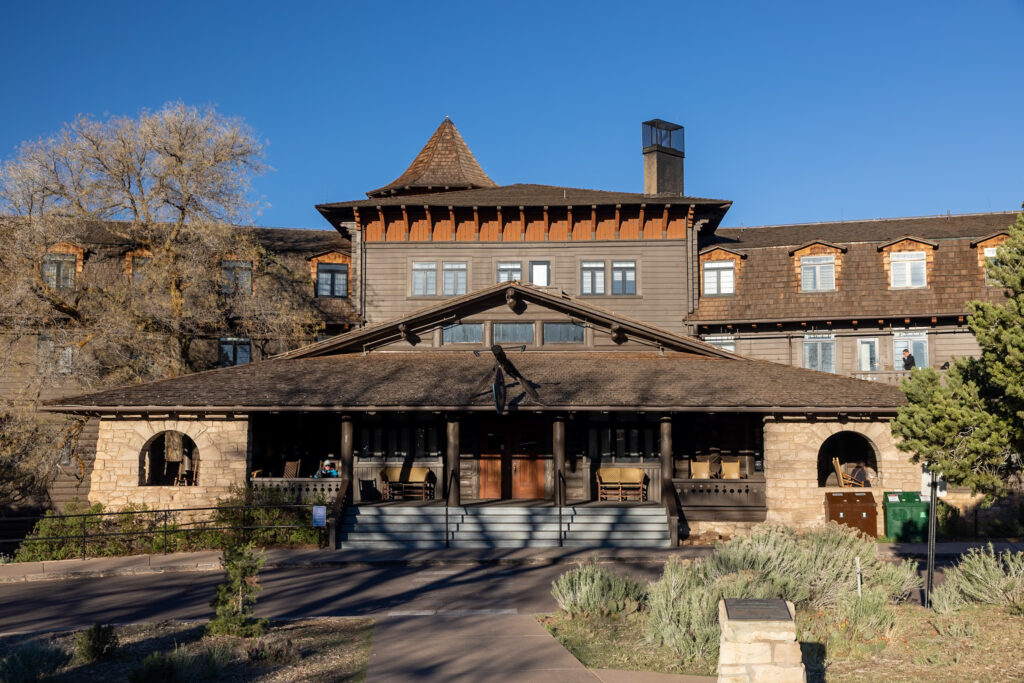
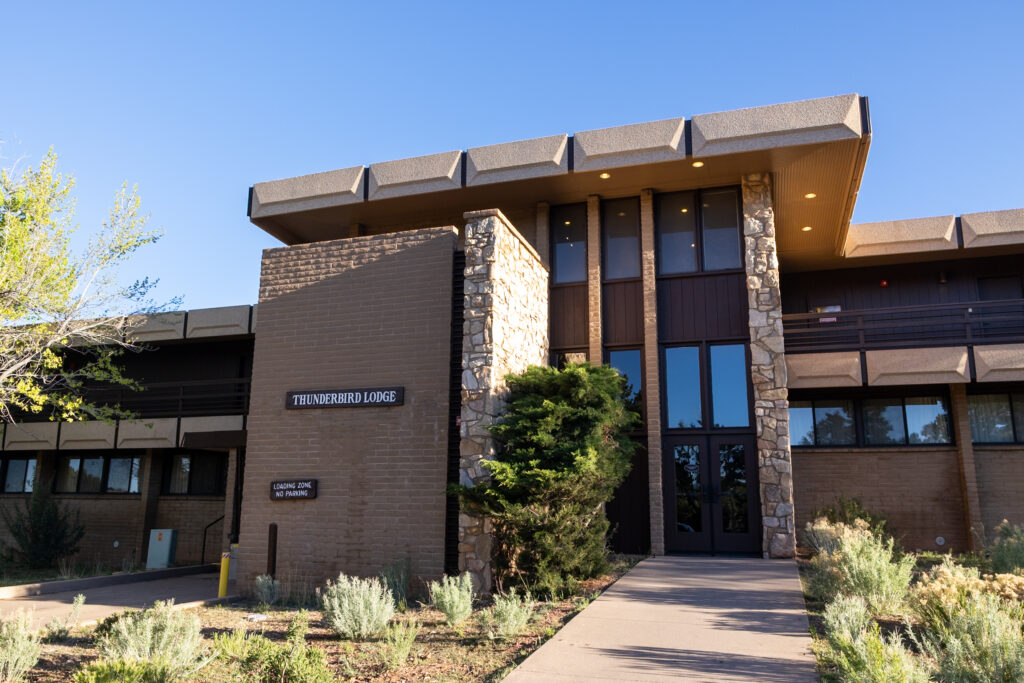
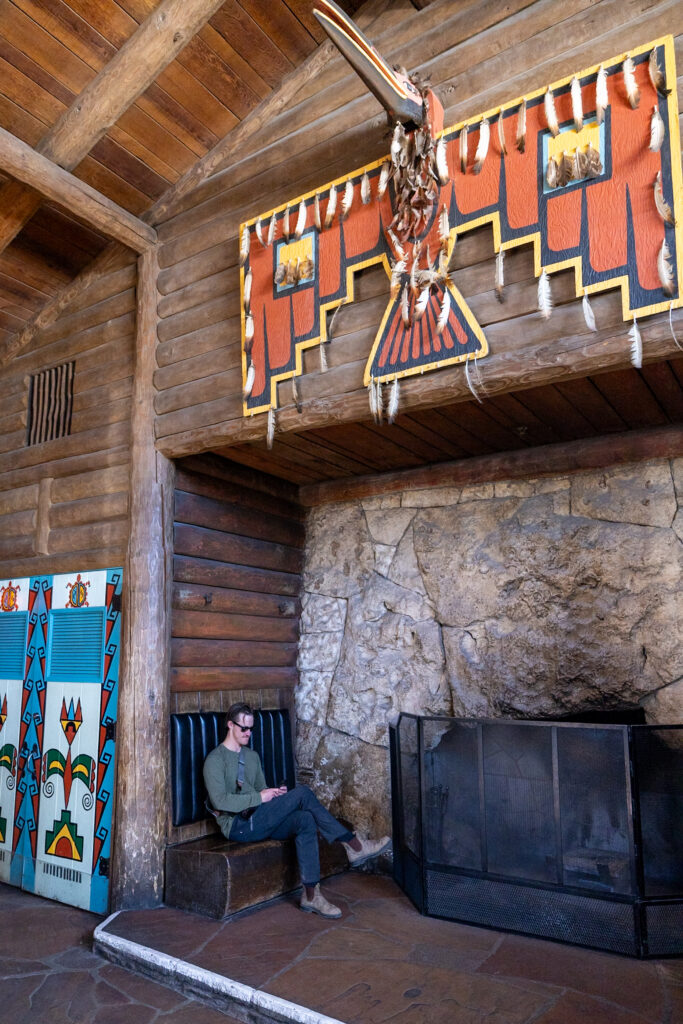
Campgrounds in the Grand Canyon
- Mather Campground ($15-30/night): Large tent and RV-friendly campground (no hook-ups), open year-round and centrally located.
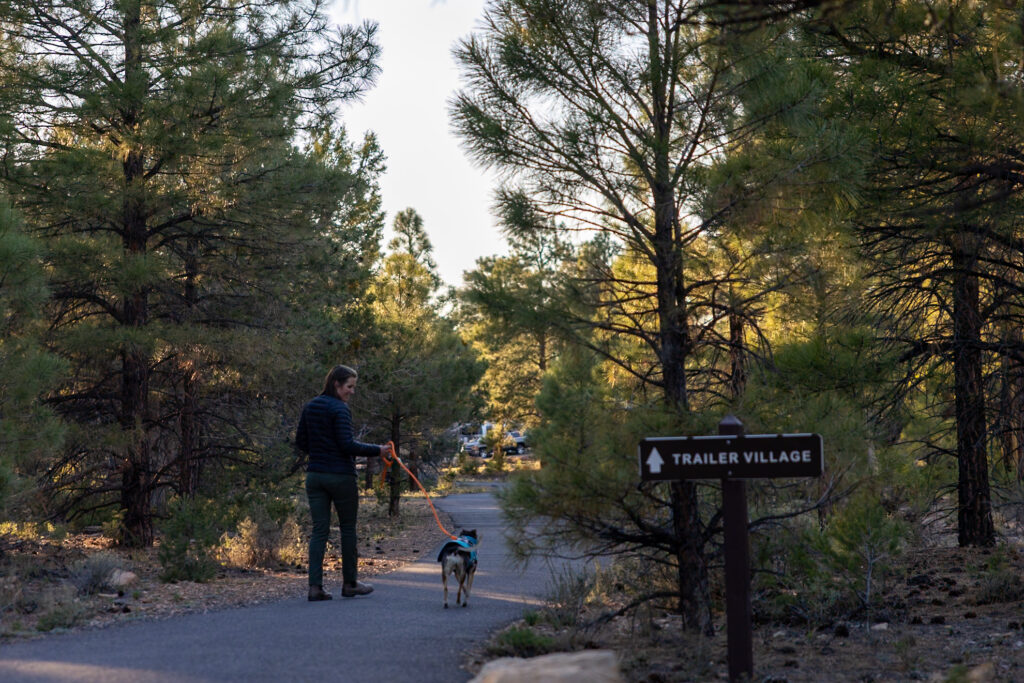
- Trailer Village ($83/night): RV Campground with full hookups, open year-round and centrally located.
- Desert View ($15-30/night): Open April 11th through October 11th, no hookups, 23 miles (37 km) east of GC Village
- Tusayan Montane ($20-125/night): Open May 14th through November 1st, no hookups, 9 miles (14 km) south of GC Village
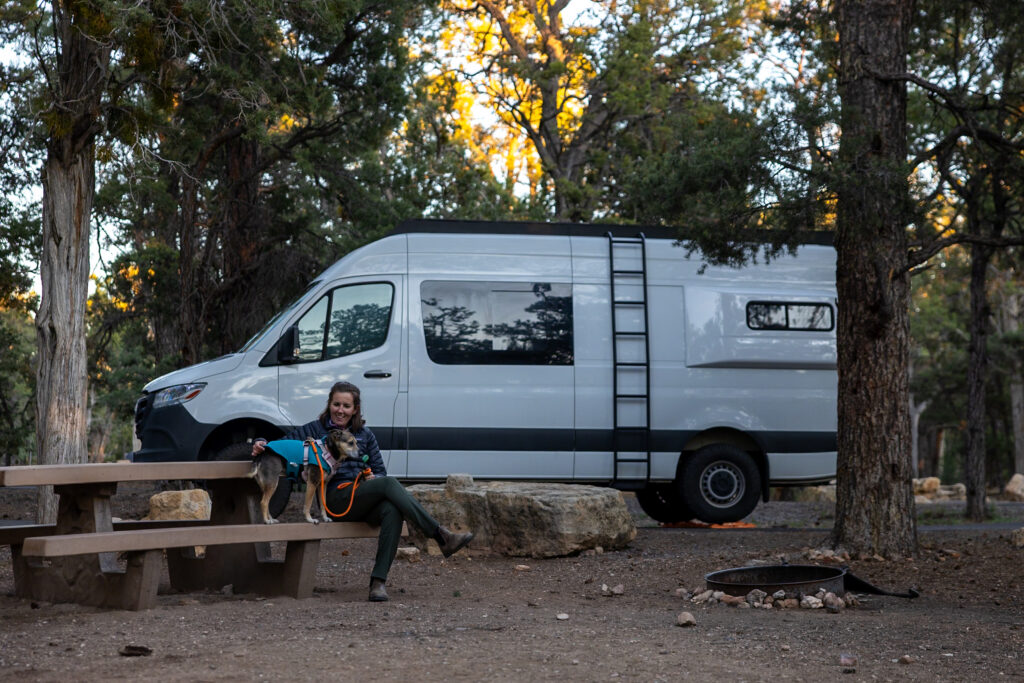
Lodging outside of the Grand Canyon
- Campgrounds: Grand Canyon Railway RV Park in Williams is a good option if you want to leave an RV behind and take the train to the Grand Canyon. If you prefer to be a bit closer, Grand Canyon Camper Village in Tusayan is a no-frills choice for RVers and tent campers.
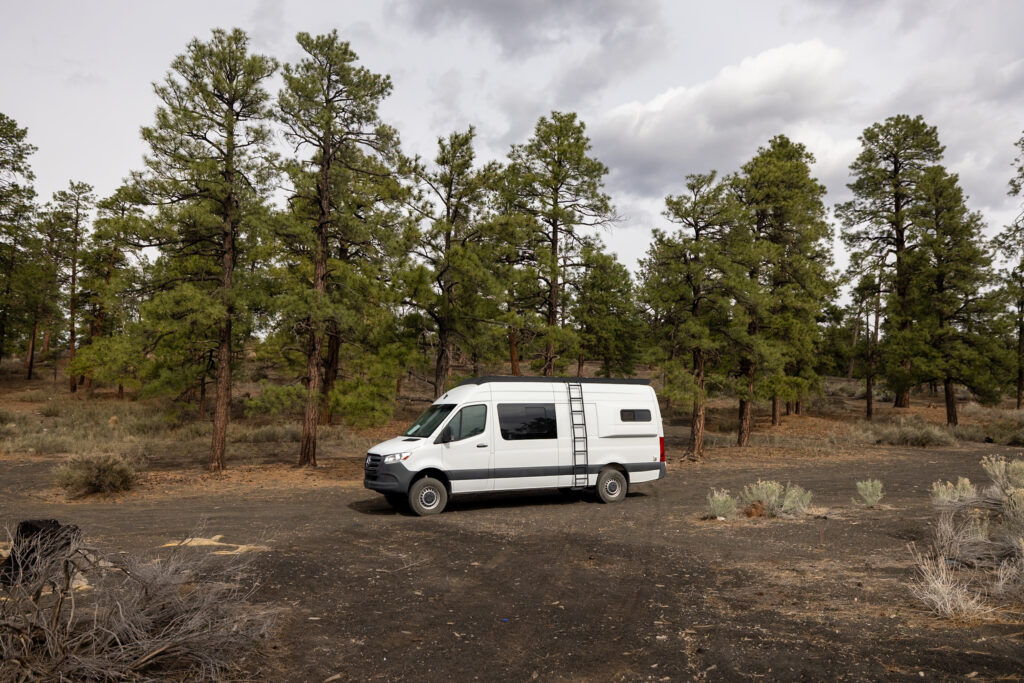
- Boondocking: You can boondock in Coconino National Forest or Kaibab National Forest as we did. In Kaibab, camping must be at least 0.25 mile (0.4 km) away from Highway 64.
- Free BLM Camping: There’s lots of BLM free camping just outside of the park. We stayed in two different places over the course of our week that we explored. One was just off Desert View Drive, after entering the park, you turn off the main road and enter the National Forest. There are also a ton of spots just outside the main entrance.
- Hotels: In Williams, Arizona, you have tons of hotels like the Grand Canyon Railway Hotel, a Hampton Inn, and a Best Western Plus Inn, among other places. In Tusayan, Arizona, you’ve got The Grand Hotel, a Holiday Inn Resort, and Grand Canyon Hotel & Suites, to name the most popular stays.
- Rent a home: Platforms like VRBO allow you to rent an entire apartment or house in nearby towns during your stay in the Grand Canyon.

Try Harvests Hosts and receive a free month on us!
Members get unlimited overnight stays at thousands of small businesses, including farms, wineries, breweries & distilleries, and attractions, that invite RVers to park for safe and convenient stays.
Use code schoandjo20 at checkout for an extra discount!
Where to Eat in the Grand Canyon South Rim
Below, we’ve listed all the places to eat in the Grand Canyon South Rim. We’ve noted in the middle column whether they serve Breakfast, Lunch, or Dinner (B, L, D), as well as an indicative price range per person. We saw that the majority of these places offer gluten-free and Vegan options; you can check their menus on the link!
🥂 El Tovar Booked? If you really want to eat in the historic lodge, try getting a spot at the El Tovar Bar if there are no openings for the dining room!
| Restaurant Name | Meal Type | Price Range per person |
|---|---|---|
| El Tovar Dining Room | B, L, D | $20-70 |
| Harvey House Cafe | B, L, D | $20-30 |
| Yavapai Dining Hall | B, L, D | $15-40 |
| Maswik Food Court | B, L, D | $10-30 |
| Canyon Village Market & Deli | Deli-Style B, L, D | $10-15 |
| Canyon Adventures Bike Tours & Café | Deli-Style B, L, D | $10-15 |
| Yavapai Cafe | B, L | $5-15 |
| Arizona Steakhouse | L, D | $30-70 |
| Maswik Pizza Pub | L, D | $10-30 |
| Fred Harvey Tavern | L, D | $20-70 |
| Yavapai Tavern | L, D | $20-50 |
| Desert View Market & Deli | Deli-Style L, D | $10-15 |
| Food Trucks (2) | L | $10-15 |
| Bright Angel Fountain | To-Go B, L, D | $5-15 |
| Hermit’s Rest Snackbar | Snacks & Sandwiches | $5-15 |
| Desert View Trading Post & Ice Cream | Ice Cream Only | $5-10 |
| Phantom Ranch Canteen | B, D (Located at the bottom of the canyon) | $30-70 |
When to Visit the Grand Canyon
The seasons bring different weather and, therefore, experiences in the Grand Canyon. We visited in April and May 2026 and had excellent weather. As we prefer to hike in slightly cooler weather, we were able to comfortably wear pants and sun shirts during the day, having taken off our puffy jackets or fleece pullovers for the cool morning temps.
- Spring: Spring can have a mix of warm and cool days and can be windy. In our experience, it was very windy both hiking, on our rafting trip, and backpacking to Phantom Ranch. The wind is a nice reprieve from the sun, but it can be a little annoying when setting up a tent.
- Summer: During the summer, temperatures are at their highest, and there are also quite a few thunderstorms. July and August are known for monsoons. Hiking in the middle of the day is going to be quite difficult due to the hot temperatures and isn’t advised by rangers. It’s best to restrict your hiking below the rim so you’re not hiking a lot of elevation on exposed trails in the middle of the day. Summer is also peak season, so you can expect to wait for shuttles after 10 AM and have a more difficult time finding parking later in the day.
- Fall: Fall has moderate temperatures, no big winds like in spring, and is the most comfortable. When speaking with our rafting tour guides and park rangers, we found that their favorite season was always fall! It has cooler temperatures similar to spring, but a lot less wind.
- Winter: In the winter, you may have ice and snow as you enter the Canyon and cool conditions at the bottom. We plan to come back in February to backpack the Escalante Route. Winter is cold, so expect to wear many layers and for snow to be a possibility, especially near the rim.
How to Get to the Grand Canyon
To get to the Grand Canyon South Rim, you can arrive by car, public transport, or plane. Once there, the majority of visitors park in one of these lots by the main Visitor Center. This is what we did, moving predominantly by the free shuttle buses if we weren’t walking. Here’s a breakdown of how to reach the Grand Canyon:
- Car: Most visitors drive via I-17 or US-180 from Flagstaff or Phoenix (1.5 to 4 hours, respectively). Once in the South Rim, the best place to park is by the main Visitor Center, not in Grand Canyon Village.
- Plane: The most popular airports to fly into to get to the South Rim include Phoenix (PHX), Las Vegas (LAS), and Flagstaff (FLG). Once landed, you can either rent a car or continue to the park via one of the public transport options we list below. Distances are all to the Grand Canyon Visitor Center at the South Rim:
- Phoenix (PHX) is 3h 36m (233 mi)
- Las Vegas (LAS) is 4h 24m (278 mi)
- Flagstaff (FLG) is 1h 34m (90.5 mi)
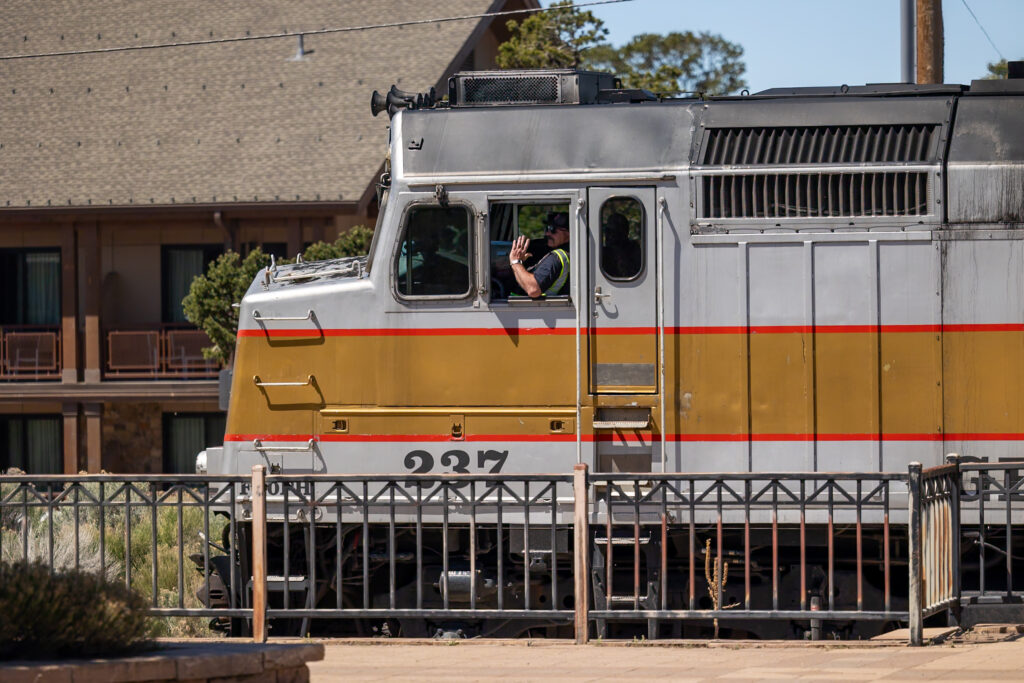
- Train: For a scenic route, you can book a ride on the Grand Canyon Railway from the city of Williams, AZ, just south of the South Rim.
- Bus: Greyhound has buses that run from major cities like Las Vegas, Flagstaff, and Phoenix directly into the park, or to Tusayan.
- Other: There is also a private shuttle run by Trans Canyon Shuttle that offers airport pickup to and from Phoenix and Las Vegas.
Visiting the Grand Canyon FAQ
1. Where is the Grand Canyon?
The Grand Canyon is located in northern Arizona and has four main areas: South Rim, North Rim, Grand Canyon West, and the Grand Canyon Wilderness. While the South and North Rims are only about 10 miles (16 km) apart, driving between them takes 4–5 hours because there isn’t a road across the canyon. We visited the South Rim, which is the most popular area, and left the North Rim for our next trip!
2. Which rim of the Grand Canyon is best?
This depends on what you’re looking for. We 100% suggest the South Rim if it’s your first visit, as it’s the most popular, has tons of trails and things to see, and is open the entire year. If you’ve already been, the North Rim is the next best option. After that, Grand Canyon West is a shorter visit, but if you only have half a day and are coming from somewhere nearby like Las Vegas (2-hour drive), it could be worth it.
3. Is there cell service in the Grand Canyon?
Cell service is quite limited in the Grand Canyon, although in the South Rim area it’s known to be the most stable. If you stick to the rim around Grand Canyon Village, you’ll probably be good. Once you hike below the rim, or stay far away from Grand Canyon Village towards Hermit Road, for example, you might not always have service.
4. How much does it cost to visit the Grand Canyon?
A standard entrance pass for the Grand Canyon is $20 per person, $35 per car, or $30 per motorcycle for US residents and citizens. Non-US residents must pay a $100 per person fee on top of this. If you plan on visiting several parks within the same year, we recommend investing in the America the Beautiful pass, which is what we use.
Besides the entrance fee, your other expenses depend on your travel style: whether you camp or stay in a lodge, whether you cook your own food or eat in, or whether you book any paid experiences or stick to free things to do. Consult our Where to Stay section for an idea of campground and hotel prices.
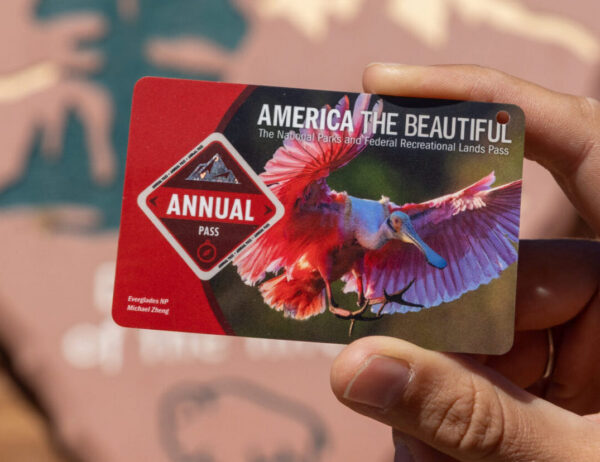
🎫 Consider investing in the America the Beautiful pass for $80 like we did if you’re planning on travelling to several parks within the year.
Related Articles
- EXACTLY What to Expect Rafting the Grand Canyon (Our 10-Day Motor Trip)
- 11 MUST-DO Day Hikes in the Grand Canyon
- ULTIMATE Guide to Helicopter Tours in the Grand Canyon
- 15+ BEST Grand Canyon Sunrise & Sunset Viewpoints (South Rim)
- 13 TOP Things to Do at Grand Canyon South Rim
- 15 BEST Hikes in Grand Canyon (Ranked Easy to Hard)
- 19 BEST Books to Read About the Grand Canyon
- The BEST Way to Spend One Day in the Grand Canyon

Leave a Reply
You must be logged in to post a comment.