

If you’re wondering what to do at Grand Canyon’s South Rim, you’ve come to the right place! Although a park as large as the Grand Canyon can be overwhelming to plan a trip to, sticking to the South Rim (the most popular area) makes visiting this park all the easier. We’ve spent 3 weeks exploring almost everything you can do on the South Rim, so you can rest assured our recommendations are tried and tested!
In this article, we’ve rounded up the top 13 things to do at Grand Canyon South Rim, from watching the sunrise at Mather Point to booking an infamous Grand Canyon Mule Ride! These top Grand Canyon attractions will surely help you make the most out of your visit.
Note: We use affiliate links which provide us a little kickback each time you use one of our links and make a purchase, without any additional cost to you. We do not recommend products that we don’t already love or have heard great things about, so you can trust we’re only suggesting great products to you.
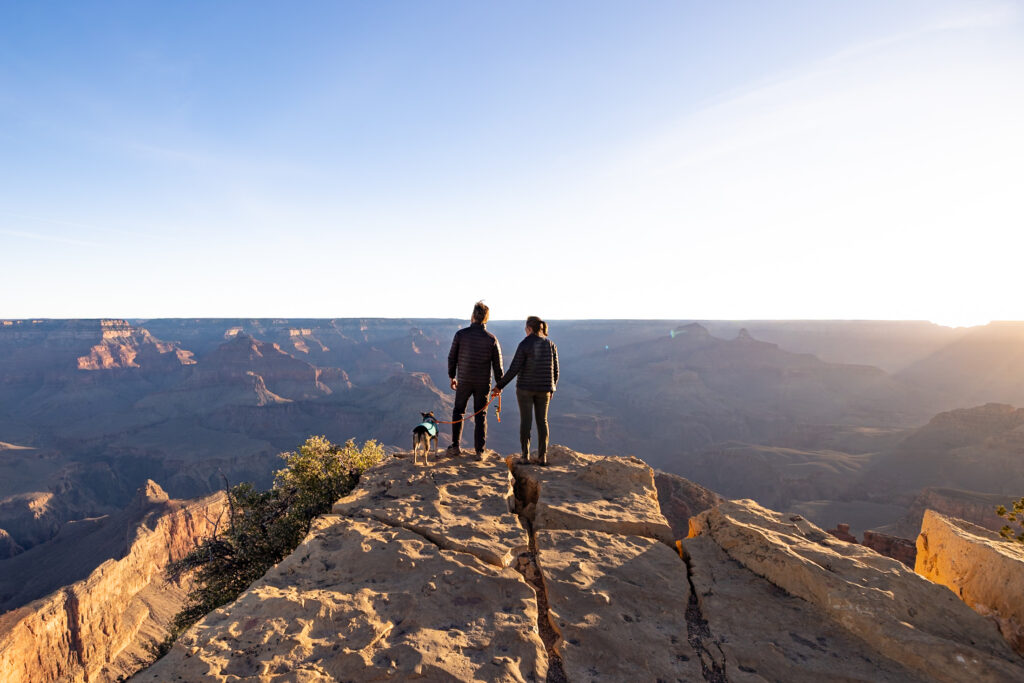
1. Watch the Sunrise in the Grand Canyon
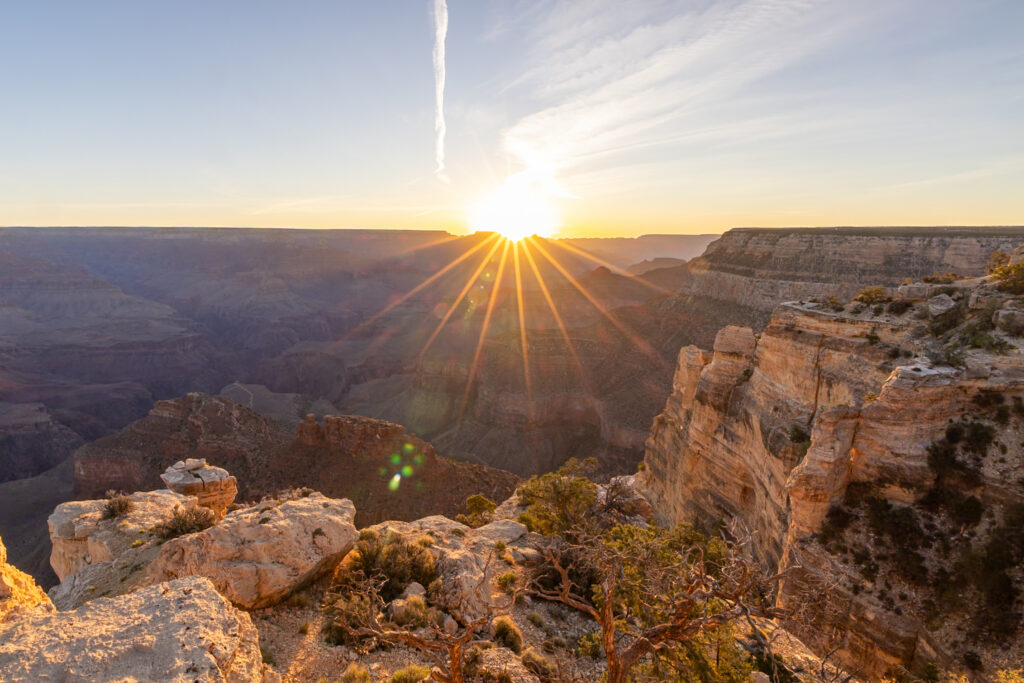
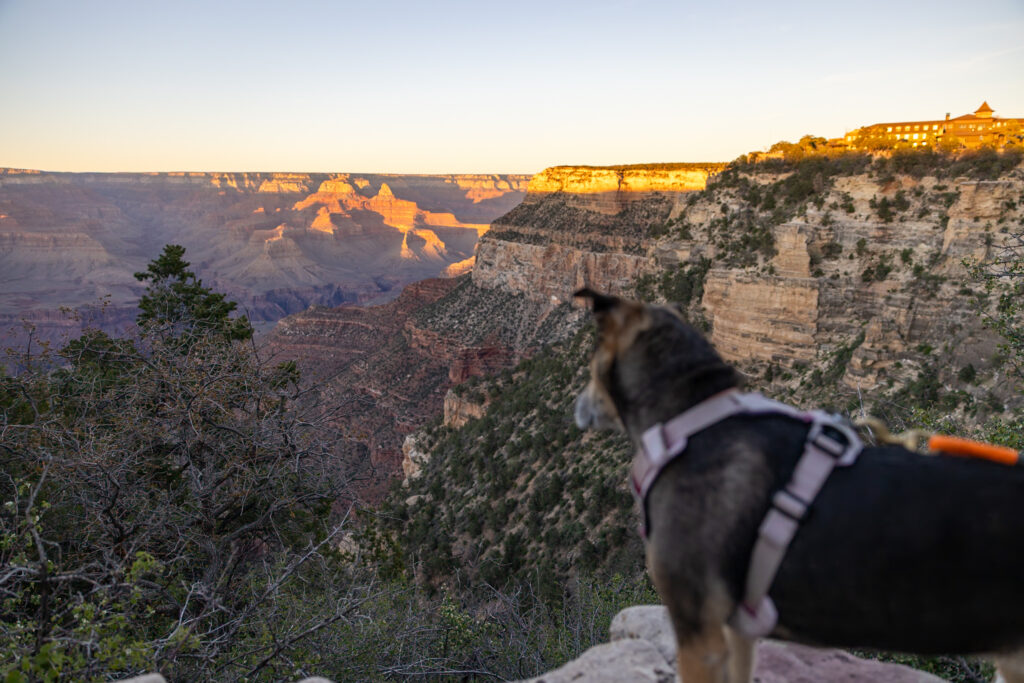
Watching the sunrise in the Grand Canyon is definitely a must on any trip! Watching the colors change as the sun washes light on the canyon walls starts any Grand Canyon trip off on the right foot. While Mather Point is hands-down the most popular spot to watch the sunrise in the Grand Canyon, we preferred Yavapai Point. Beyond offering gorgeous canyon views, it’s also in walking distance from the Visitor Center and a much quieter alternative.
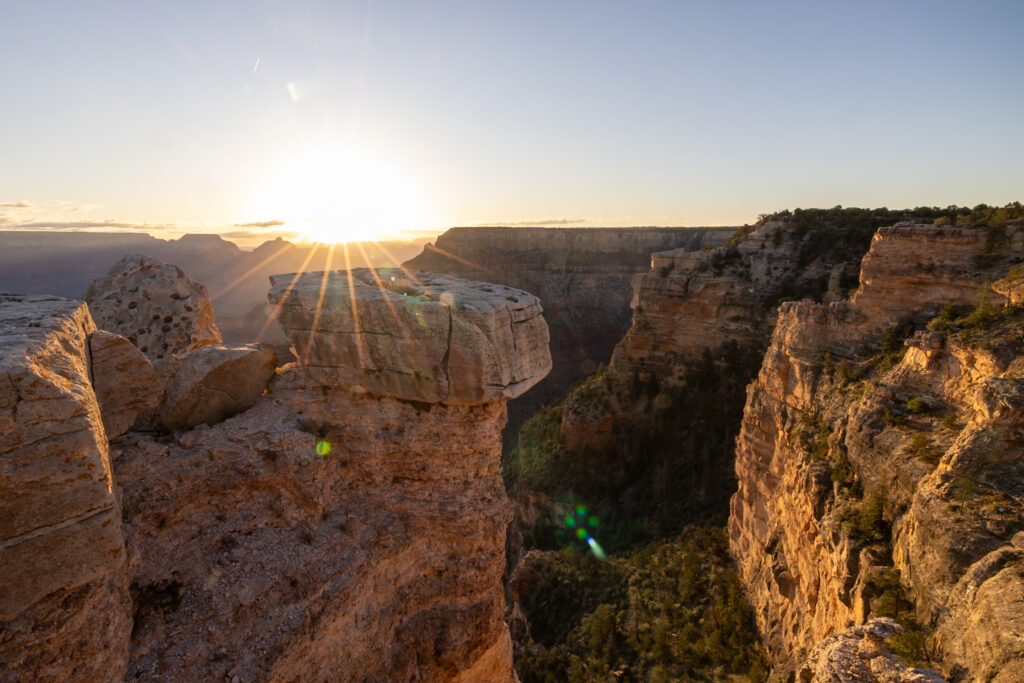
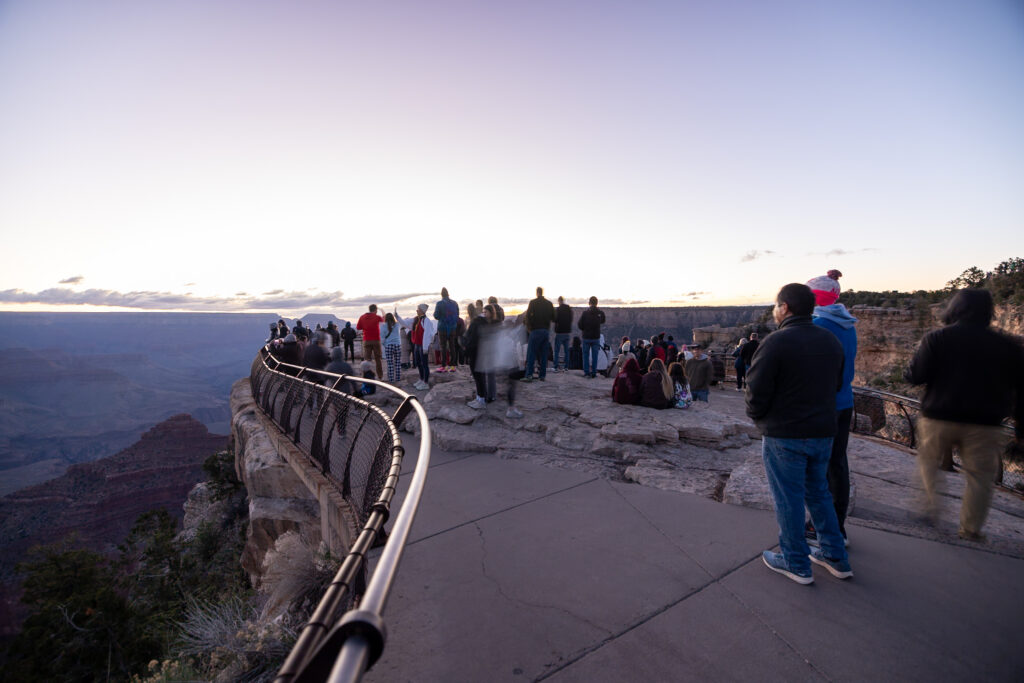
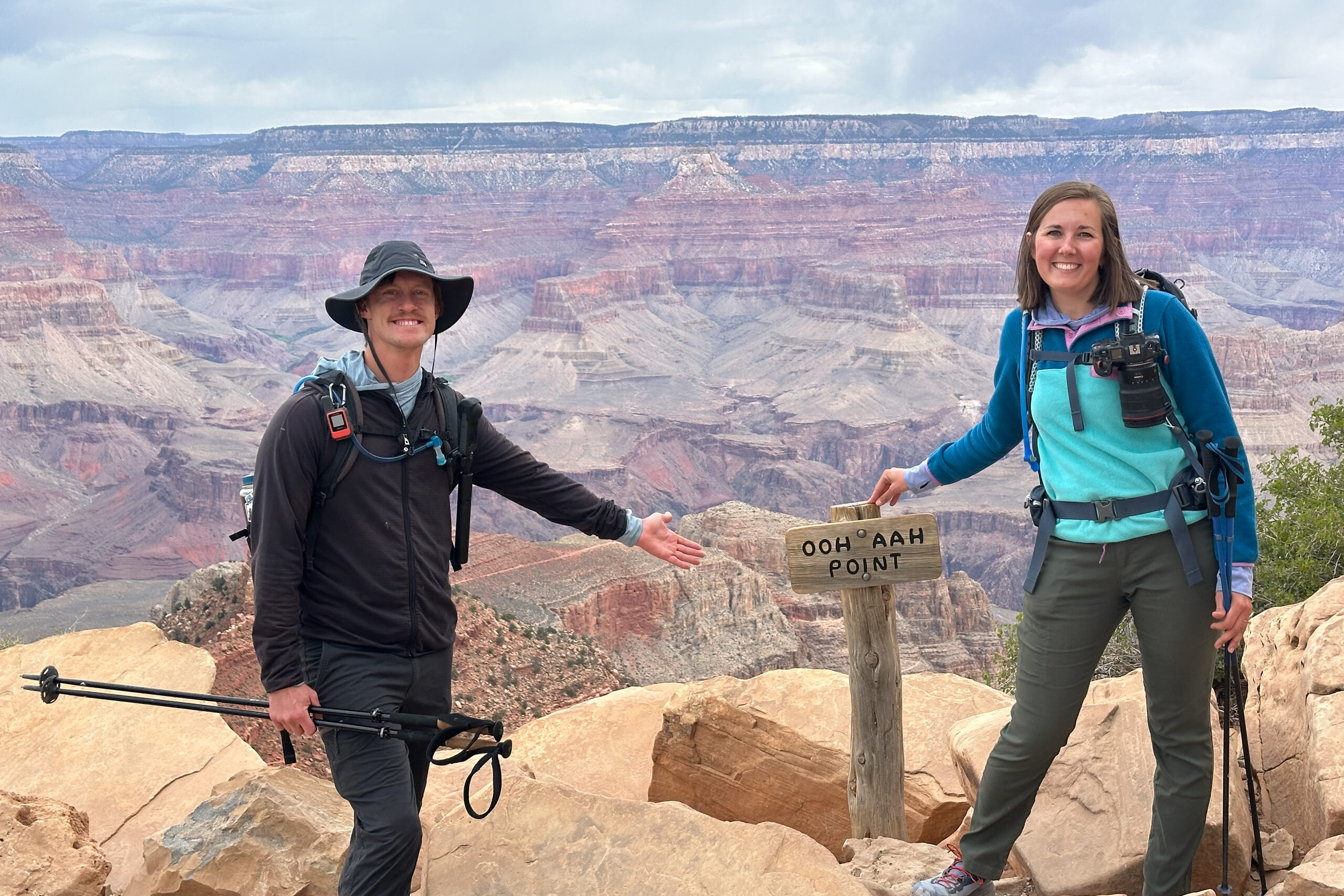
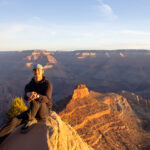
If you’re feeling up for a short hike to experience the sunrise surrounded by the canyon walls, we highly recommend Ooh Aah Point! This viewpoint on the South Kaibab Trail ended up becoming our favorite spot to watch the sunrise in the Grand Canyon! To get here requires a short, 1-mile (1.6-km) hike into the canyon. Although one of the best sunrise spots in the park, it isn’t for people who are apprehensive about going into the canyon. If this is your case, feel free to stick to the rim.
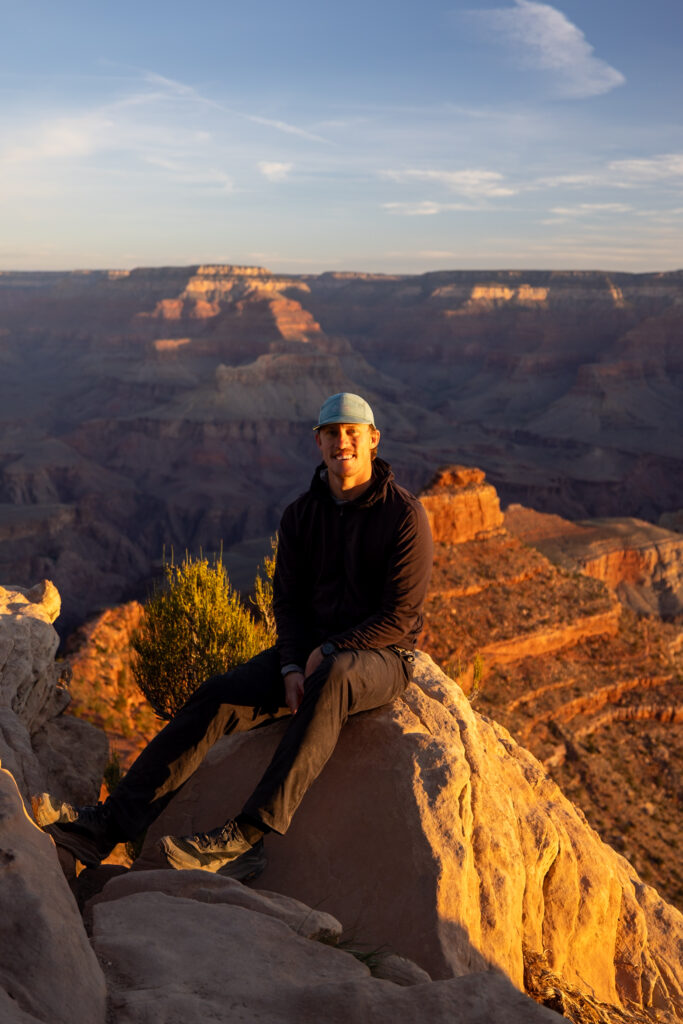
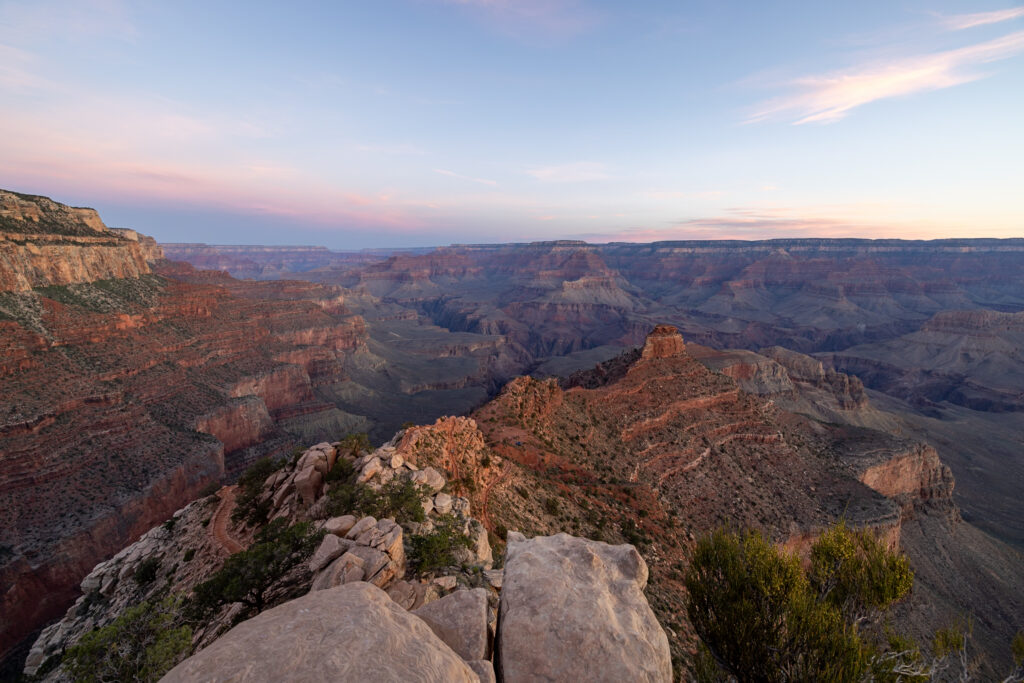
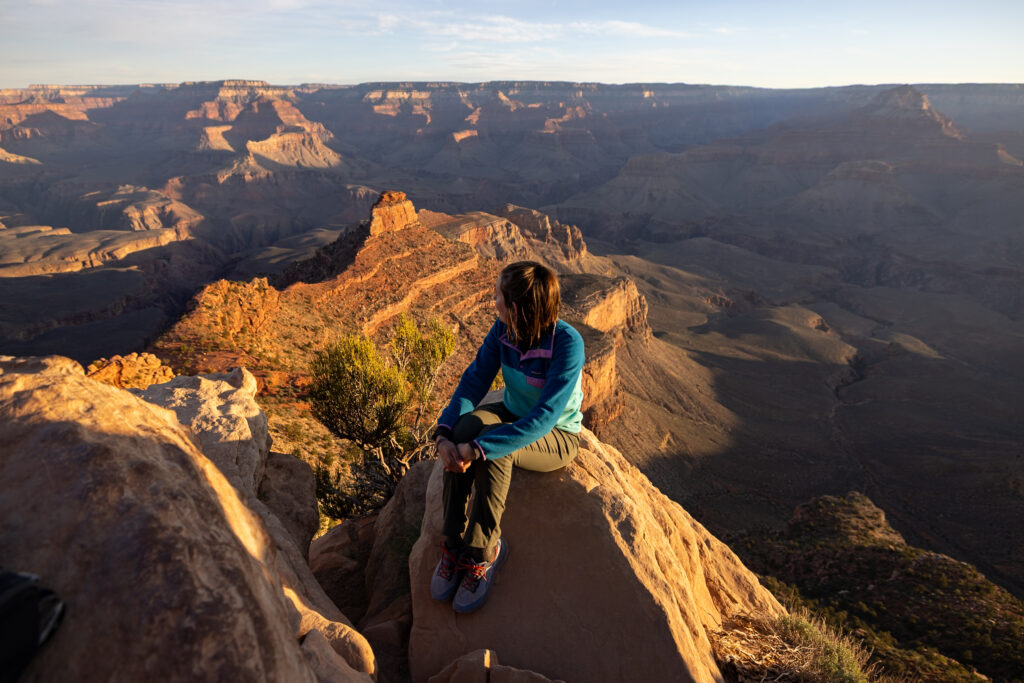
🌄 Discover More Sunrise Spots! Discover more spots to watch the sunrise in the Grand Canyon in our related article, 15+ BEST Grand Canyon Sunrise & Sunset Viewpoints (South Rim)!
2. Walk the Rim Trail
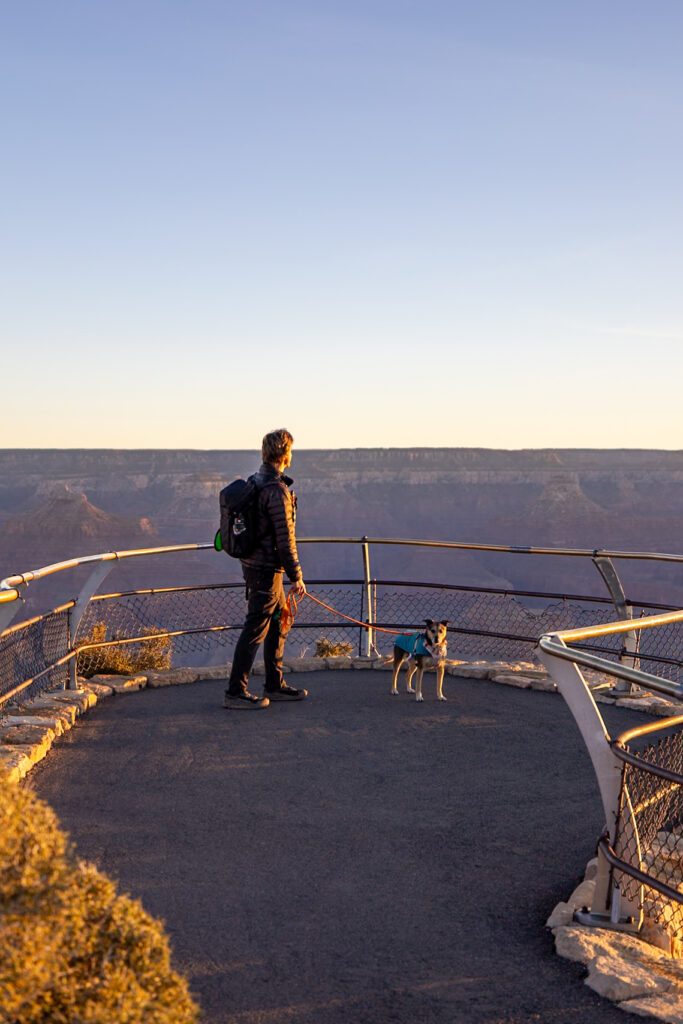
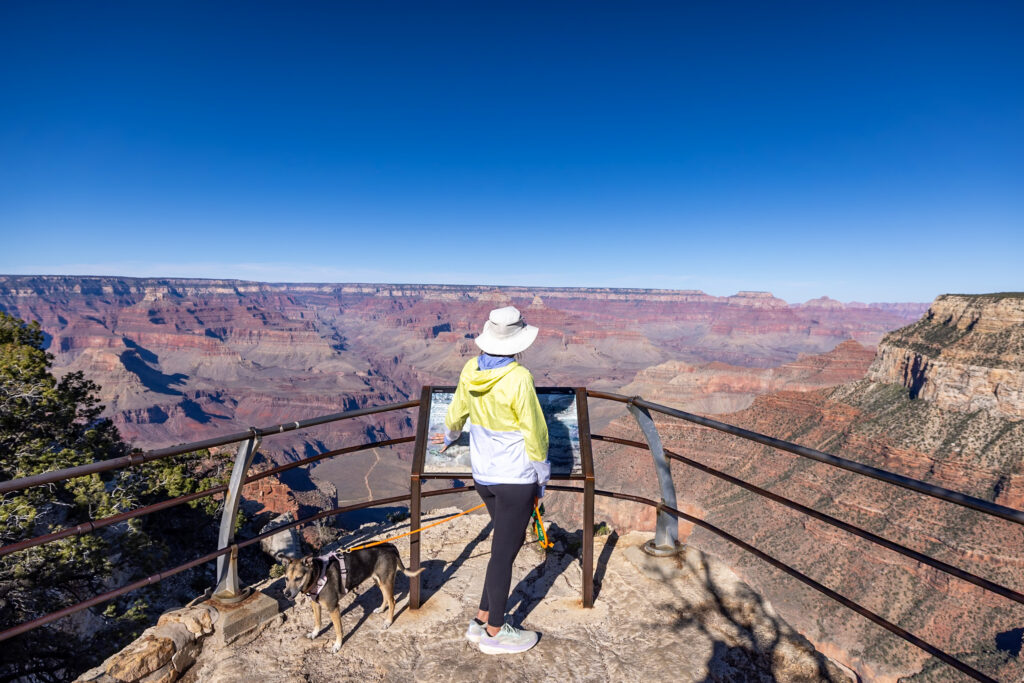
The most popular trail in the Grand Canyon’s South Rim is hands-down the Rim Trail. 12.7 miles (20.4 km) in length, this trail is flat, dog-friendly, and, as the name suggests, sticks to the rim. We hiked this trail several times during our visit, tackling different sections each time. Two sections we recommend include:
- Trail of Time (20 minutes): This section near the Grand Canyon Visitor Center is super educational, taking you along a geological timeline where every meter you walk equals 1 million years. It’s a great introduction to the park!
- Maricopa Point, Powell Point, and Hopi Point (1-1.5 hours): These three iconic viewpoints are located right next to one another on the quieter West Rim near Hermit Road and can be visited in 1 hour. Expect to take 2-2.5 hours if you hike back as well, instead of catching the free shuttle. Alternatively, you can visit these viewpoints from the Hermit’s Rest Shuttle; just remember you’ll have to take the Shuttle to the end of the line before it turns around.
The section of the Rim Trail around the Grand Canyon Visitor Center is, without a doubt, the most crowded. When we hiked the western portion of the trail, near Hermit Road, the crowds dramatically thinned out. So if you’re looking for the most convenient section regarding parking, we recommend the section near the Grand Canyon Visitor Center, but if you’re looking for a peaceful trail to enjoy the views into the canyon, we recommend the sections on Hermit’s Road.
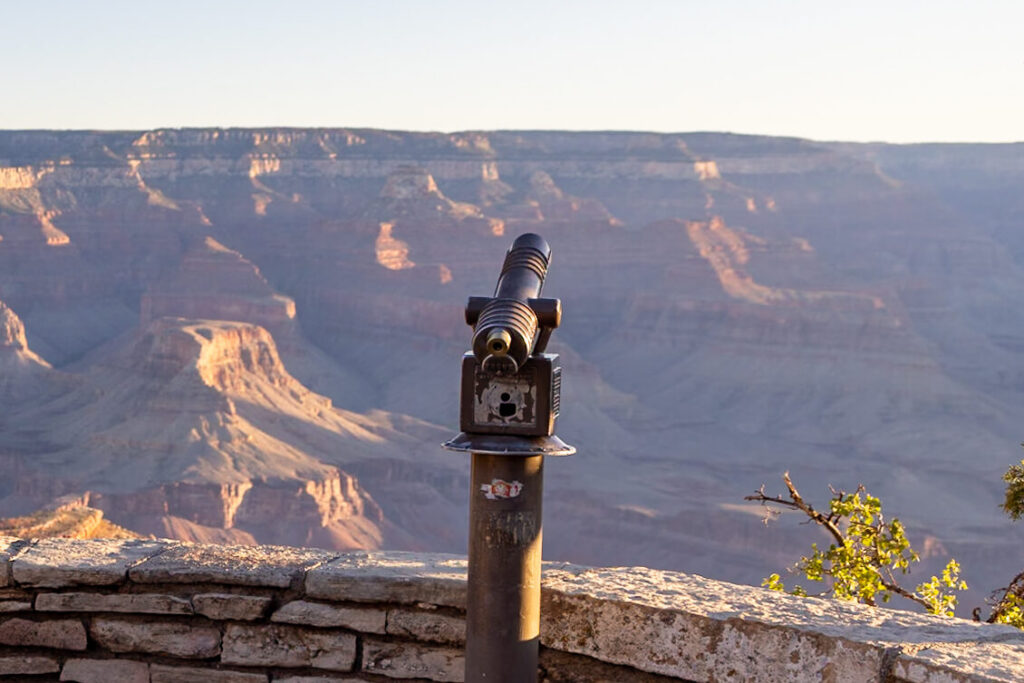
3. Hike the South Kaibab or Bright Angel Trails
The two main trails that head down into the canyon are the South Kaibab Trail and the Bright Angel Trail. Even though these long trails go all the way down to the Colorado River, most people just hike sections of them, similar to the Rim Trail.
☀️ Practice Hiking Safety! The Grand Canyon is the deadliest national park, so, especially when going past the rim, make sure to start early, take at least 4 liters of water per person, and pack salty, satisfying snacks and electrolytes to reenergize. It’s always a good idea to consult a park ranger about your hiking plans before setting out.
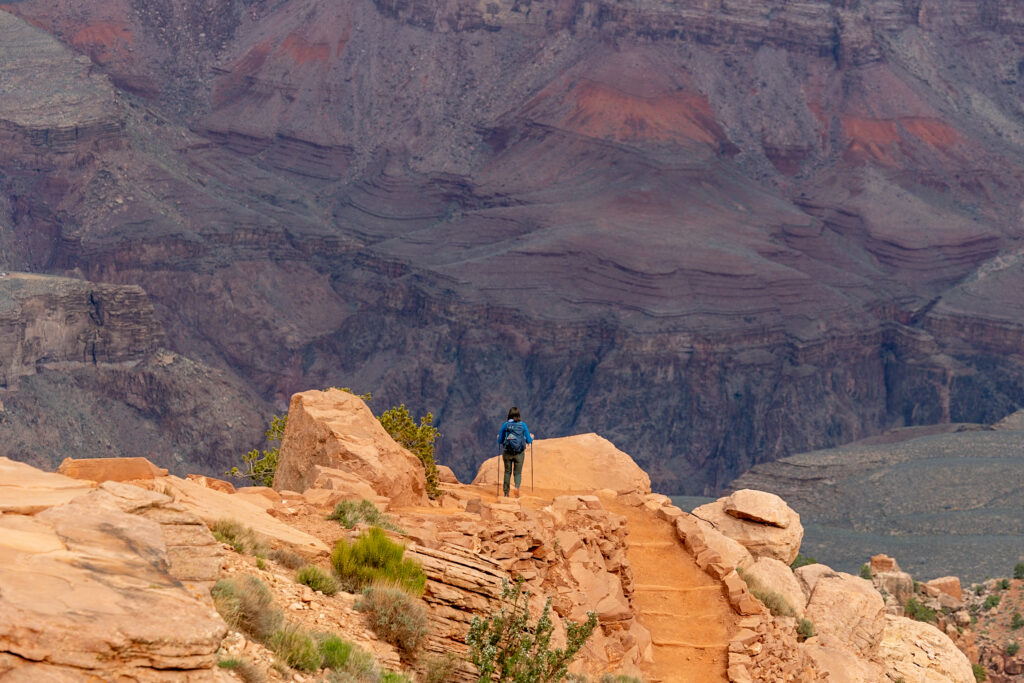
Our first recommendation is to go to Ooh Aah Point via the South Kaibab Trail. This moderate-level trail takes just 1 to 1.5 hours in total and ended up being our favorite shorter trail in the park. The views from the viewpoint are amazing, particularly at sunrise or sunset! Don’t be fooled, though; this trail is labeled as moderate because it has 662 feet of elevation gain in 2 miles round trip.
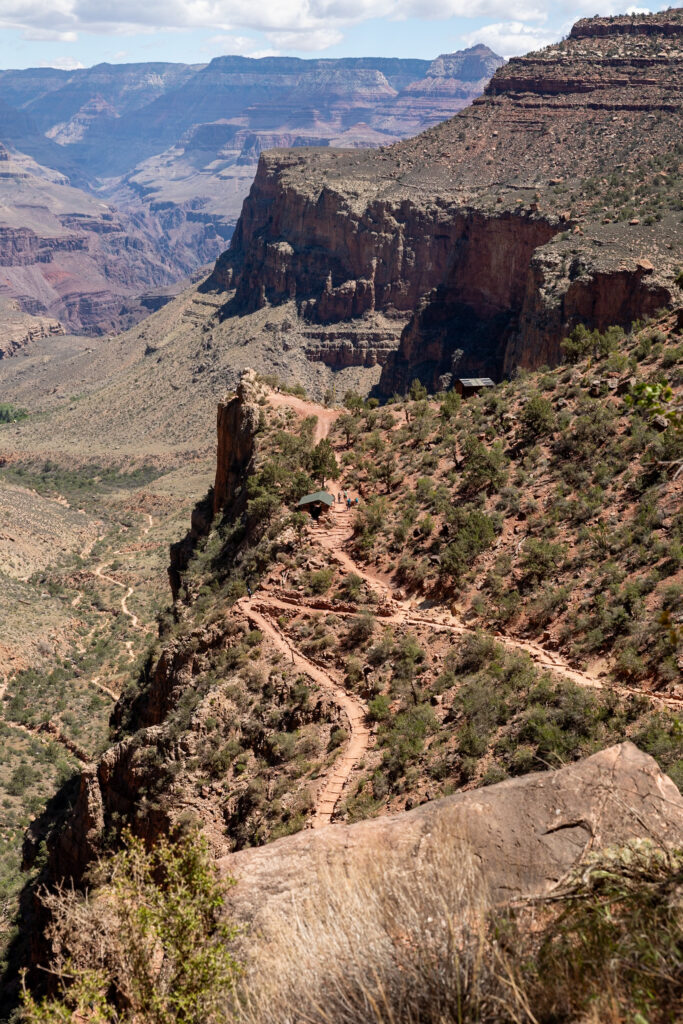
Another option is to head to 1.5 Mile Resthouse on the Bright Angel Trail. This 2-hour trail only takes you 1.5 miles (2.8 km) down to a resthouse with water stations, pit toilets, and a shady covering. Although short in distance, this trail is labeled as hard due to its 1,151 feet (351 meters) of elevation gain in 3 miles round trip!
If you’re interested in hiking further than a few miles on these and other trails, check out our related article—15 BEST Hikes in Grand Canyon (Ranked Easy to Hard). Here, you’ll get a complete overview of everywhere else there is to hike in the South Rim.

With offline maps, wrong-turn alerts, and extra planning features, make the most of every outside adventure with AllTrails Plus. Get 7 days of AllTrails Plus for free!
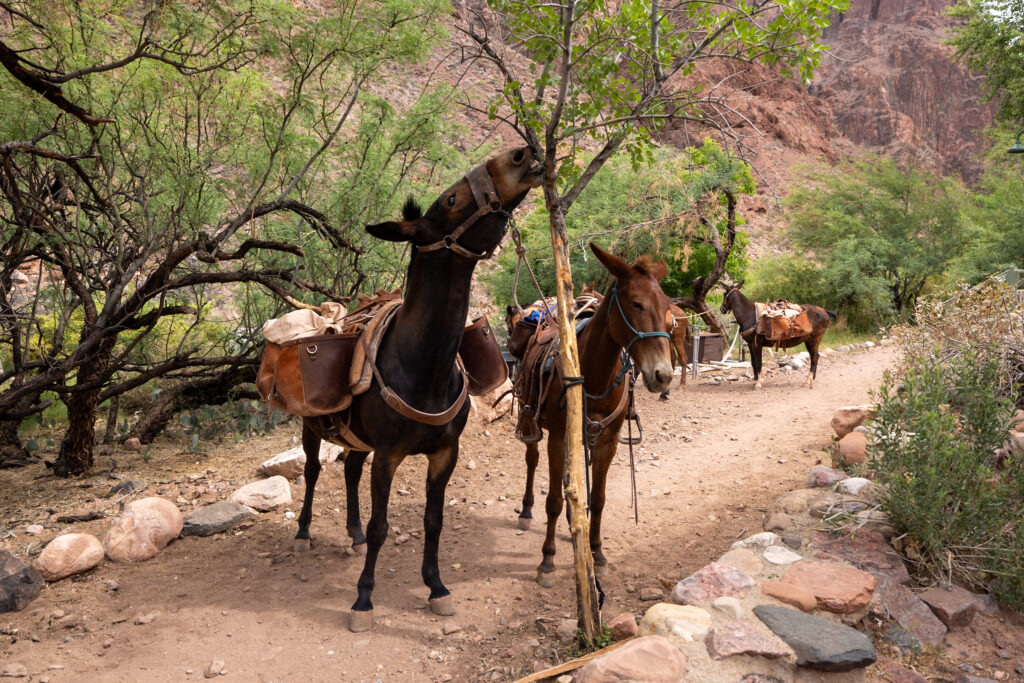
4. Book a Grand Canyon Mule Ride
Consider booking an iconic Grand Canyon Mule Ride, either along the rim or down into the canyon. These rides started in 1887 and have become a highly sought-after experience, with tickets selling out as far as 15 months in advance. There are 3 main experiences in the South Rim:
- 2-Hour Canyon Vistas Mule Ride: $192.96 per person for a 2-hour ride along the rim.
- Havasupai Gardens Day Ride: $510.31 per person for a 7-hour ride down to Havasupai Gardens, an oasis in the canyon!
- Overnight Rides to Phantom Ranch: $1,341.52 for one person (discounts for groups) to ride down the Bright Angel Trail, stay overnight in a cabin at Phantom Ranch, and then ride back up again the next day. There is a 2-night ride available from November to March as well.
We didn’t have the chance to take a mule ride ourselves, but we have heard they are a once-in-a-lifetime experience—especially the overnight trips! For more information, or to book your trip, visit Grand Canyon Lodges.
🐴 Kaibab National Forest Rides! Grand Canyon Trail Rides also offers 30-minute to 2-hour horse and wagon rides at a lower rate than rim and canyon rides. More info here!
5. Explore Grand Canyon Village
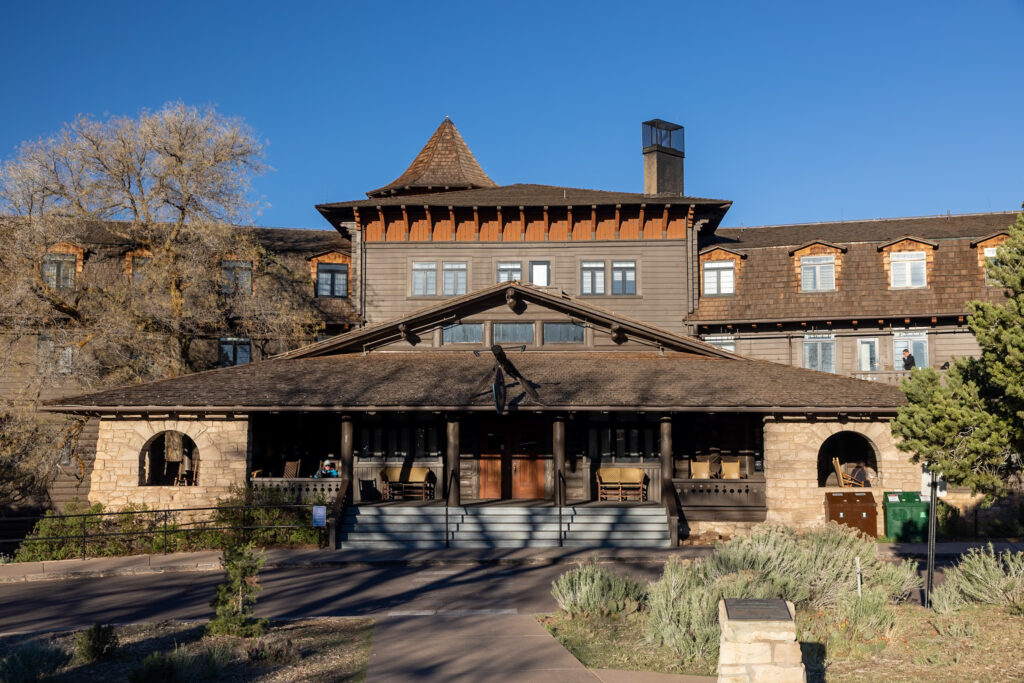
Grand Canyon Village is a historic hub and the heart of the South Rim. This lively village is going to be your go-to for stocking up on souvenirs, exploring unique architecture, and even grabbing a bite to eat. Here are some of the highlights, all pinned on our Map of the South Rim.
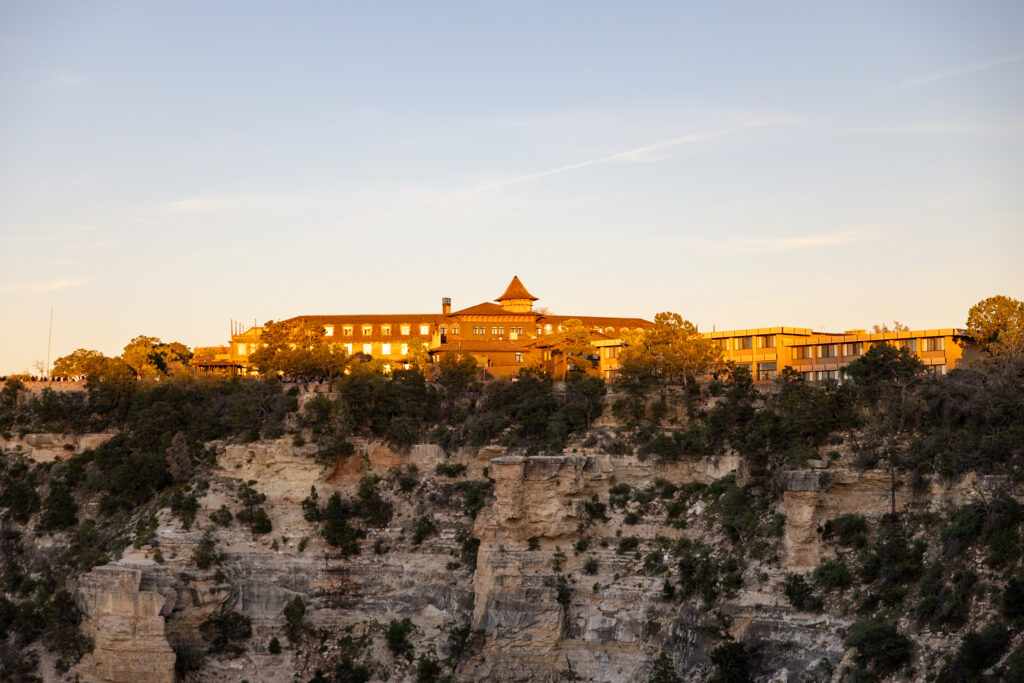
- El Tovar Hotel: This historic hotel is worth a step inside, even if you aren’t staying here. The architecture is super unique, and its all-day dining room is also one of the best places to eat at in the Grand Canyon. If you can’t get a spot for lunch or dinner, ask about getting a spot at the bar.
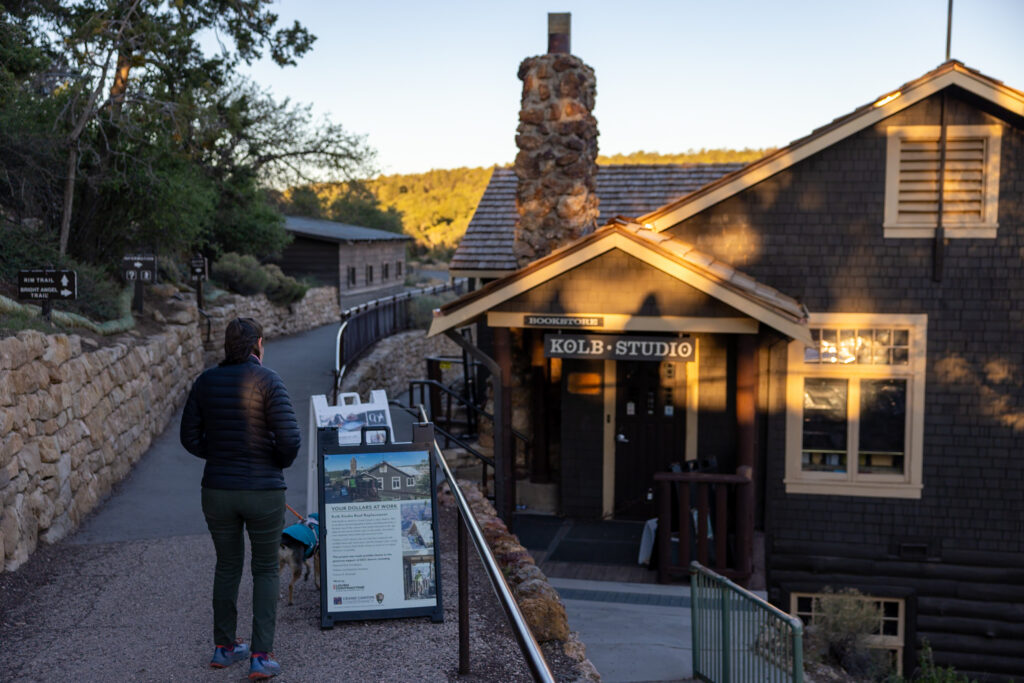
- Kolb Studio: A small museum dedicated to the Kolb Brothers, famous photographers from the Grand Canyon’s early years.
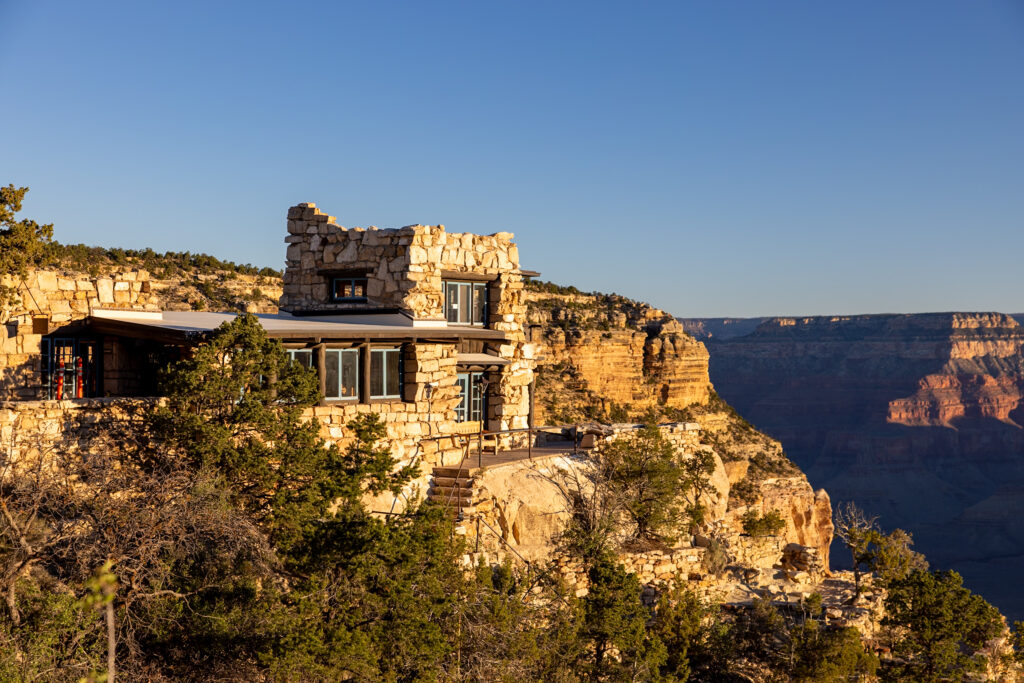
- Lookout Studio: A unique stone structure from 1914, which now mainly functions as a gift shop, although it also has some nice views from its balcony. Some of the in-house artists use this as a studio space to create and highlight their artwork.
- Hopi House: Gift shop for Native American arts and crafts housed inside a traditional Hopi-style adobe home.
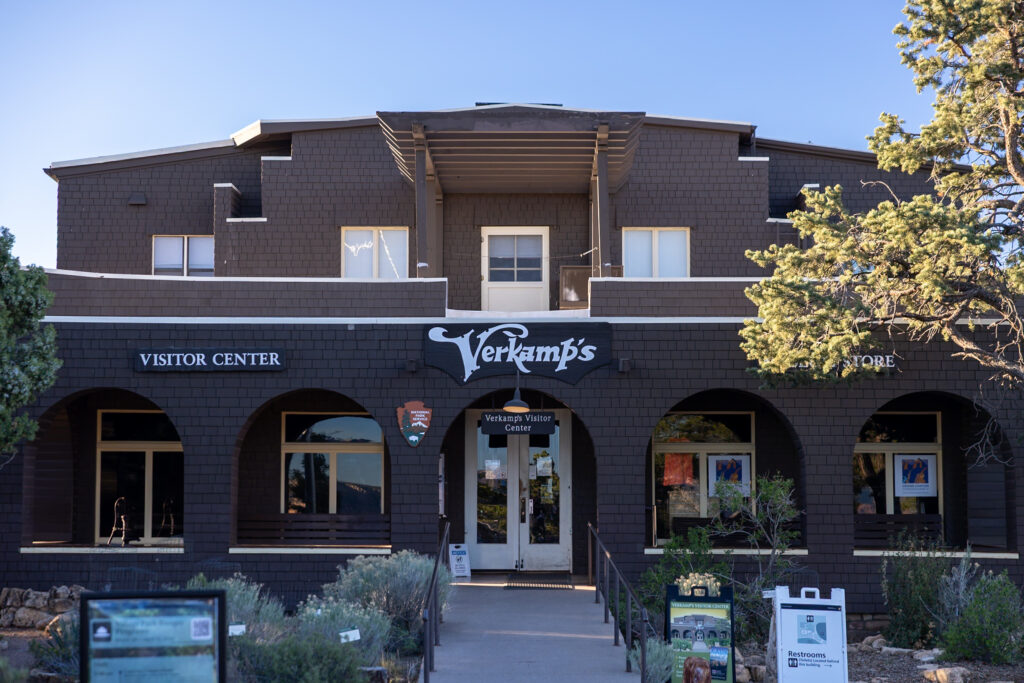
- Verkamp’s Visitor Center: This century-old home is now a gift shop and museum with exhibits on the village’s history.
- Train Depot: Connecting the South Rim with Williams, Arizona, daily, this historic train line has its depot right in the village.
- Mule Pen: Rim and canyon mule rides start from Grand Canyon Village’s Mule Pen. More information about this iconic experience in this section!
🅿️ Parking Tip! Although there is parking at Grand Canyon Village, it’s quite slim. The nearest parking lot is Parking Lot D near the Backcountry Office. We recommend parking at the Visitor Center (pinned in our South Rim Map) and hopping on the Blue Shuttle to get to the Village, especially if you’re visiting in the high season.
6. Drive Desert View Drive
The 23-mile (37-km) Desert View Drive stretches from the South Rim’s East Entrance to the Grand Canyon Visitor Center and has some of the best spots that overlook the Colorado River! You can drive it starting from either the South Entrance or the East Entrance. After the map, we’ve listed the main highlights along the way.
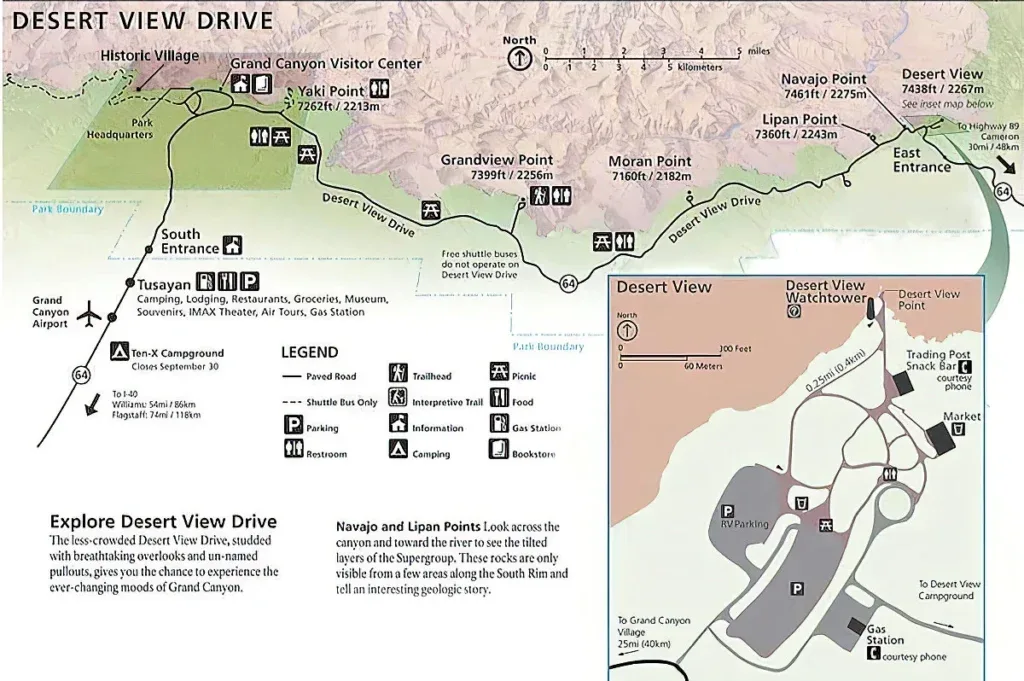
- Pipe Creek Vista: First view of the canyon on the drive after the Visitor Center; connected to the main Rim Trail.
- Yaki Point: Reachable by foot, bike, or the Orange Shuttle from the Visitor Center.
- Duck on a Rock: Viewpoint showcasing a unique rock formation and expansive canyon views.
- Grandview Point: Panoramic canyon and Colorado River views; starting point of the Grandview Trail.
- Moran Point: Named after painter Thomas Moran; offers views of three main rock groups.
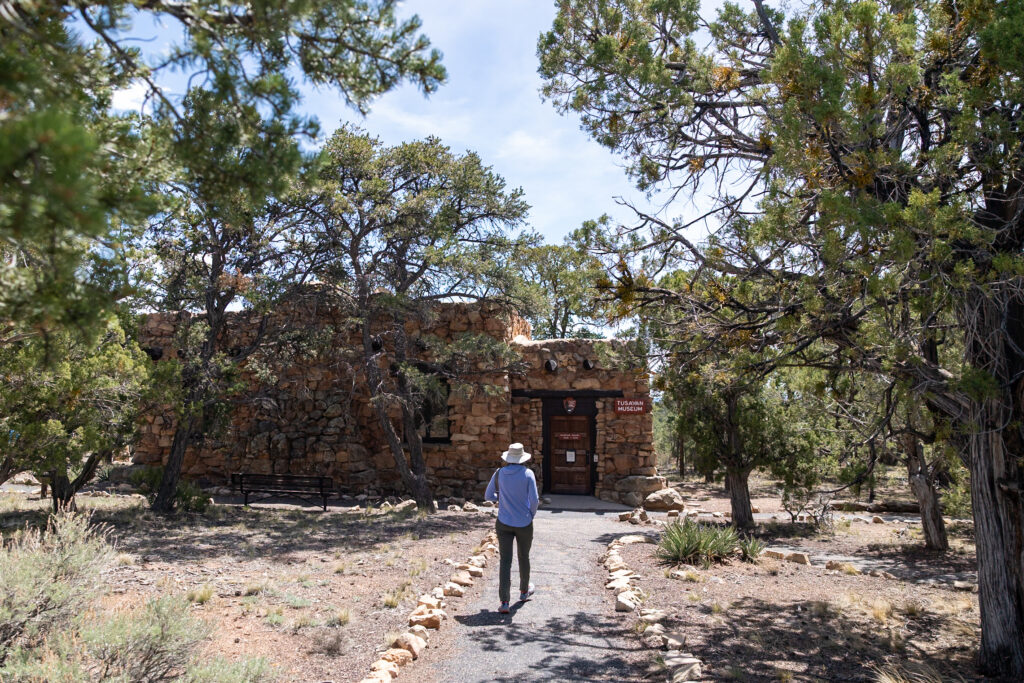
- Tusayan Pueblo Site: Remains of an Ancestral Puebloan village with a short trail and a Native American Artisan Market.
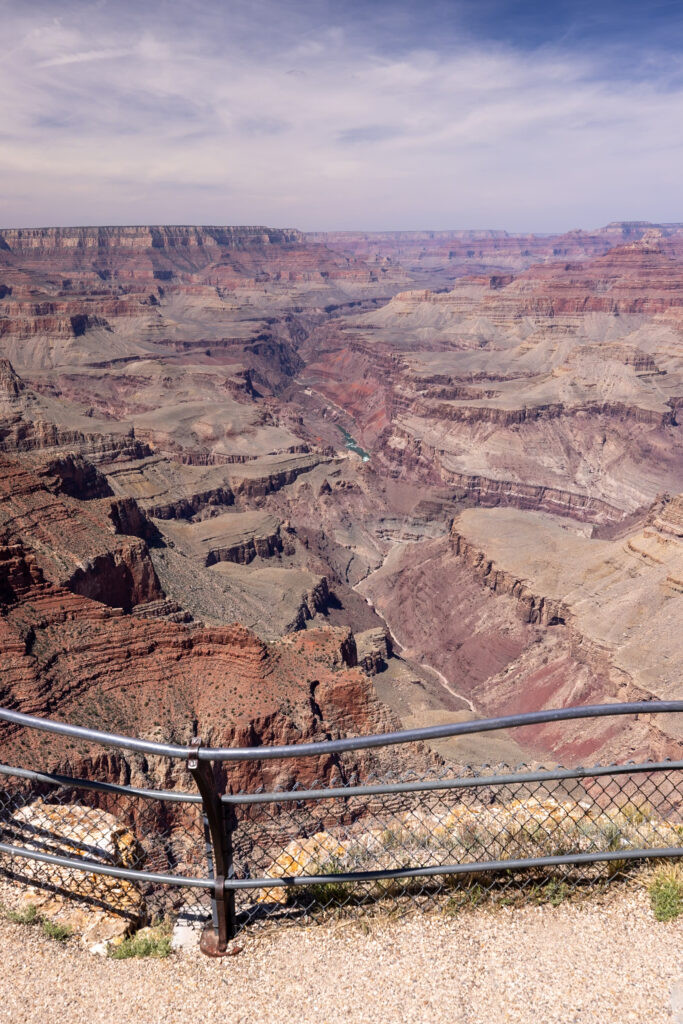
- Lipan Point: Popular viewpoint with views of Hance Rapid and Unkar Delta, an ancestral Puebloan archaeological site. This spot offers great views of the Colorado River!
- Navajo Point: Highest overlook on the South Rim, offering views of the Desert View Watchtower and panoramic vistas.
- Desert View: Features a 1/4-mile walk to the rim, the Desert View Watchtower, a campground, and a Visitor Services center. We loved the views from the Desert View Watchtower since the canyon widens up and you can see the Colorado River below!
In total, this drive takes 40 minutes if you don’t stop. Counting stops, we recommend allowing yourself anywhere from 2-4 hours, depending on how many stops you take and how much time you spend at each. All of their locations are pinned below on our Map of Grand Canyon South Rim.
7. Visit Desert View Watchtower
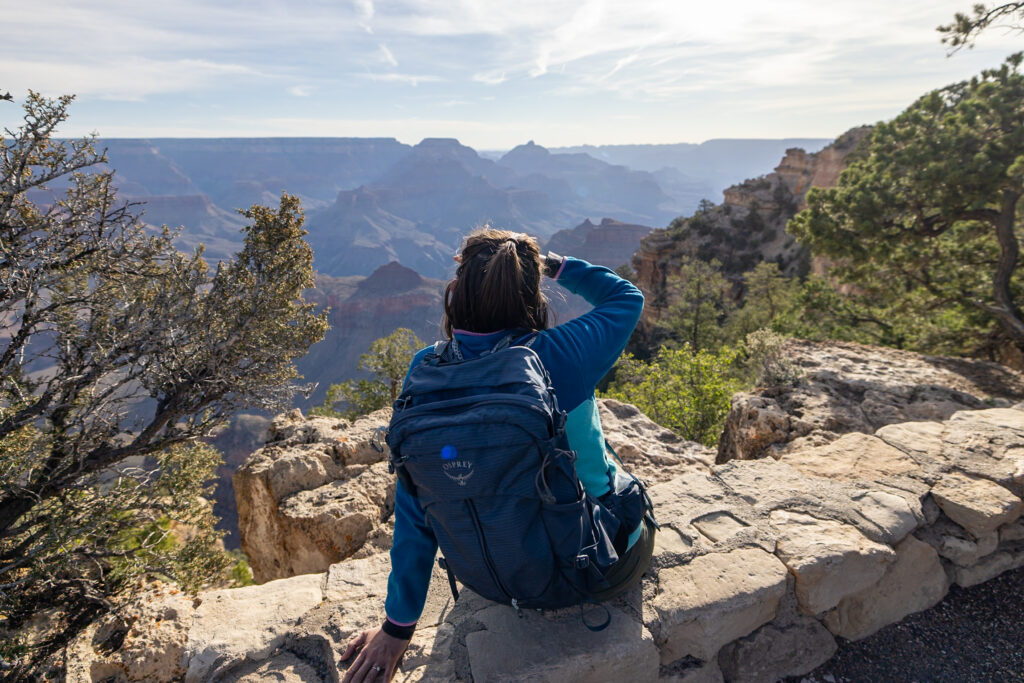
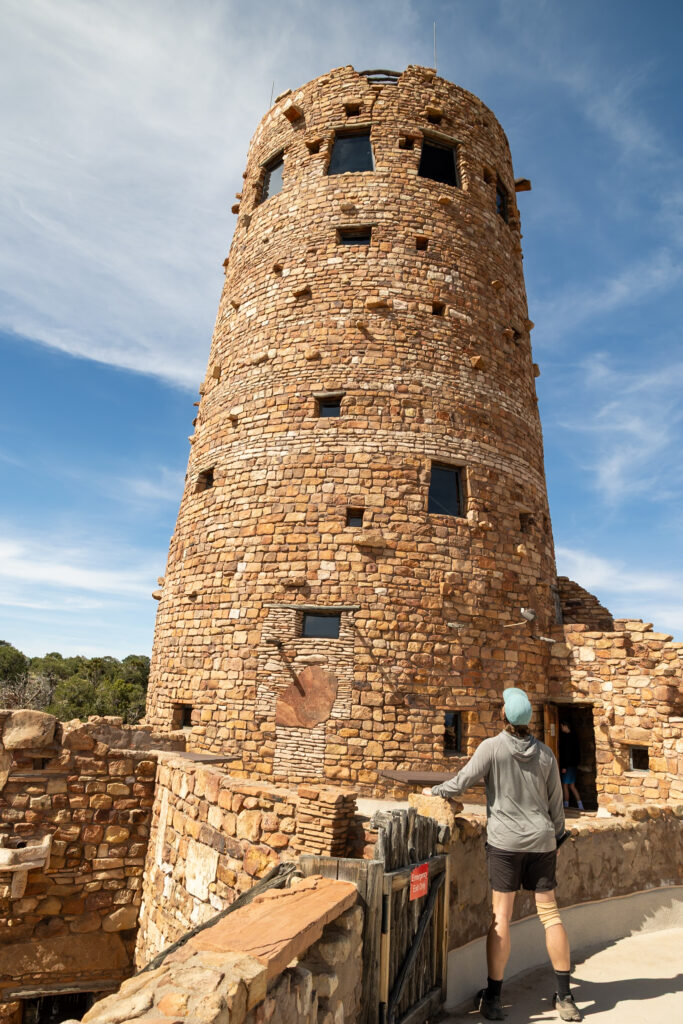
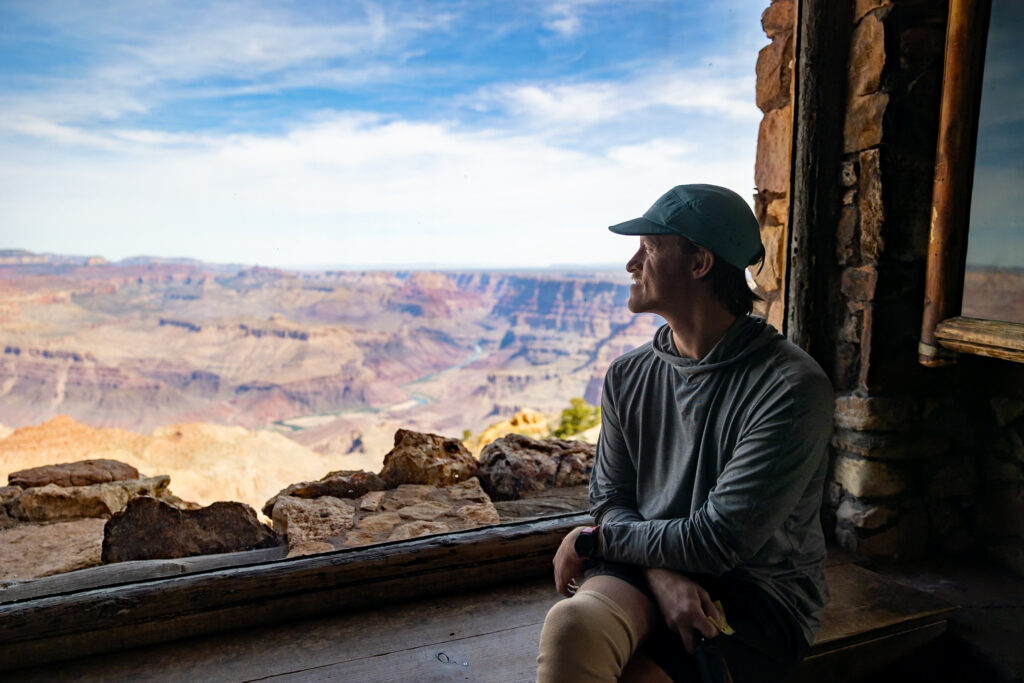
The Desert View Watchtower is a National Historic Landmark that you can enter for free from 8 am to 7 pm, daily, right by the South Rim’s East Entrance on Desert View Drive. Up to 25 people are admitted at a time to go up into the tower, with a 20-minute time limit. The building itself was constructed in 1932 and designed by Mary Colter, who based her design on traditional Puebloan architecture.
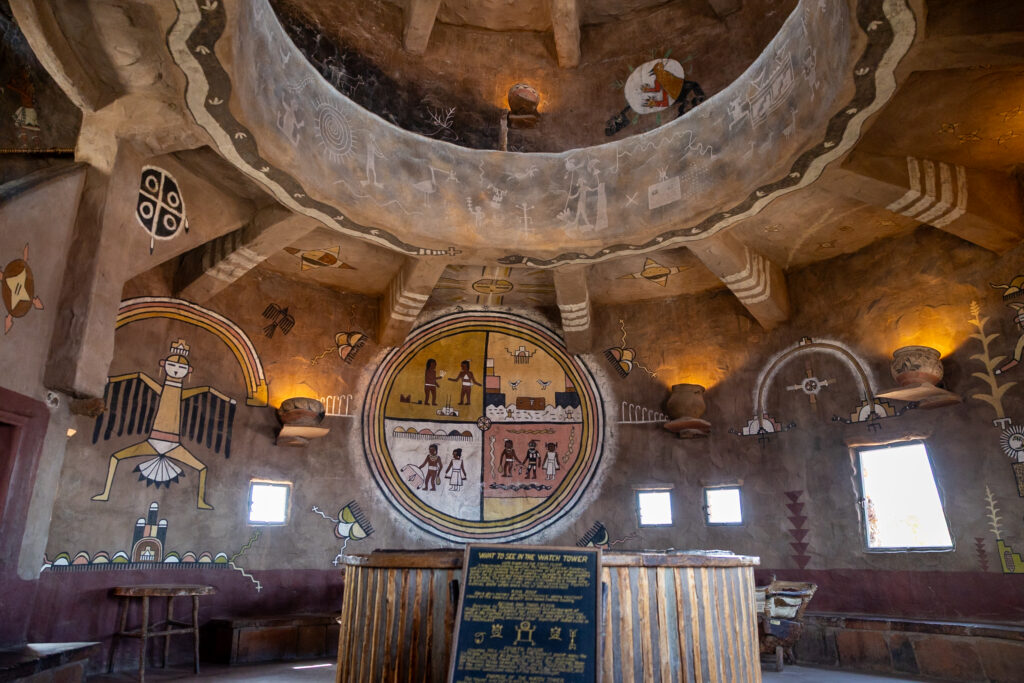
Inside, you can climb 85 steps to the top to get panoramic views of the Grand Canyon. The views from the top are excellent! We really enjoyed looking around and learning about the architect who designed it as well as the Native person who designed the interior. It’s definitely worth the stop, not only for the views overlooking the canyon, but also to learn about the history of the tribes that call the Grand Canyon home.
☕ Need Some Coffee? If you get sleepy, you’ve got the Desert View Trading Post nearby, which sells coffee and sweet treats as well as handmade Native American crafts.
8. Hop on a Free Ranger-led Program
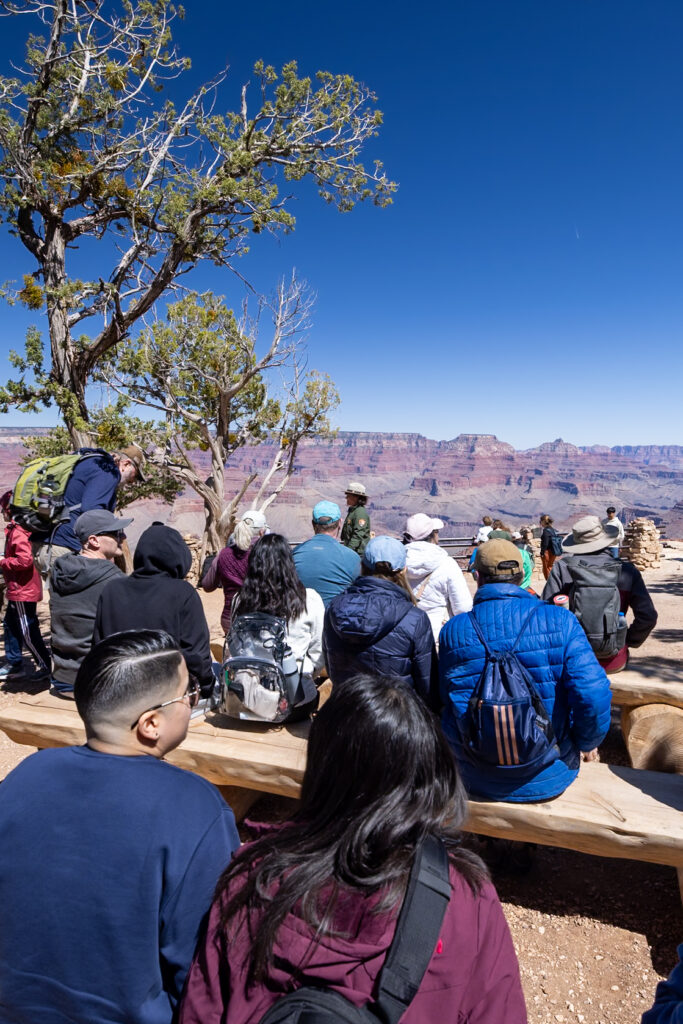
One of our favorite things to do in any national park is to attend a free ranger program. Although some parks don’t have the bandwidth to offer tons of daily programs, that’s not the case with the Grand Canyon.
There is a plethora of activities every day on the South Rim, from rim walks and critter chats to geology talks and night sky programs. Depending on the time of year, they increase their programming. Check out their Events Calendar to see what’s going on during your visit!
9. Visit the Yavapai Geology Museum
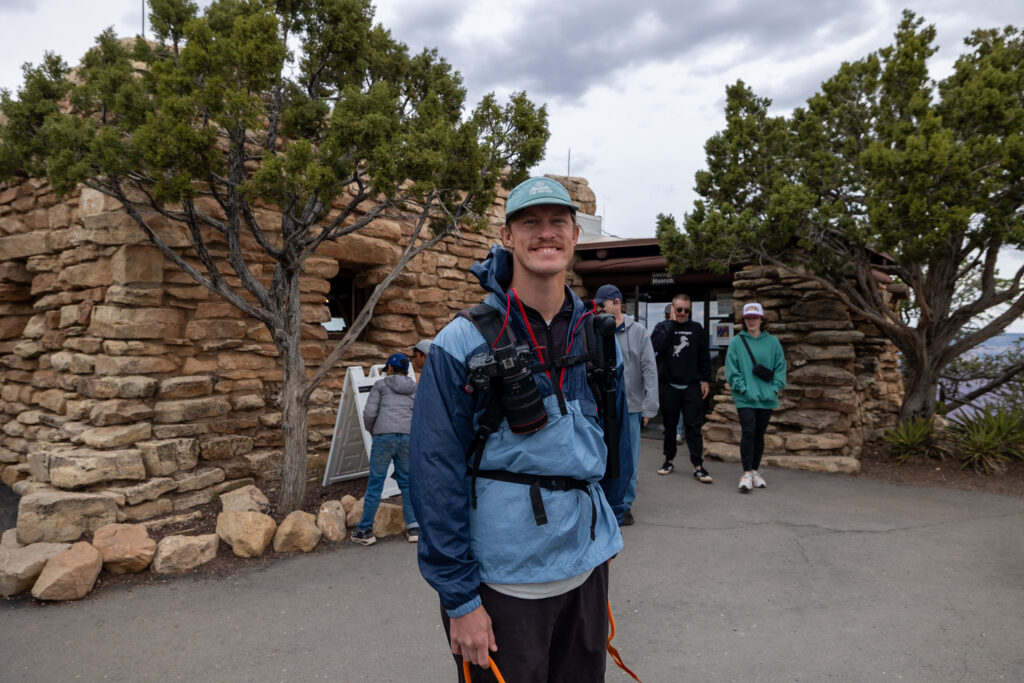
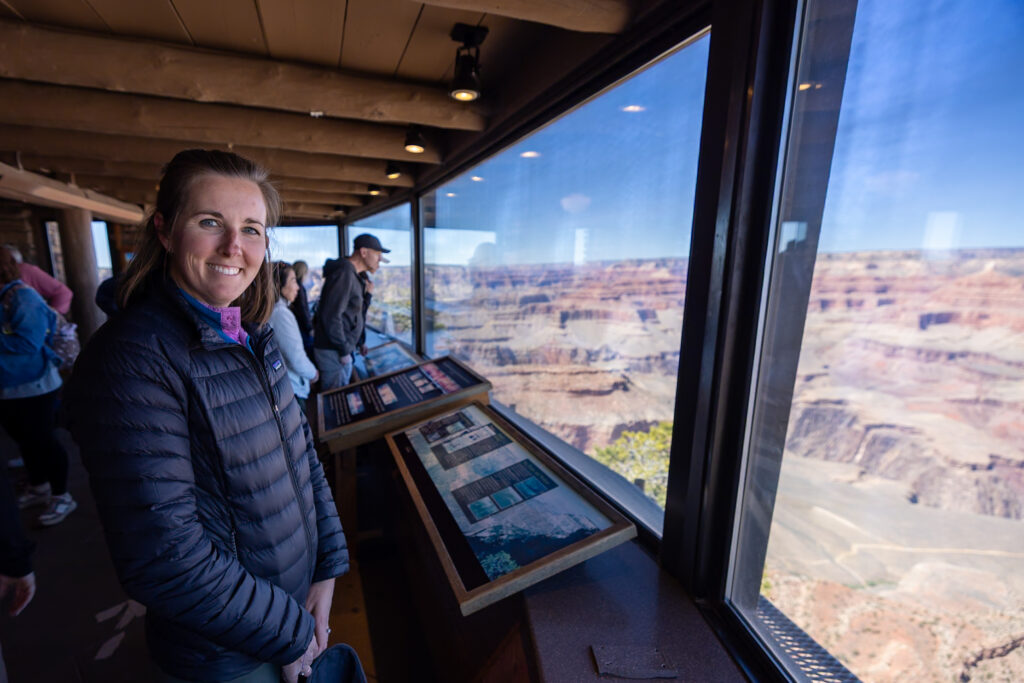
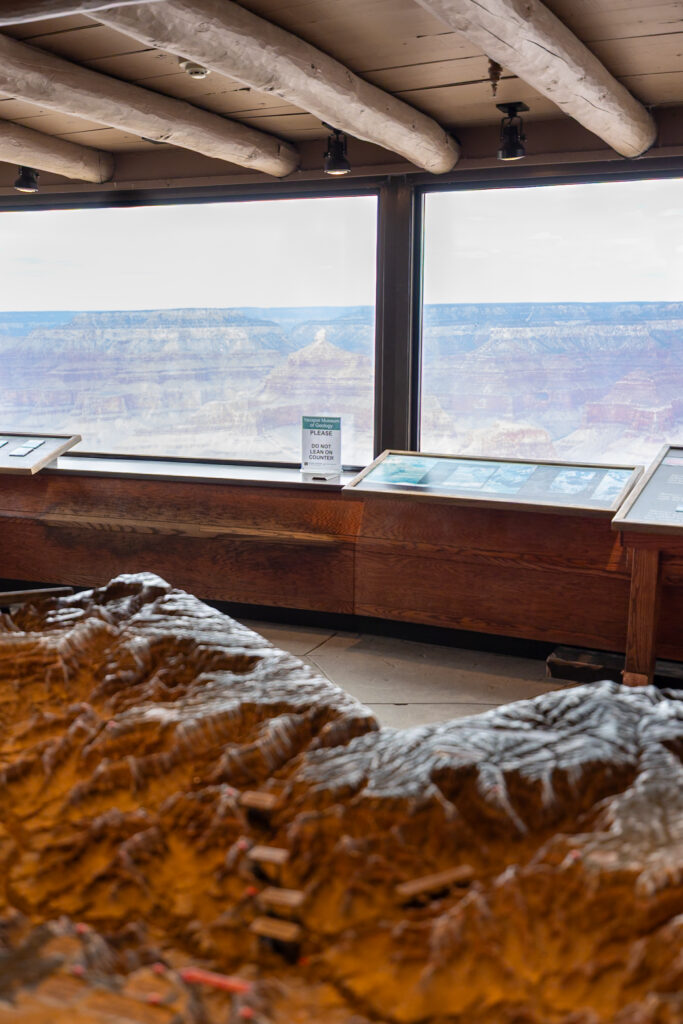
Open from 8 am to 6 pm daily, the Yavapai Geology Museum is located on Village Loop Road, right by Yavapai Point. Even if geology isn’t your forté, this small free museum is definitely worth popping into. Beyond their bookstore, you’ll find interactive exhibits explaining the park’s geology, a huge panoramic window overlooking the canyon, and a large topographical map of the park.
It’s a great spot for kids to learn about the park’s geology, and the Ranger-led geology talks are usually held in the amphitheater right outside. The exhibits really help put into perspective the scale of the park, trails, and distance between the rims. The museum does get busy mid-day, so if you’re trying to avoid the crowds, we’d recommend visiting earlier.
🪨 Geology Talks! Park rangers also lead 30-minute Geology Talks from this center every day at 3 pm.
10. Watch the Sunset
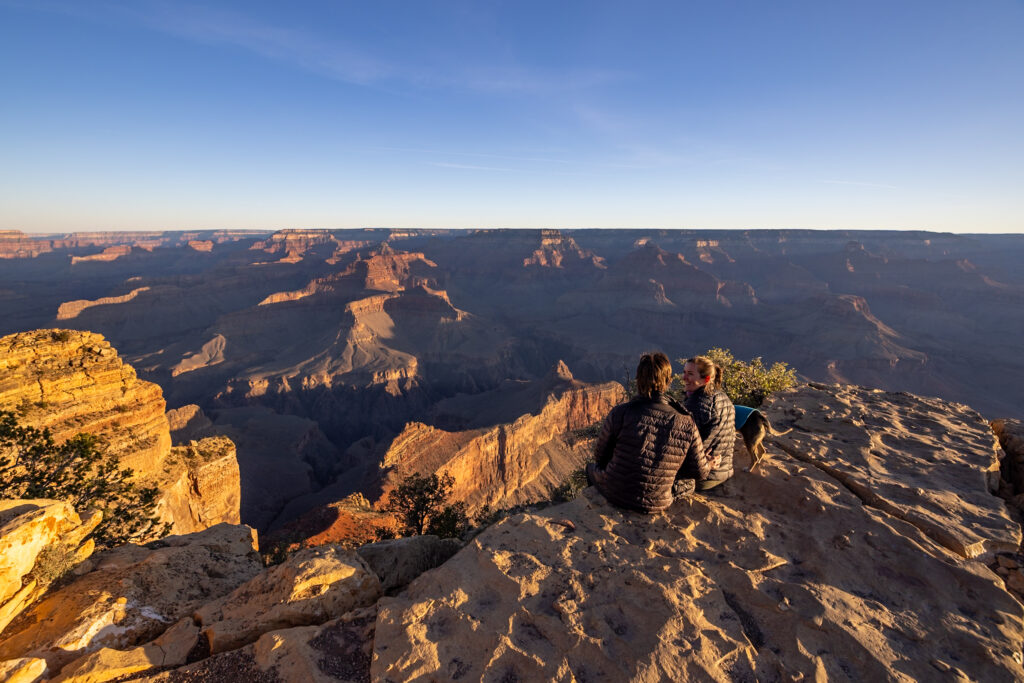
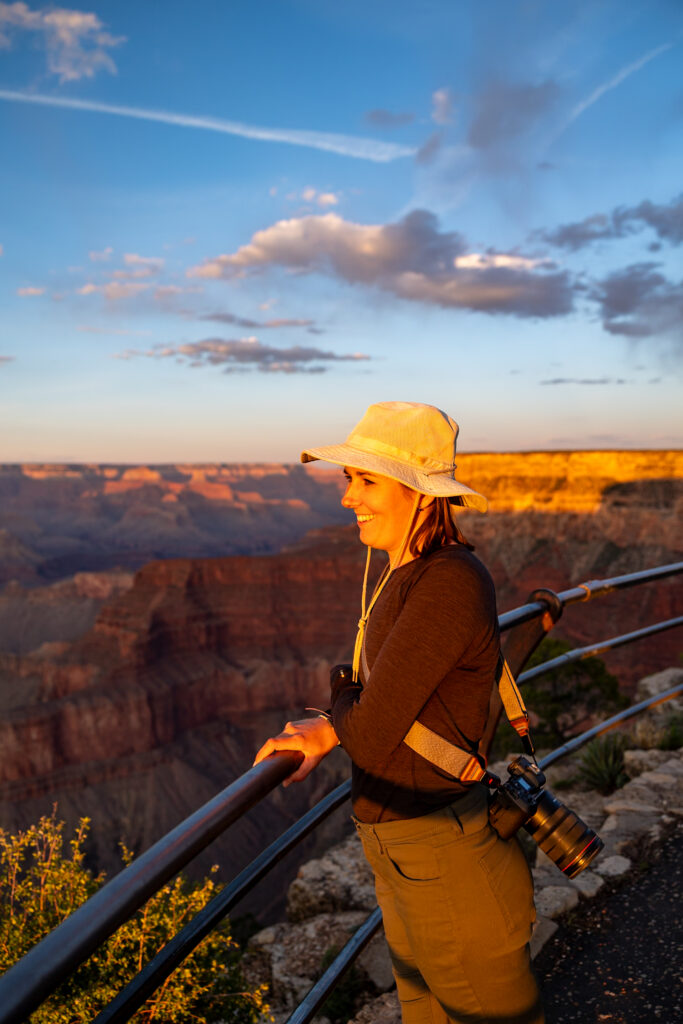
If you aren’t an early riser, watching the sunset over the Grand Canyon might be more of your jam. Besides Mather Point and Yavapai Point, which are both quite close to the Visitor Center, we recommend catching the red shuttle bus East towards Hermit Road. Once there, you’ve got tons of viewpoints to watch the sunset from. Here are some of our recs (all pinned on our South Rim Map):
- Maricopa Point
- Powell Point
- Hopi Point – Most Popular viewpoint on Hermit Road, so you can expect crowds at sunset
- Mohave Point – Our favorite point on Hermit Road with a great view of the Colorado River!
- The Abyss
- Monument Creek Vista
- Pima Point (Much Quieter)
If you take the bus to Hermits Rest (the last stop, after Pima Point) 1 to 2 hours before sunset, you could also walk back on the Rim Trail as the sun goes down. Whenever you like, stop at a bench (there are several) and enjoy an incredible Grand Canyon sunset all to yourself! As the last bus doesn’t leave until 1 hour after sundown, you’ll have plenty of time to ride back.
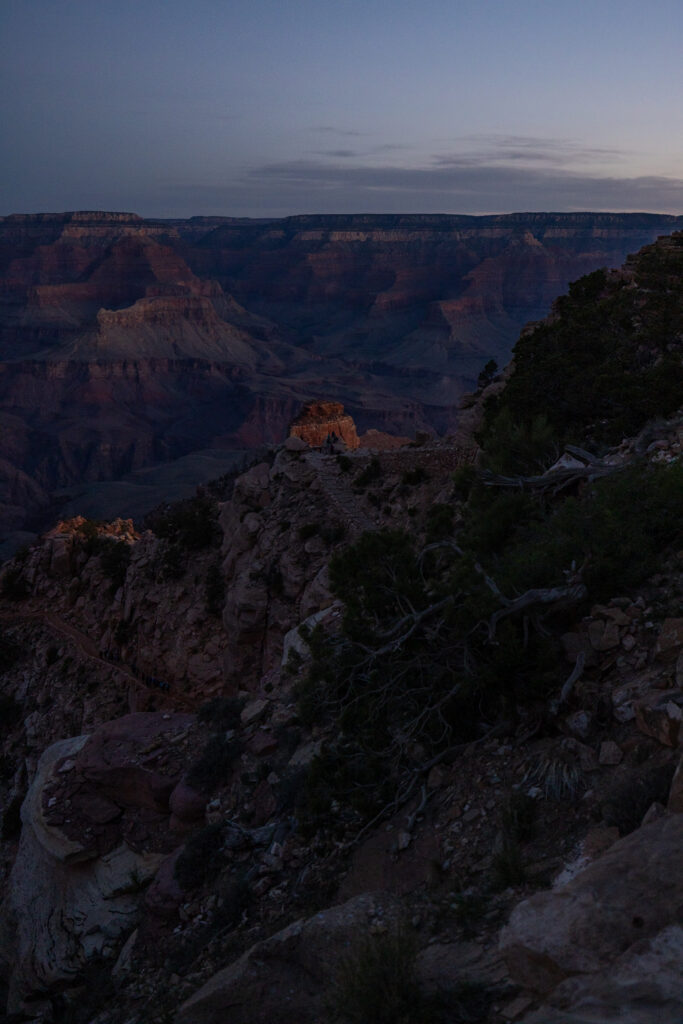
11. Go Stargazing
If you plan on staying inside the park or nearby, don’t miss out on the incredible night skies of the Grand Canyon. As a certified International Dark Skies Park, there are tons of great spots to stargaze from. Getting away from the Grand Canyon Visitor Center and Grand Canyon Village will reduce light pollution and be a great place to stargaze in the South Rim. If you’d like somewhere a bit quieter, head to Desert View, Moran, or Lipan Point on the Desert View Drive.
Throughout the year, the park also regularly holds night sky events for kids and adults alike. From telescope setups to astronomy talks, check out any upcoming events over at the Grand Canyon’s Upcoming Night Sky Events page.
📷 Photography Tip! If you’re interested in getting a shot of the Milky Way and the canyon, the North Rim is generally a better place to achieve such a shot because of positioning. That being said, many people successfully use Desert View Watchtower as a foreground object to the Milky Way in the South.
12. Go on a Grand Canyon Helicopter Tour
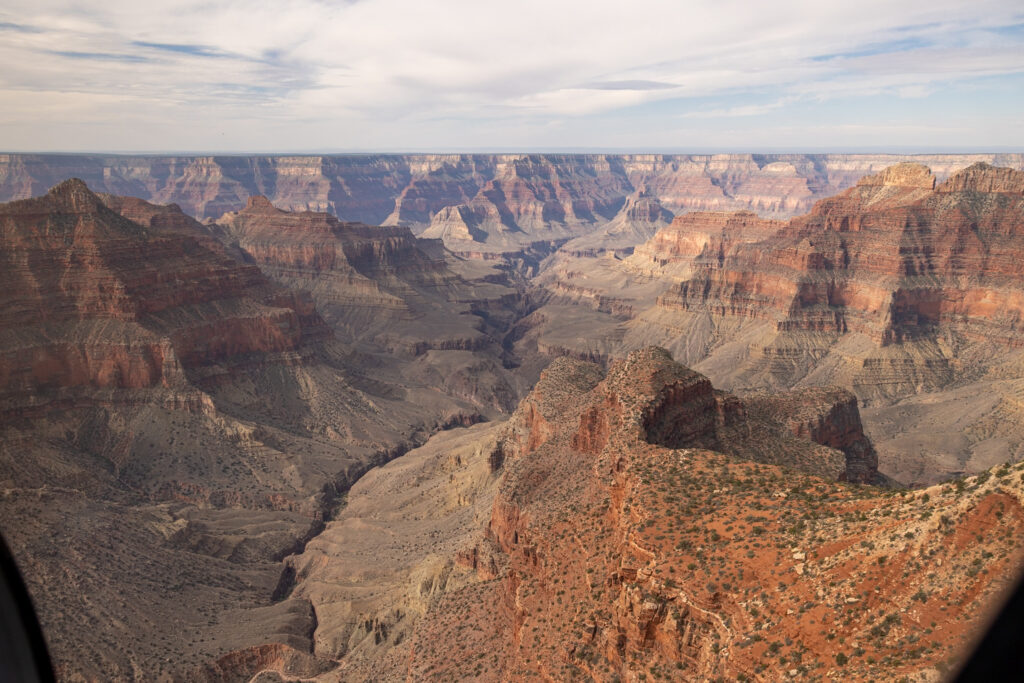
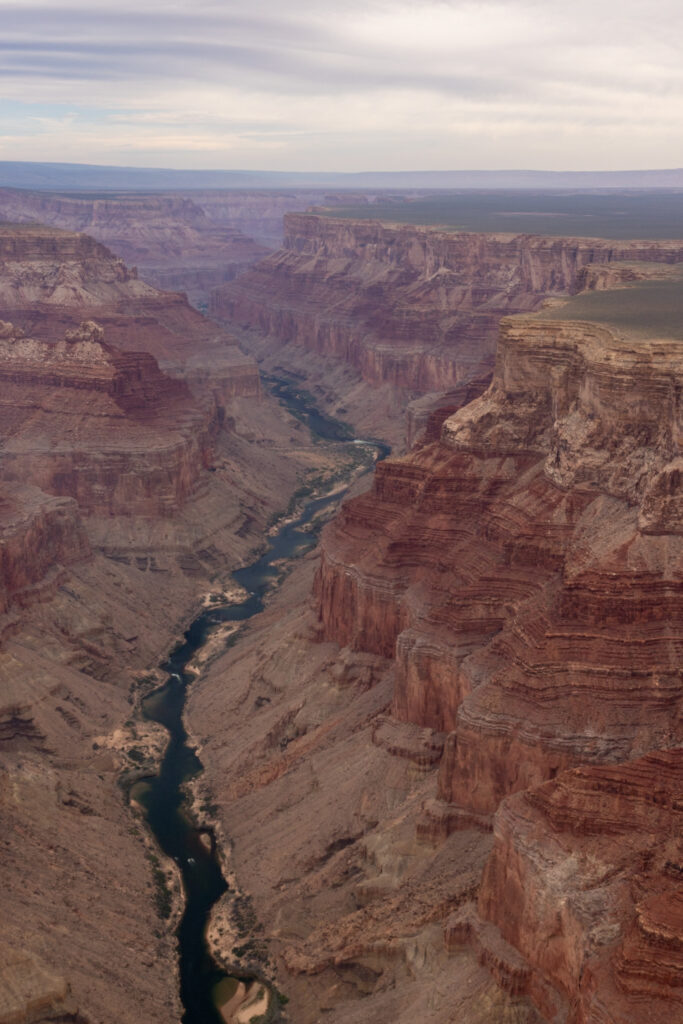
There’s really no better way to get a bird’s-eye view of the Grand Canyon than with a helicopter tour. Three helicopter concessioners run flights over the Grand Canyon.
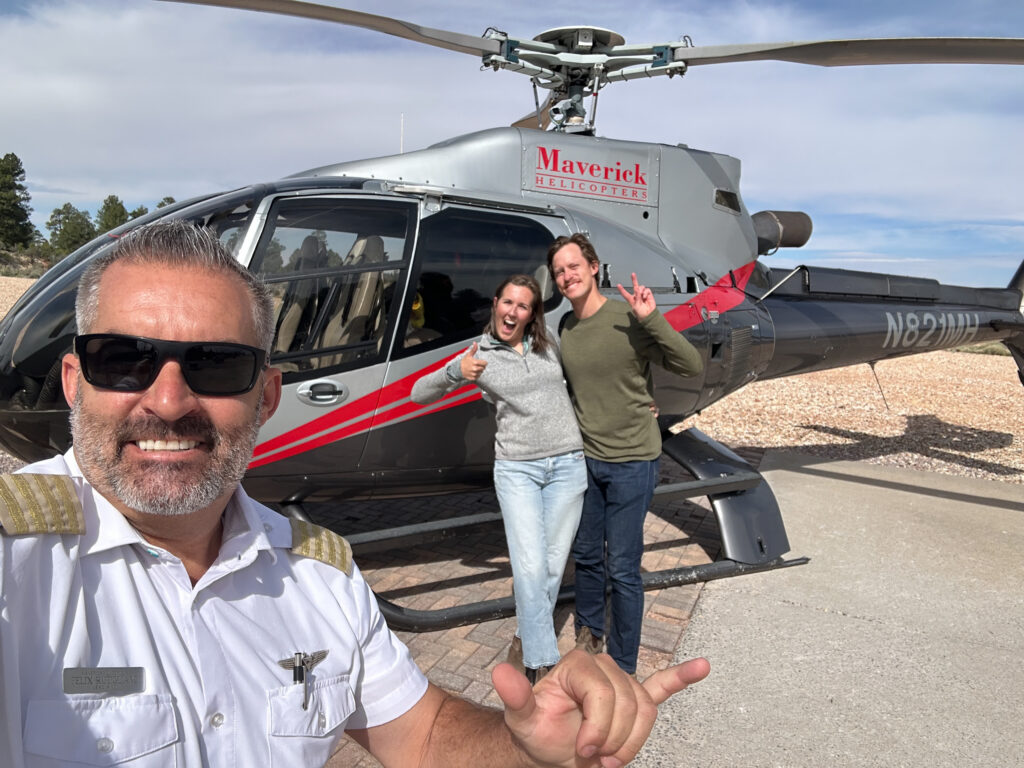
- Maverick Helicopters: South Rim, Grand Canyon West, and Las Vegas. This is who we chose!
- Papillon Grand Canyon Helicopters: South Rim, Grand Canyon West, and Las Vegas
- Five Star Helicopter Tours: Las Vegas
We took the 9 am Canyon Spirit Tour with Maverick Helicopters from Tusayan, just south of the South Rim, and had such an amazing time! Read more about our experience in this blog post! If you’re looking for the experience of a lifetime, a helicopter tour is definitely something to consider!
13. Go Camping in the Grand Canyon
What better way to visit the Grand Canyon than to camp underneath its starry night sky? There are four frontcountry campgrounds within (or very close to) the official South Rim of the Grand Canyon. Here is some basic information about each.
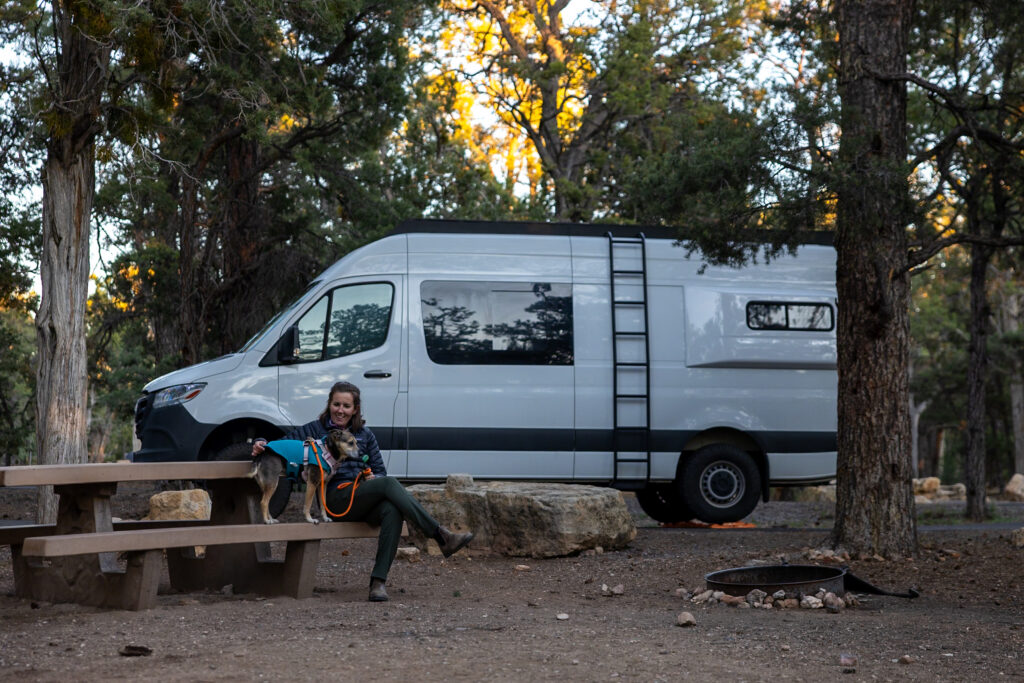
- Mather Campground: We stayed here for 2 nights and loved it! Largest South Rim campground open year-round with a total of 327 RV and tent sites ranging from $3 to $50. Reservations required 6 months in advance if travelling between March and November, although there are 15 first-come, first-served sites listed daily at 8 am.
- Trailer Village RV Park: The only 100% RV Park in the South Rim with 80 full hookups in a total of 123 sites. Sites start at around $80/night and require a reservation around 13 months in advance if visiting from May to October.
- Desert View Campground: Desert View has a total of 49 sites that can be reserved up to 6 months in advance for $30/night ($15/night with some passes). This campground is seasonal, only open from mid-April to mid-October each year.
- Tusayan Montane Campground: Technically in the Kaibab National Forest, but it’s quite nearby, so we wanted to include it. Opens mid-May through early November, and prices range from $20 to $40 for tent or RV sites. Reservations recommended.
All camping below the rim requires hiking down to that campground, as well as a permit available on Recreation.gov before you leave. There are also campgrounds further outside of the park like Grand Canyon Railway RV Park in Williams, boondocking in Coconino National Forest, and wild camping in Kaibab National Forest.
Map of the Grand Canyon South Rim
How to use this map: We have saved the locations from this guide on this map. You can save this map to your Google Maps by pressing the star icon. In your Google Maps, click the menu icon and then Saved Maps, where this map will appear.
Grand Canyon South Rim vs North Rim
The South Rim is the most popular area of the Grand Canyon. This is where we went and probably what you’re imagining when you think of the iconic images of the Grand Canyon. If you have more time or have already been to the South Rim, the North Rim is your next best bet.
Here, you’ll get to see a quieter side of Grand Canyon National Park that many visitors don’t get to experience. Just keep in mind that the North Rim opens in mid-May and closes in mid-October, whereas the South Rim is open year-round.
Also, the two rims have a 1,000-foot elevation difference, so temperatures vary between them. The North Rim, which is at 8,000 feet above sea level, will be cooler than the South Rim, which is at 7,000 feet above sea level.
When to Visit the Grand Canyon
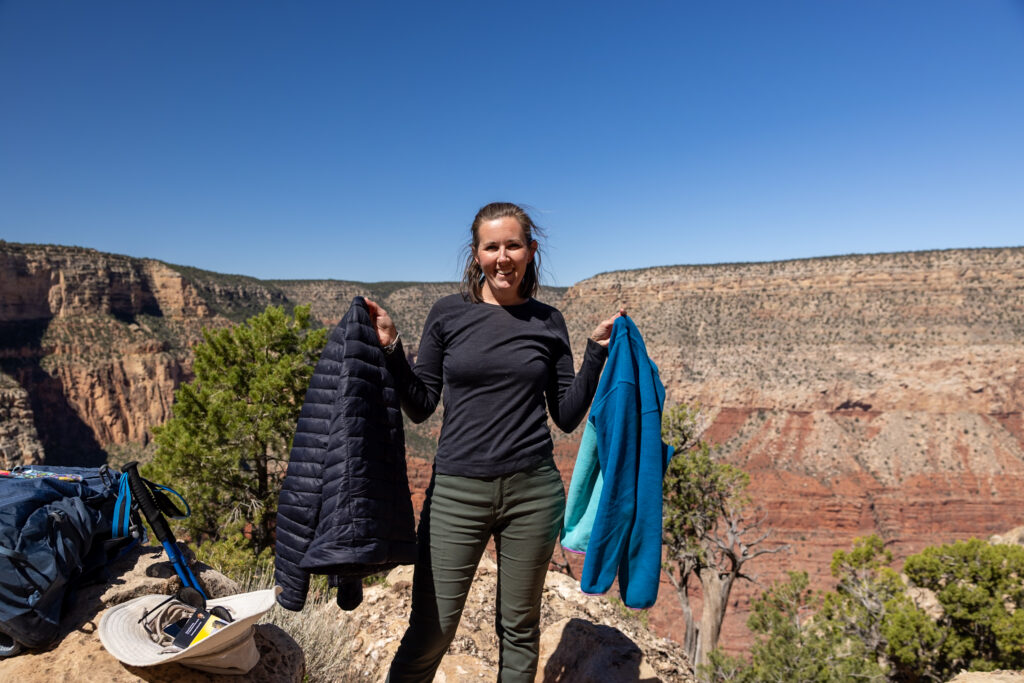
The seasons bring different weather and, therefore, experiences in the Grand Canyon. We visited in April and May 2026 and had excellent weather. As we prefer to hike in slightly cooler weather, we were able to comfortably wear pants and sun shirts during the day, having taken off our puffy jackets or fleece pullovers for the cool morning temps.
- Spring: Spring can have a mix of warm and cool days and can be windy. In our experience, it was very windy both hiking, on our rafting trip, and backpacking to Phantom Ranch. The wind is a nice reprieve from the sun, but it can be a little annoying when setting up a tent.
- Summer: During the summer, temperatures are at their highest, and there are also quite a few thunderstorms. July and August are known for monsoons. Hiking in the middle of the day is going to be quite difficult due to the hot temperatures and isn’t advised by rangers. It’s best to restrict your hiking below the rim so you’re not hiking a lot of elevation on exposed trails in the middle of the day. Summer is also peak season, so you can expect to wait for shuttles after 10 AM and have a more difficult time finding parking later in the day.
- Fall: Fall has moderate temperatures, no big winds like in spring, and is the most comfortable. When speaking with our rafting tour guides and park rangers, we found that their favorite season was always fall! It has cooler temperatures similar to spring, but a lot less wind.
- Winter: In the winter, you may have ice and snow as you enter the Canyon and cool conditions at the bottom. We plan to come back in February to backpack the Escalante Route. Winter is cold, so expect to wear many layers and for snow to be a possibility, especially near the rim.
How to Get to the South Rim
Conveniently located just north of Flagstaff, Arizona, the Grand Canyon South Rim is easily accessible by car, public transport, or plane. Here’s a breakdown of each option:
- Car: Most visitors drive via I-17 or US-180 from Flagstaff or Phoenix (1.5 to 4 hours, respectively). Once in the South Rim, the best place to park is by the main Visitor Center, not in Grand Canyon Village.
- Plane: The most popular airports to fly into to get to the South Rim include Phoenix (PHX), Las Vegas (LAS), and Flagstaff (FLG). Once landed, you can either rent a car or continue to the park via one of the public transport options we list below.
- Train: For a scenic route, you can book a ride on the Grand Canyon Railway from the city of Williams, AZ, just south of the South Rim.
- Bus: Greyhound has buses that run from major cities like Las Vegas, Flagstaff, and Phoenix directly into the park, or to Tusayan.
- Other: There is also a private shuttle run by Trans Canyon Shuttle that offers airport pickup to and from Phoenix and Las Vegas.
Love finding cheap flights?
Going (formerly Scott’s Cheap Flights) is one of our favorite tools for discovering insane airfare deals.
We’ve been members since 2015 and it has saved us thousands! The membership practically pays for itself if you use it once a year.
What to Pack for the Grand Canyon
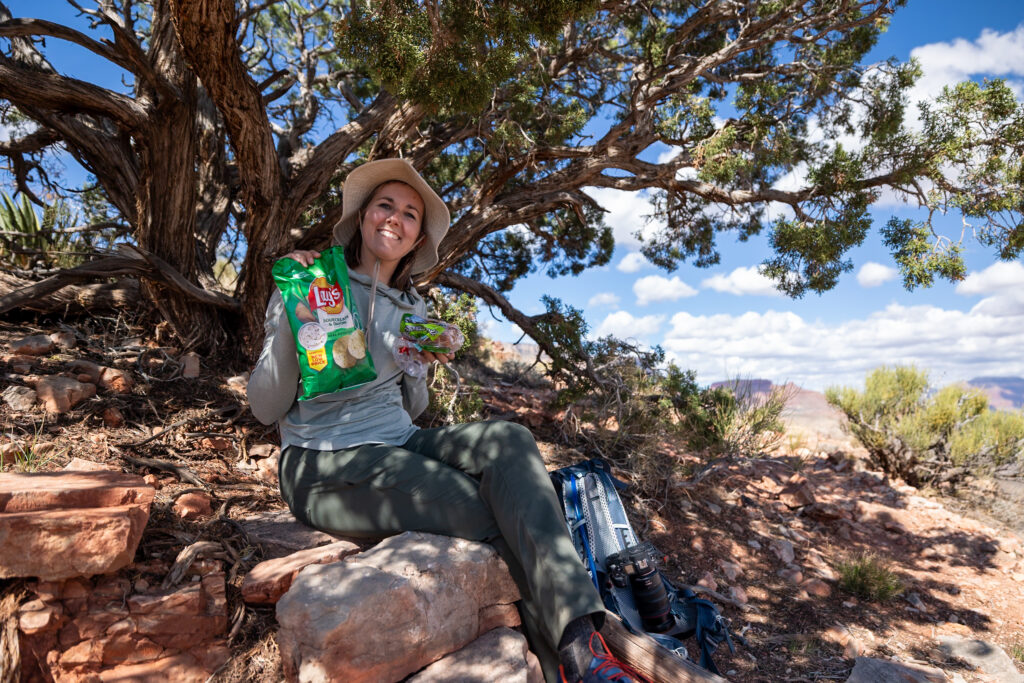
Hiking in the Grand Canyon requires visitors to be prepared! Since temperatures typically vary by 25°F from the rim to the river, it’s essential to be prepared with the right clothing to keep you comfortable. Most trails in the Grand Canyon lack ample shade, so wearing and bringing proper sun protection is crucial. Lastly, packing salty snacks really does hit different in the Grand Canyon. We brought our usual snacks plus salty chips on many of our long hiking days in addition to electrolytes, and they hit the spot!
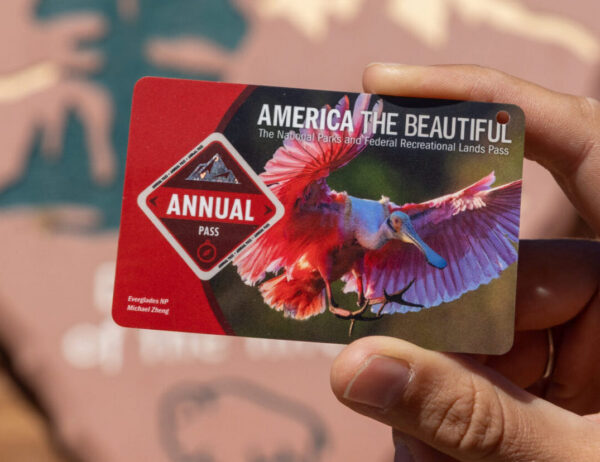
🎫 Consider investing in the America the Beautiful pass for $80 like we did if you’re planning on travelling to several parks within the year.
Hiking Essentials
Read next: Hiking Gear for Beginners!
Sun Protection
Safety Essentials
Related Articles
- EXACTLY What to Expect Rafting the Grand Canyon (Our 10-Day Motor Trip)
- 11 MUST-DO Day Hikes in the Grand Canyon
- ULTIMATE Guide to Helicopter Tours in the Grand Canyon
- 15+ BEST Grand Canyon Sunrise & Sunset Viewpoints (South Rim)
- 19 BEST Books to Read About the Grand Canyon
- The BEST Way to Spend One Day in the Grand Canyon
- Grand Canyon Itinerary: 2 PERFECT Days in the South Rim


Leave a Reply
You must be logged in to post a comment.